A neighbor keeps threatening you. A former roommate will not stop calling. A stranger follows you online and in person. When someone you are not related to and never dated makes you feel unsafe, California law gives you a way to protect yourself. It is called a civil harassment restraining order.
This guide explains the whole process in plain English. You will learn who can ask for a civil harassment restraining order, which forms to fill out, how much filing costs, how to serve the other person, and what to expect in court. The process usually takes a few weeks from start to finish, according to the California Courts Self-Help Guide.
This article gives general legal information for California. It is not legal advice for your specific situation. Court rules and fees can change, so always confirm details with your local superior court.
What Is a Civil Harassment Restraining Order?
A civil harassment restraining order is a court order that protects you from someone who is not a close family member and not a current or former romantic partner. It is the right type of order when the person harassing you is, for example:
- A neighbor
- A roommate or former roommate
- A coworker
- A landlord
- A stranger
- A more distant relative, such as an aunt, uncle, niece, nephew, or cousin
These orders come from California Code of Civil Procedure section 527.6. That law lets any person who has suffered harassment ask the court for protection.
If you are 12 or older, you can ask for this order on your own. You do not need a parent’s permission, although a judge may ask a trusted adult to help you with the case.
What Counts as Harassment Under California Law
The law defines harassment in a specific way. To get a civil harassment restraining order, you must show one of these three things:
-
Unlawful violence. This means assault, battery, or stalking.
-
A credible threat of violence. This is a statement or behavior that would make a reasonable person fear for their safety or their family’s safety, with no legitimate purpose.
-
A course of conduct that seriously alarms, annoys, or harasses you. This means a pattern of acts over time, such as repeated calls, messages, or following you. The conduct must serve no legitimate purpose. It must cause substantial emotional distress to you, and it would cause the same distress to any reasonable person.

The harassment can happen anywhere, including online. Harassing emails, texts, and social media messages all count under the statute.
What the Order Can Do
A judge can order the restrained person to:
-
Have no contact with you
-
Stop harassing, stalking, threatening, or harming you
-
Stay a certain distance away from you, your home, your job, or your school
-
Not own or possess firearms, ammunition, or body armor
The order can also protect your family or household members and even your pets. Once a judge signs the order, police can enforce it. Violating the order can lead to arrest and criminal charges.
Is a Civil Harassment Restraining Order the Right Order for You?
California has several types of restraining orders. Picking the right one matters, because each type uses different forms and covers different relationships.
Table alt text: Comparison of a civil harassment restraining order with other California restraining order types.
If the person harming you is a spouse, ex-partner, someone you dated, or a close relative like a parent, child, or sibling, you need a domestic violence restraining order instead. When in doubt, ask your court’s free self-help center before you file.
Forms You Need to Ask for Protection
You will start your case with a small set of Judicial Council forms. The table below lists each one and what it does.
Table alt text: Court forms required to request a civil harassment restraining order in California.
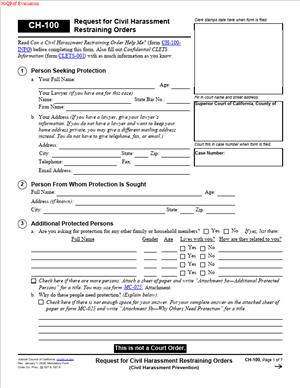
You can find, complete, and download each of these forms on RunSensible Forms, starting with Form CH-100, Request for Civil Harassment Restraining Orders.
How to File for a Civil Harassment Restraining Order
Follow these steps in order. Your court’s self-help center can review your paperwork for free at any point.
Step 1: Fill Out the Civil Harassment Restraining Order Forms
Start with Form CH-100. Item 7 is the heart of your request. Describe the most recent incident first, then earlier ones. For each incident, write:
-
The date, or your best estimate
-
What the person did and said
-
How often it happened and how long it has gone on
-
Any physical or emotional harm you suffered

Understanding Washington State Protection Orders and How They Help in 2026
Be specific and stick to facts. The judge decides based on what you write here. If you need more space, attach Form MC-025 or a blank page. You can attach proof, such as emails, texts, or photos. If you also need to swear out a supporting statement, learn how to write a strong affidavit before you start.
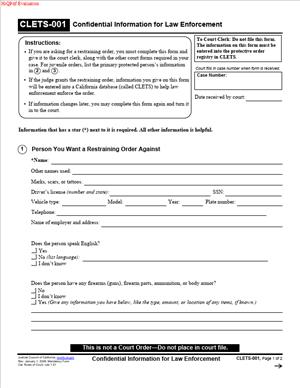
Next, complete Form CLETS-001. This confidential form goes into a statewide law enforcement database so police can enforce your order. The other person never sees it.
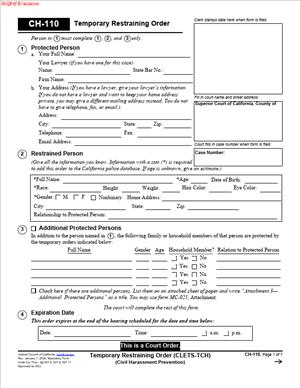
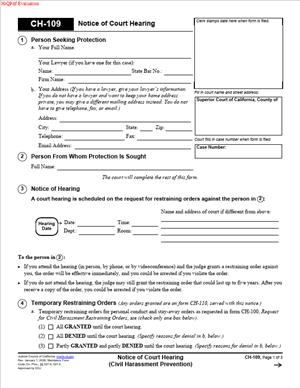
If you want protection right away, also fill out the top of Form CH-110, the temporary order. Fill out items 1 and 2 on Form CH-109 as well. The court completes the rest.
Step 2: Make Copies and File With the Court Clerk
Sign your forms and make two copies of everything. Take the original plus both copies to the superior court clerk in the correct county. Many courts also accept e-filing or offer a drop box (California Courts filing guide).
A judge reviews your request quickly. If you asked for a temporary order, you usually get a decision the same day or by the next business day.
Step 3: Pay the Fee or Ask for a Fee Waiver
The filing fee for this case is $435 to $450. You pay nothing, however, if your request alleges violence, stalking, or threats of violence. Check the fee-related boxes in item 13 of Form CH-100 to ask for this (California Courts).
If your case does not involve violence but you cannot afford the fee, file Form FW-001, Request to Waive Court Fees with Form FW-003. Our guide on asking the court to waive filing fees explains who qualifies.
Step 4: Serve the Other Person
The restrained person has a legal right to know about the case. Someone who is 18 or older and not part of the case must hand-deliver a copy of your filed forms to them. This is called personal service. You cannot serve the papers yourself.
Service usually must happen at least five days before the hearing. The judge writes the exact deadline on Form CH-109, so read it carefully. If your case involves violence or threats of violence, the sheriff will serve the papers for free.
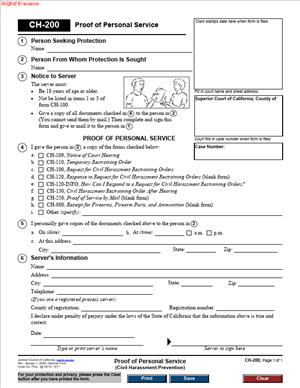
After service, your server completes Form CH-200, Proof of Personal Service. File it with the court before your hearing. Without valid proof of service, the judge cannot grant your final order and may delay your case.
Step 5: Go to Your Hearing
The court sets a hearing within 21 days of your request, or up to 25 days when there is good cause. Your temporary order, if granted, lasts until that hearing date (CCP § 527.6).
Bring your evidence and any witnesses. Organize texts, emails, photos, and police reports in date order. Answer the judge’s questions calmly and stick to facts. Our article on preparing for a court hearing walks through what to bring and how to act in the courtroom.
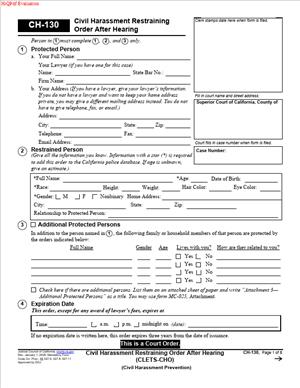
At the hearing, you must prove harassment by clear and convincing evidence. That standard is higher than in most civil cases. If the judge agrees, the court issues Form CH-130, the final order.
If you need more time to gather evidence or serve the papers, you can ask to postpone the hearing with Form CH-115, Request to Continue Court Hearing.
How Long the Order Lasts and How to Renew It
A civil harassment restraining order granted after a hearing can last up to five years. If the order does not list an end date, it lasts three years from the date it was issued (CCP § 527.6).
You can ask the court to renew the order for up to five more years. File your renewal request within the three months before the current order expires. You do not need to show new harassment to renew (California Courts renewal guide). If the order expires first, you must start a brand-new case.
Keep a copy of your order with you. If the restrained person breaks it, call the police. You can read more in our guide to enforcing a restraining order.
What to Do if You Were Served With One
If someone asked the court for a civil harassment restraining order against you, take it seriously. Read every page you were served. If you received Form CH-110, a temporary order is already in effect. Follow it exactly, even if you think it is unfair. Breaking it can lead to arrest.
You have the right to tell your side. Fill out Form CH-120, Response to Request for Civil Harassment Restraining Orders. Have someone 18 or older mail it to the other party, then file Form CH-250, Proof of Service by Mail with the court. Then go to the hearing and bring your evidence. If you do not appear, the judge can grant the order without hearing from you.
Common Mistakes to Avoid
Small errors cause many of these cases to fail or stall. Watch out for these problems:
-
Filing the wrong order type. Close relationships belong in domestic violence court, not a civil harassment case.
-
Vague descriptions. “He bothers me” is not enough. Give dates, actions, and words.
-
Serving the papers yourself. The law does not allow it. Use an adult who is not in the case, or the sheriff.
-
Missing the service deadline. Late service usually means a postponed hearing.
-
Forgetting proof of service. File Form CH-200 before the hearing.
-
Skipping the hearing. If you filed the request and do not show up, your case is usually dismissed, and your temporary order ends.
-
Letting the order expire. Mark your calendar for three months before the end date if you want to renew.
Conclusion
A civil harassment restraining order gives you real, enforceable protection from a neighbor, coworker, roommate, or stranger who harasses or threatens you. The path is clear: complete Form CH-100 and its companion forms, file them with your superior court, serve the other person properly, and present your evidence at the hearing. Move quickly, keep good records, and use your court’s free self-help center whenever you feel stuck. If the situation feels dangerous at any moment, call 911 first and deal with the paperwork after you are safe.
Frequently Asked Questions
How much does a civil harassment restraining order cost in California?
The filing fee is $435 to $450. It is free if your request alleges violence, stalking, or threats of violence. Low-income filers can also ask for a fee waiver using Form FW-001 (California Courts).
How fast can I get protection?
Judges usually decide requests for temporary orders the same day you file or by the next business day. The temporary order then protects you until your hearing, which is set within about 21 to 25 days.
Do I need a lawyer to get a civil harassment restraining order?
No. Many people handle these cases on their own. Court self-help centers give free guidance, and every required form is available online. A lawyer can still help if your case is complicated or the other side hires one.
Can I get an order against a neighbor for repeated threats?
Yes. Neighbors are one of the most common subjects of a civil harassment restraining order. Document each threat with dates and details, and include any messages or recordings as evidence.
What happens if the restrained person violates the order?
Call the police. Violating a restraining order is a crime in California and can lead to arrest, fines, or jail time. Keep a certified copy of your order with you so officers can act quickly.
Does the order show up in background checks?
A civil harassment restraining order is a civil court record, and final orders are entered into the statewide CLETS law enforcement database. It is not a criminal conviction, but it may appear in some background searches.
Resources
- Civil Harassment Restraining Orders in California – California Courts Self-Help Guide: https://selfhelp.courts.ca.gov/CH-restraining-order
- Fill Out Civil Harassment Restraining Order Forms – California Courts: https://selfhelp.courts.ca.gov/CH-restraining-order/fill-forms
- File Your Request for Civil Harassment Restraining Orders – California Courts: https://selfhelp.courts.ca.gov/CH-restraining-order/file
- How to Renew a Civil Harassment Restraining Order – California Courts: https://selfhelp.courts.ca.gov/CH-restraining-order/renew
- California Code of Civil Procedure § 527.6: https://codes.findlaw.com/ca/code-of-civil-procedure/ccp-sect-527-6/
- Civil Harassment Restraining Orders – Superior Court of California, County of San Diego: https://www.sdcourt.ca.gov/sdcourt/civil2/civilrestrainingorder
Disclaimer: The content provided on this blog is for informational purposes only and does not constitute legal, financial, or professional advice.
Contents