
A court filing fee waiver is a judicial determination that a party lacks the financial ability to prepay required court costs, allowing a case or appeal to proceed without upfront payment. Depending on the jurisdiction, the waiver may cover filing fees, motion fees, service costs, jury fees, or transcript expenses. It is typically granted only after the applicant submits a sworn financial affidavit and, in some systems, demonstrates that the claim or appeal is brought in good faith.
The effect is procedural and immediate: the clerk will accept or reject filings based on the waiver status, fees may be deferred or shifted to the state, and a denial can trigger dismissal or a strict deadline to pay. Some courts also reserve the right to order repayment from a future settlement or judgment.
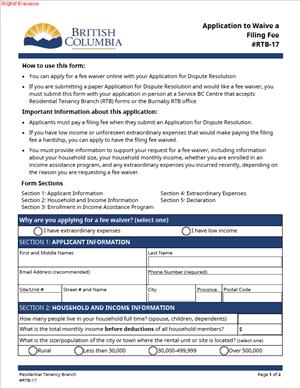
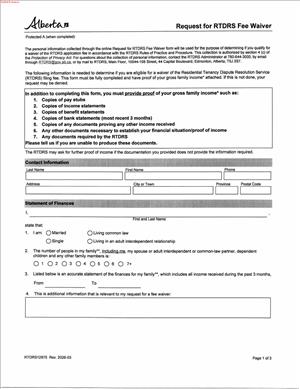
Rules vary significantly by jurisdiction. For example:
- New York (State Courts): “Poor person’s relief” under CPLR Article 11, using structured affirmations such as CIV-GP-15 and CIV-GP-16-i.
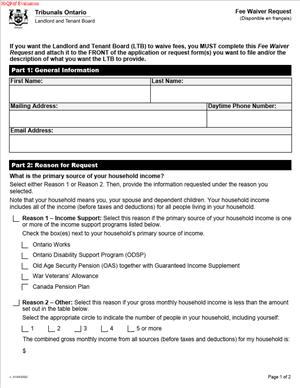
- Ontario, Canada: Fee waiver requests under provincial court rules using a prescribed fee waiver request form, reviewed by court administration or a judge based on income and asset criteria.
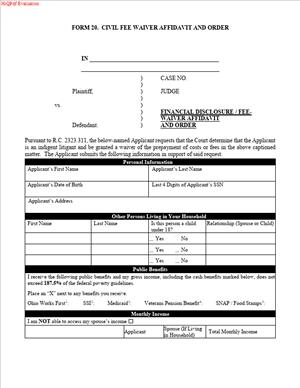
- Ohio: Statutory indigency framework with a financial disclosure and fee waiver affidavit and order commonly known as Form 20.
- Federal Courts: 28 U.S.C. § 1915 and Federal Rule of Appellate Procedure 24, requiring Form 4 – Affidavit Accompanying Motion for Permission to Appeal In Forma Pauperis.
- Other States: Clerk-based indigency determinations before judicial review.
Access court-specific fee waiver forms that match the exact type of relief you are requesting. Right Law Forms Online – RunSensible Forms provides structured templates for filing fees, appeal fees, and transcript cost requests.
Legal Scope of a Filing Fee Waiver
A filing fee waiver is not a discretionary discount. It permits a party to litigate without prepaying required court costs, subject to statutory conditions and judicial oversight. When granted, it alters how the clerk processes filings, how costs are allocated, and what compliance obligations attach to the applicant.
Core Legal Functions
Across state and federal systems, fee waiver mechanisms generally perform the following functions:
- Authorize filing without prepayment upon submission of a sworn financial affidavit (e.g., CPLR 1101; 28 U.S.C. § 1915).
- Create a sworn financial record under penalty of perjury detailing income, assets, expenses, and liabilities.
- Trigger a formal approval or denial order that controls the next procedural steps, including strict payment deadlines if relief is denied.
The waiver decision directly affects whether a case proceeds, pauses, or risks dismissal.

Additional Legal Consequences and Conditions
Beyond basic authorization to proceed without prepayment, fee waiver systems often impose structured legal conditions. These typically fall into four functional categories:
- Scope of Costs Covered
A waiver may apply only to defined statutory fees rather than all litigation expenses. For example, CIV-GP-15 permits requests for specific categories such as filing fees, notice of appeal fees, or other enumerated court costs. Relief must be expressly requested; unlisted costs may remain payable. - Transcript and Record Preparation Orders
Some jurisdictions require a separate application to shift transcript expenses to the state. CIV-GP-16-i is designed specifically to authorize state payment of stenographic transcript costs and requires submission of a cost estimate. Without this additional order, transcript preparation fees are not automatically covered. - Merits and Good-Faith Screening
Courts frequently require more than financial disclosure. Under CPLR 1101, the applicant must provide sufficient factual detail to permit assessment of merit.CIV-GP-15 requires affirmation of a good and meritorious claim or defense. In federal appellate practice, Form 4 and FRAP 24 require identification of the issues to be raised on appeal . In federal court, 28 U.S.C. § 1915 further mandates dismissal if the poverty claim is untrue or the action is frivolous, legally insufficient, or seeks relief from an immune defendant. - Continuing Obligations and Exposure
Fee waivers are not permanently insulated from review. Courts may modify or revoke them if financial circumstances change or misrepresentation is discovered. All applications are signed under penalty of perjury, and false disclosures may result in dismissal, repayment orders, sanctions, or criminal liability.
Together, these conditional elements demonstrate that a filing fee waiver is a regulated access mechanism; note that it is not a blanket exemption from court costs.
Procedural Requirements for Requesting a Court Filing Fee Waiver
A filing fee waiver application follows a structured procedural sequence. Courts evaluate eligibility based not only on financial hardship but also on proper form usage, required disclosures, and compliance with filing and notice rules. Because denial often triggers strict payment deadlines—or dismissal—the process must be handled with precision from the outset. Below is the typical progression from preparation through post-decision compliance.
Step 1 — Confirm the Correct Court, Procedural Posture, and Fee Category
Before preparing any affidavit, confirm which court has jurisdiction and whether the matter is an initial filing, a pending action, or an appeal. Fee waiver standards and required forms differ between trial courts and appellate courts, and transcript-related relief may require a separate request.
For example, in the NYC Civil Court, CIV-GP-15 addresses general waiver of court costs and fees, while CIV-GP-16-i specifically seeks authorization for the state to pay transcript preparation costs. In federal appellate practice, requests are governed by FRAP 24 and require the detail contained in Form 4.
Using the wrong court framework or failing to request the correct category of fees can result in rejection or denial, potentially jeopardizing filing deadlines.
Step 2 — Obtain the Court-Approved Form Set and Verify Filing Method
Courts require structured financial disclosures in prescribed formats. Retrieve the most current version of the required forms from an official source and confirm whether the court requires paper filing or permits electronic submission.
Some courts expressly prohibit electronic filing of fee waiver applications. For instance, certain NYC Civil Court fee waiver forms must be completed, printed, and submitted in accordance with court instructions.
Submitting outdated forms, incomplete versions, or filing through an incorrect method may delay review or cause loss of filing priority if a statutory deadline expires.
Step 3 — Complete the Financial Disclosure With Full and Accurate Detail
The sworn financial statement is the evidentiary foundation of eligibility. All required income sources, assets, monthly expenses, debts, and dependent information must be disclosed exactly as the form directs.
Ohio Form 20 requires detailed reporting of household income, liquid assets, and recurring expenses, and includes a judicial order section and notarization. Federal Form 4 requires disclosure of income history, expected future income, assets, expenses, and—if the applicant is incarcerated—a certified institutional account statement.
Incomplete disclosures often result in denial. Material misstatements may expose the applicant to dismissal, sanctions, repayment orders, or perjury consequences.
Step 4 — Provide the Required Merit or Good-Faith Statement
Many jurisdictions condition fee waivers on a showing that the claim or appeal is not frivolous.
Under CPLR 1101, the applicant must provide sufficient factual detail to permit the court to assess merit. CIV-GP-15 requires affirmation that the applicant has a good and meritorious cause of action or defense. In federal appellate practice, Form 4 and FRAP 24 require identification of the issues intended to be raised on appeal.
Leaving this section blank or providing only conclusory statements can result in denial and trigger strict post-denial payment deadlines.
Step 5 — File and, When Required, Serve the Application Properly
Proper filing perfects the request. Service rules vary depending on the jurisdiction and procedural posture.
In New York, when initiating a case, service of the fee waiver request may not be required before judicial review. However, if the case is already pending, all parties must be served—and in NYC, the Corporation Counsel must also receive notice (or the County Attorney outside NYC), consistent with CPLR 1101.
Failure to comply with notice requirements or provide proof of service can result in adjournment, denial without prejudice, or procedural delay that affects critical deadlines.
Access court-ready, jurisdiction-specific fee waiver forms through Right Law Forms Online – RunSensible Forms to ensure you are using the correct and current version required by your court.
Step 6 — Track the Court’s Determination and Meet All Post-Decision Deadlines
Fee waiver decisions carry immediate procedural consequences. If granted, the clerk will accept filings without prepayment, subject to the scope of the order. If denied, a payment deadline is typically imposed.
In New York, denial may require payment within 120 days to avoid dismissal. Ohio Form 20 provides a 30-day window to make the required deposit following denial. In federal appellate practice, if in forma pauperis status is denied, the applicant may move in the court of appeals within 30 days after notice.
Missing post-denial deadlines can result in dismissal of the case, forfeiture of appellate rights, or expiration of statutory time limits.
Fee Filing Waiver Documents and Forms
Fee waiver practice is document-driven. Courts decide eligibility based on structured sworn disclosures and compliance with procedural filing rules. The following categories explain the documents that control review and enforceability, without repeating earlier process steps.

The Sworn Financial Application
The primary filing is a sworn financial statement establishing economic eligibility. It must identify the case, disclose income and assets in structured detail, and include any legally required merit or issue statements.
The core forms guiding this framework include:
- CIV-GP-15 (NYC Civil Court) — An affirmation filed under CPLR 1101 and signed under penalties of perjury. It requires residence information, a statement of a good and meritorious cause of action or defense, disclosure of income, property, public assistance status, beneficial interests, and identification of the specific fee categories requested for waiver.
- CIV-GP-16-i (NYC Civil Court) — A companion application used when requesting state payment of transcript costs. It requires a transcript estimate and a statement explaining the necessity, where applicable.
- Form 20 — Civil Fee Waiver Affidavit and Order — A consolidated affidavit and judicial order under R.C. 2323.311. It requires detailed household income and expense reporting, notarization, and contains the court’s grant-or-deny section within the same instrument.
- Form 4 (Federal) — Affidavit Accompanying Motion for Permission to Appeal In Forma Pauperis — The affidavit framework is tied to FRAP 24. It requires disclosure of income, assets, expenses, and identification of appellate issues. Prisoner applicants must attach a certified institutional account statement.
Across jurisdictions, the foundational filing must be sworn in the manner required by local law and must be internally consistent. Courts assess eligibility primarily from the face of this document.
Supporting Documentation and Administrative Controls
In many jurisdictions, the affidavit alone is not the entire record. Courts may require supporting documentation to substantiate eligibility, including benefit verification letters, wage statements, or bank records. Failure to provide proof when requested can result in denial or later modification of the order.
Some systems permit a case to be assigned a docket or index number while eligibility is under review. If the waiver is denied and payment is not made within the prescribed time, dismissal may follow automatically.
Electronic filing systems may also condition submission privileges on the entry of a waiver order. In those systems, the order functions as an administrative authorization enabling further filings.
Because fee waiver applications often include partial identifying information—such as the last four digits of a Social Security or driver’s license number—privacy and restricted-access rules may apply, particularly in appellate courts.
Notice and Procedural Validity Documentation
When a fee waiver request is made in a pending case, notice obligations may apply. Certain jurisdictions require service of the application on opposing parties and, in some instances, designated government counsel. Failure to provide the required notice can delay or invalidate the review.
In appellate settings, denial of in forma pauperis status triggers formal notice procedures that start strict deadlines for further review.
Where service or delivery is required, proof must be documented through an affidavit or certificate of service, e-filing confirmation, or comparable record. Absent documented notice, a court may decline to rule on the merits of eligibility. Procedural confirmation—through docket entries, stamped copies, or electronic receipts—creates the record necessary to preserve rights and enforce deadlines.
How Documents and Steps Work Together
A filing fee waiver request functions as a coordinated procedural system. The documents do not operate independently; each stage builds on the prior one and determines whether the court will permit the case to proceed without prepayment. The process operates through three integrated layers:
- Eligibility Layer.
The sworn financial application establishes the factual and legal basis for relief and defines the scope of fees requested.
- Administrative Layer.
Once submitted, the application enters the court’s internal docketing and review structure, so the matter remains procedurally active while eligibility is evaluated.
- Validity Layer.
Required notices, clerk entries, and written orders formalize the court’s authority and trigger any resulting deadlines.
From Initiation to Final Determination
- Initial Submission
The applicant files the completed fee waiver packet either with the initiating pleading or within an existing case. The sworn financial record and any required attachments become part of the official case file, placing the issue of eligibility squarely before the decision-maker.
- Review and Evaluation
The court, or in some systems, an authorized clerk subject to judicial review, examines the submission for statutory compliance and financial sufficiency. The review focuses on completeness, accuracy, and whether the applicant meets the governing eligibility standards. Additional documentation may be requested before a decision is issued.
- Interim Status During Review
While the application is pending, the case typically remains procedurally preserved. Courts may assign or maintain a case number and hold further action in abeyance until the eligibility question is resolved, preventing automatic dismissal solely for nonpayment during review.
- Issuance of Order
The court enters a written order granting full relief, granting limited relief, or denying the request.
- A grant authorizes the clerk to proceed without collecting the covered fees.
- A partial grant limits relief to specified categories.
- A denial imposes a defined payment deadline.
The order controls whether the case advances or terminates.
- Post-Determination Consequences
After issuance:
- If relief is granted, the matter proceeds under the terms of the order.
- If relief is denied, failure to pay within the prescribed period may result in dismissal or loss of appellate rights.
- In certain jurisdictions, additional statutory screening authority may apply, allowing dismissal if legal standards are not met.
The fee waiver ruling, therefore, operates as a threshold procedural determination that directly governs access to the court system.
Control the process from first filing through final order. Use RunSensible Forms and make court-ready waiver applications aligned with your jurisdiction’s review and notice rules. Prepare the right forms here.
Enforcement, Compliance, and Ongoing Obligations
A fee waiver order does not end compliance obligations. It alters how the case proceeds and may create continuing duties, repayment exposure, or enforcement risk if circumstances change or disclosures prove inaccurate.
Legal and Practical Authority of the Order
An approval authorizes the applicant to proceed without prepaying the specific fees identified in the order. In New York practice, relief may cover commencement costs and can extend to appellate fees and transcript preparation when properly requested.
In federal court, 28 U.S.C. § 1915 permits proceedings without prepayment of fees or security, but it also governs cost taxation at the conclusion of the case and preserves the court’s authority to dismiss if statutory conditions are not satisfied. The waiver, therefore, grants access—but does not eliminate statutory oversight.
Enforcement for False or Defective Applications
Fee waiver applications are sworn submissions and are enforced through perjury and fraud statutes.
- New York’s CIV-GP forms are signed under penalties of perjury.
- Federal Form 4 requires a penalty-of-perjury declaration tied to federal perjury statutes.
- Florida law classifies knowingly providing false information in seeking indigent status as a criminal offense and permits referral for prosecution.
If financial representations are materially false, consequences may include dismissal, repayment orders, sanctions, or criminal exposure.

Later Collection, Repayment, or Modification
Many jurisdictions reserve the right to recover waived costs or modify relief if circumstances change.
New York guidance warns that if a litigant later receives a judgment or settlement, the court may direct repayment of waived fees. Federal law allows judgment for costs at the conclusion of the suit and provides mechanisms for taxing certain government-paid transcript or record expenses.
California’s framework explicitly treats some waivers as “initial” and subject to later modification, termination, or retroactive withdrawal if eligibility changes. Certain systems also permit liens on qualifying recoveries.
A waiver, therefore, reduces upfront payment obligations but may not permanently extinguish liability.
Review, Appeal, and Challenge Pathways
If a waiver is denied or later modified, further review may be available depending on jurisdiction.
- In federal appellate practice, a party may move in the court of appeals within 30 days after service of notice of denial.
- In Florida, if a clerk finds the applicant not indigent, the applicant may seek court review without paying an additional filing fee.
- In Texas practice, Rule 145 provides procedures for challenging payment orders, including defined notice and appellate motion timelines.
Relief from denial is time-sensitive and procedurally strict.
Recordkeeping and Compliance Discipline
Maintain a complete fee waiver file that includes:
- The signed application and all attachments.
- Supporting financial documentation.
- Proof of filing and, where required, proof of service.
- The court’s signed order.
Denial deadlines are often short and strictly enforced. In addition, because some jurisdictions allow later review or cost recovery if eligibility was improper or financial circumstances change, preserving a clear and organized record is essential to protecting procedural rights.
Fee waiver compliance does not end with approval. RunSensible provides jurisdiction-specific follow-up forms for modifications, appeals, repayment issues, and related procedural filings. Access the correct follow-up forms for your court on RunSensible
Final Thoughts
Requesting a court filing fee waiver is a structured procedural act that depends on accuracy, jurisdictional awareness, and disciplined compliance. The correct court pathway, the proper form set, and a complete sworn financial record are not formalities—they determine whether the clerk will accept the filing and whether the case proceeds at all. Frameworks such as New York’s CPLR 1101 and the NYC Civil Court CIV-GP forms illustrate how financial disclosure, merit statements, and notice obligations are integrated into a single, reviewable application.
Across jurisdictions, the same structural pillars control the outcome: a properly executed primary affidavit (CIV-GP-15, CIV-GP-16-i, Ohio Form 20, or Federal Form 4), adherence to procedural requirements governing filing and notice, and strict observance of post-decision deadlines. Approval authorizes access to the court; denial activates payment windows that can determine whether the case survives.
Finally, fee waiver relief should be treated as conditional and subject to ongoing oversight. Many systems retain authority to reassess eligibility, recover waived costs, or impose consequences for inaccurate disclosures. Complete transparency at the outset and careful recordkeeping throughout the case are essential to preserving both access and compliance.
FAQs
What is the difference between a “fee waiver,” “poor person’s relief,” and “in forma pauperis”?
These terms describe the same core procedural mechanism: allowing a litigant to proceed without prepaying required court fees due to financial inability. The terminology varies by jurisdiction. New York commonly refers to poor person’s relief under CPLR 1101, while federal courts use in forma pauperis under 28 U.S.C. § 1915 and FRAP 24 for appeals. The substance, which requires sworn financial disclosure and judicial approval, remains consistent.
Which form should I use if I am filing in the Civil Court of the City of New York?
For general waiver of court costs, fees, and expenses in the NYC Civil Court, CIV GP 15 is the primary affirmation form. If you are seeking state payment of stenographic transcript costs, typically in connection with an appeal, CIV GP 16 i is required and must include a transcript cost estimate. The correct form depends on the specific category of relief requested.
If my case is already pending, do I have to serve my fee waiver request?
In many jurisdictions, yes. In New York, when a case has already been commenced, the applicant must serve all parties. In NYC, notice must also be provided to Corporation Counsel, or to the County Attorney outside NYC, consistent with CPLR 1101(c). Failure to comply with notice requirements can delay or invalidate the request.
How detailed must my financial disclosure be?
The level of detail must match the governing form and rule. Ohio Form 20 requires detailed reporting of monthly income, liquid assets, and expenses, and must be notarized. Federal Form 4 requires disclosure of income sources, assets, liabilities, and expenses, and prisoners must attach certified institutional account statements. Incomplete or inconsistent disclosures frequently result in denial.
How long does it take for a court to decide a fee waiver request?
There is no universal timeline. Some jurisdictions establish short review periods in specific contexts. For example, certain California appellate rules treat an initial waiver as granted unless the court acts within a defined number of days. Other courts decide through standard motion practice or clerk review without fixed statutory deadlines. Timing depends on court workload and procedural posture.
What happens if the court denies my fee waiver request?
Denial typically triggers a strict payment deadline. If the required fees are not paid within the prescribed period, the case may be dismissed, or the appeal may not proceed. In federal appellate practice, a party may seek review in the court of appeals within 30 days after service of notice of denial. Missing these deadlines can permanently affect the case.
Can a fee waiver cover transcript costs or appeal-related fees?
In some jurisdictions, yes, but separate authorization may be required. NYC Civil Court uses CIV GP 16 i to request state payment of transcript costs and requires a cost estimate attachment. In federal appeals, FRAP 24 governs in forma pauperis status on appeal, and 28 U.S.C. § 1915 addresses certain record and transcript expenses in specified circumstances. Coverage depends on the governing statute and the specific relief requested.
Are there penalties for providing false information on a fee waiver application?
Yes. Fee waiver applications are sworn under penalty of perjury. False statements can result in dismissal, repayment orders, sanctions, or criminal liability. For example, Florida law classifies knowingly providing false information in seeking indigent status as a criminal offense, and federal forms expressly reference perjury statutes. Accuracy and transparency are legally required.
Resources
- CPLR 1101 Motion to Waive Costs, Fees, and Expenses – New York State Senate
https://www.nysenate.gov/legislation/laws/CVP/1101 - Civil Court Forms Including CIV GP 15 and CIV GP 16 – New York City Civil Court
https://ww2.nycourts.gov/courts/nyc/civil/forms.shtml - Proceedings in Forma Pauperis 28 U.S.C. § 1915 – Legal Information Institute Cornell Law School
https://www.law.cornell.edu/uscode/text/28/1915 - Federal Rule of Appellate Procedure 24 Proceeding in Forma Pauperis – Legal Information Institute Cornell Law School
https://www.law.cornell.edu/rules/frap/rule_24 - Form 4 Affidavit Accompanying Motion for Permission to Appeal In Forma Pauperis – United States Court of Appeals for the First Circuit
https://www.ca1.uscourts.gov/sites/ca1/files/form4.pdf - California Rules of Court Rule 8.818 Waiver of Fees and Costs – Judicial Branch of California
https://courts.ca.gov/cms/rules/index/eight/rule8_818 - Request to Waive Court Fees FW 001 – Judicial Council of California
https://courts.ca.gov/sites/default/files/courts/default/2024-11/fw001.pdf - Florida Statutes Section 57.082 Determination of Civil Indigent Status – The Florida Legislature Online Sunshine
https://www.leg.state.fl.us/Statutes/index.cfm?App_mode=Display_Statute&URL=0000-0099/0057/Sections/0057.082.html
Disclaimer: The content provided on this blog is for informational purposes only and does not constitute legal, financial, or professional advice.
Contents