Starting a new job in the United States comes with paperwork. One document matters more than the rest: Form I-9, Employment Eligibility Verification. Every employer must complete this form for every person they hire. Every new employee must fill out part of it, too. The rules are strict, the deadlines are short, and mistakes can cost employers thousands of dollars per form.
This guide explains Form I-9 in plain English. You will learn who completes each section, which documents count, what changed for 2026, and how long employers must keep the completed form.
This article is general information, not legal advice. Rules, fines, and form versions can change. Always check the official USCIS I-9 page for the latest version.
What Is Form I-9?
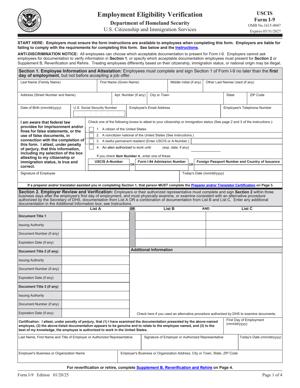
Form I-9 is a federal form from U.S. Citizenship and Immigration Services (USCIS). Its full name is Employment Eligibility Verification. It proves two things about a new employee:
-
Identity. The person is who they say they are.
-
Work authorization. The person is legally allowed to work in the United States.
Federal law has required this form since November 6, 1986. It applies to citizens and noncitizens alike (USCIS).
Here is something that surprises many people: the form is never mailed to the government. The employer keeps it on file and must show it only if an authorized government officer asks to inspect it. You can review the current official version on the USCIS Form I-9 page at RunSensible Forms.
Who Must Complete Form I-9?
Both the employee and the employer fill out parts of the same form. It is a shared task with separate deadlines.
-
Employees complete Section 1 no later than their first day of work for pay. They can fill it out earlier, but only after accepting the job offer (USCIS instructions). If an offer falls through before the first day, see our guide on what to do when a job offer is rescinded.
-
Employers review the employee’s original documents and complete Section 2 within three business days after the first day of employment. For jobs lasting fewer than three days, Section 2 is due by the first day.
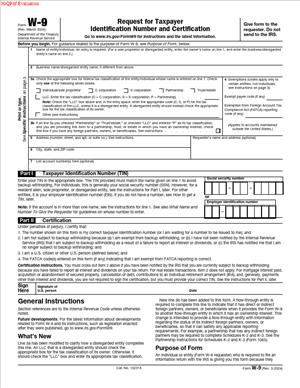
The rule covers every employee on payroll, full-time or part-time. It does not cover true independent contractors. Businesses usually collect a different form from contractors instead, called Form W-9.

Which Version of Form I-9 Is Valid in 2026?
This is the timely part. USCIS allows more than one edition of the form, but a key deadline arrives on July 31, 2026.
The current edition is dated 01/20/25 and expires 05/31/2027. An older 08/01/23 edition also exists in two printings. One printing shows a 05/31/2027 expiration date and remains acceptable. The other printing shows a 07/31/2026 expiration date. After July 31, 2026, that printing may no longer be used for new hires (USCIS).
Employers using electronic I-9 systems must update them to the version showing the 05/31/2027 expiration date by July 31, 2026 (E-Verify).
Check two spots on your paper form:
-
Edition date. Bottom of the page, in small print.
-
Expiration date. Top right corner of the page.
Good news for existing files: you do not need to redo old forms. A properly completed Form I-9 stays valid for as long as it must be kept, even after that edition is replaced.
How to Fill Out Form I-9 Step by Step
The form has two main sections and two supplements. Most hires only use Section 1 and Section 2.
Step 1: The Employee Fills Out Section 1
Section 1 is called Employee Information and Attestation. The employee enters:
-
Full legal name and other last names used (such as a maiden name)
-
Address and date of birth
-
Social Security number (optional unless the employer uses E-Verify)
-
Email and phone number (optional)
-
Citizenship or immigration status, chosen from four categories
The employee then signs and dates the section. The attestation is made under penalty of perjury, which means lying on the form is a federal offense. Employees who used a preparer or translator must have that person complete Supplement A.
One important protection: the employer may not ask the employee to complete Section 1 before a job offer has been accepted.
Step 2: The Employee Presents Original Documents
Within three business days of starting work, the employee must show original, unexpired documents that prove identity and work authorization (USCIS instructions). Photocopies are not acceptable. The employee chooses which documents to present from the official lists (USCIS acceptable documents).
The choice is simple: one List A document, or one List B document plus one List C document. A Social Security card marked “NOT VALID FOR EMPLOYMENT” does not count for List C. An employee who lost a document may show an acceptable replacement receipt for a temporary period.
Step 3: The Employer Completes Section 2 of Form I-9
The employer, or an authorized representative, examines the original documents in the employee’s presence. The standard is reasonable: documents must appear genuine and must relate to the person presenting them.
In Section 2, the employer records:
-
Document title, issuing authority, number, and expiration date
-
The employee’s first day of employment
-
The employer’s business name, address, and signature
The deadline is firm. Section 2 must be finished within three business days after the employee’s first day of work for pay. If a new hire starts on Monday, the employer must complete Section 2 by Thursday.
Employers may not demand specific documents. Telling a worker “bring your Green Card” instead of letting them choose from the lists can violate federal anti-discrimination rules (USCIS Q&A).

Is It Illegal to Have Two Jobs? Moonlighting vs Overemployment
When You Need Supplement A or Supplement B
The current form replaced old Section 3 with two supplements:
-
Supplement A records anyone who helped the employee prepare or translate Section 1.
-
Supplement B is used for reverification and rehires. Employers must complete it when an employee’s temporary work authorization expires. They may also use it when rehiring someone within three years of the original form, or recording a legal name change (USCIS).
Reverification is never required for U.S. citizens, noncitizen nationals, Green Card holders, or expired List B documents (USCIS M-274 Handbook).
Remote Document Checks for E-Verify Employers
Since August 2023, some employers can review documents by live video instead of in person. This option is called the alternative procedure. It is open only to employers enrolled in E-Verify and in good standing (USCIS).
The remote process works like this:
-
The employee sends front-and-back copies of their documents.
-
The employer examines the copies.
-
The employer and employee meet in a live video call, where the employee shows the same documents.
-
The employer checks the “alternative procedure” box in Section 2 and keeps clear copies of the documents.
Employers must offer the option consistently at each hiring site. Picking and choosing who may verify remotely based on citizenship or national origin is not allowed. Employers who are not enrolled in E-Verify must still examine documents in person.
How Long Must Employers Keep Form I-9?
Employers must keep every completed Form I-9 for three years after the date of hire, or one year after employment ends, whichever is later (USCIS M-274 Handbook). Forms may be stored on paper or electronically, and must be available within three business days of an official inspection request.
Two quick examples make the retention rule clear:
-
An employee works for six months. Three years after hire is later than one year after leaving, so the form is kept for three years from the hire date.
-
An employee works for ten years. One year after leaving is later, so the form is kept until one year after the last day.
Many employers store these forms separately from personnel files. That makes inspections faster and protects private information.
Common Form I-9 Mistakes and Penalties
Small errors carry real costs. As of mid-2026, civil fines for paperwork violations range from $288 to $2,861 per form, under inflation adjustments published January 2, 2025. Knowingly hiring someone without work authorization can bring fines up to $28,619 per worker for repeat violations (Morgan Lewis). These amounts adjust over time, so treat them as a floor, not a ceiling.
Enforcement also tightened. In March 2026, ICE updated its inspection fact sheet and reclassified more than ten common errors as substantive violations. Errors in that category can be fined immediately, without the ten-day window employers once had to fix technical mistakes (Morgan Lewis).
Watch for these frequent mistakes:
-
Missing signatures or dates in Section 1 or Section 2
-
Section 2 completed after the three-business-day deadline
-
Accepting photocopies instead of original documents
-
Demanding specific documents instead of offering the official lists
-
Using an outdated version of the form for a new hire
-
Missing reverification deadlines for expiring work authorization
-
Destroying forms before the retention period ends
A simple habit prevents most problems: audit your files once or twice a year, fix errors properly by initialing and dating corrections, and never backdate anything.

Conclusion
Form I-9 is short, but it carries serious legal weight. The employee completes Section 1 by day one. The employer checks original documents and completes Section 2 within three business days. The completed form stays on file for years and must survive a government inspection. With the July 31, 2026 version deadline here, now is the perfect moment for employers to confirm they are using the edition that expires 05/31/2027 — and for every new hire to understand the documents they will be asked to show. If you are setting up payroll for the first time, our guide to the forms you need when launching a business pairs well with this one.
Frequently Asked Questions
Do independent contractors need to complete Form I-9?
No. The requirement applies to employees on payroll, not true independent contractors. Businesses typically collect Form W-9 from contractors for tax reporting instead. Be careful with labels, though. A worker treated like an employee may legally be one, no matter what the contract says.
Does the employer send Form I-9 to the government?
No. The employer keeps the completed form on file. Officers from the Department of Homeland Security, the Department of Labor, or the Department of Justice may ask to inspect it (USCIS). Employers generally have three business days to produce the forms after a notice of inspection.
Can an employer tell an employee which documents to bring?
No. The employee chooses from the official lists: one List A document, or one from List B plus one from List C. Requiring a specific document can violate federal anti-discrimination rules.
What if an employee cannot show documents within three business days?
An employee may present an acceptable receipt for a lost, stolen, or damaged document for a temporary period. If no acceptable document or receipt is presented on time, the employer may not continue employing the person under federal law.
Do current employees need a new Form I-9 when a new version comes out?
No. A form that was valid when completed stays valid. New versions apply to new hires and to reverifications completed after the old version can no longer be used.
Can Form I-9 documents be checked over video call?
Yes, but only by employers enrolled in E-Verify and in good standing. The employer reviews document copies, then confirms them in a live video interaction and checks the alternative procedure box. All other employers must examine documents in person.
Resources
-
I-9, Employment Eligibility Verification (USCIS) — https://www.uscis.gov/i-9
-
Instructions for Form I-9 (USCIS) — https://www.uscis.gov/sites/default/files/document/forms/i-9instr.pdf
-
Form I-9 Acceptable Documents (USCIS) — https://www.uscis.gov/i-9-central/form-i-9-acceptable-documents
-
Remote Examination of Documents, Alternative Procedure (USCIS) — https://www.uscis.gov/i-9-central/remote-examination-of-documents
-
Completing Supplement B, Reverification and Rehires (USCIS) — https://www.uscis.gov/i-9-central/completing-form-i-9/completing-supplement-b-reverification-and-rehires-formerly-section-3
-
M-274 Handbook for Employers, 6.0 Supplement B (USCIS) — https://www.uscis.gov/i-9-central/form-i-9-resources/handbook-for-employers-m-274/60-completing-supplement-b-reverification-and-rehire-of-form-i-9
-
M-274 Handbook for Employers, 10.0 Retaining Form I-9 (USCIS) — https://www.uscis.gov/i-9-central/form-i-9-resources/handbook-for-employers-m-274/100-retaining-form-i-9
-
Questions and Answers, I-9 Central (USCIS) — https://www.uscis.gov/i-9-central/form-i-9-resources/questions-and-answers
-
USCIS Extends Form I-9 Expiration Date (E-Verify) — https://www.e-verify.gov/about-e-verify/whats-new/uscis-extends-form-i-9-expiration-date
-
Minor Changes to Form I-9 and E-Verify Updates (USCIS) — https://www.uscis.gov/i-9-central/form-i-9-related-news/minor-changes-to-form-i-9-and-e-verify-updates
-
ICE Rewrites the Rules on Form I-9 Violations (Morgan Lewis) — https://www.morganlewis.com/pubs/2026/04/ice-rewrites-the-rules-on-form-i-9-violations
Disclaimer: The content provided on this blog is for informational purposes only and does not constitute legal, financial, or professional advice.
Contents