Build a clear bad-faith eviction record, identify the right deadline, and understand the compensation you can ask for.
You moved out because your landlord said a family member needed your home. Then you found the same unit advertised for rent. That may support a bad-faith eviction claim, but the listing is only part of the story.
In Ontario, former tenants may use a T5 application at the Landlord and Tenant Board (LTB) in qualifying cases. The reason you left, the notice, and what happened afterward all matter. There are different deadlines for different claims.
This guide covers evidence, deadlines, remedies, and hearing preparation after moving out. It provides general legal information, not advice about your case. It reflects official guidance checked on October 15, 2026. Confirm current requirements before filing.
Check Whether the Bad-Faith Eviction Process Fits
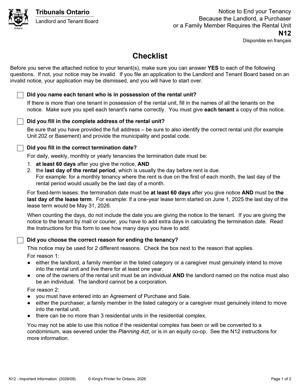
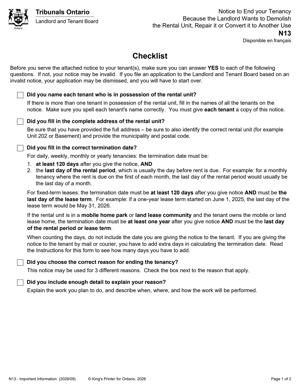
An N12 is a notice for occupation by a landlord, purchaser, or certain related people. An N13 concerns demolition, conversion, or substantial repairs or renovations. Neither is a finding that the landlord acted improperly.
A bad-faith eviction claim under section 57 generally involves three linked points: a notice given in bad faith, a move caused by that notice or related proceedings, and the stated occupation or work not happening within a reasonable time. The former tenant must establish the applicable legal test.
Start by connecting the notice to your decision to leave. Keep messages discussing the move, your new lease, and records showing when possession ended. A payment receipt alone may not explain why you left.
The T5 bad-faith eviction route is for former tenants. If you still occupy the unit, you need advice about the current notice or eviction proceeding. Do not use an after-move application as your only response to a pending hearing.
If you signed an N11 agreement or never received a standard notice, preserve all communications. Get advice about whether the T5 process fits those facts. Avoid assuming either that you automatically qualify or that a missing form automatically defeats your case.
Identify the Correct Filing Deadline
Do not treat every bad-faith eviction claim as having the same deadline. Identify the legal reason first, then calculate the filing date.
Table description: Bad-faith eviction filing deadlines for standard notice claims and qualifying renovation-return claims in Ontario.
| Type of claim | Current general filing deadline |
|---|---|
| Notice allegedly given in bad faith: T5 Reasons 1–3 | No later than one year after you moved out. |
| Qualifying failure to honour renovation return rights: T5 Reason 4 | The later of two years after moving out or six months after repairs or renovations were completed. |
The longer deadline belongs to the qualifying return-right claim. It does not automatically extend every claim involving an N13. For ongoing return-right applications filed before September 21, 2026, the guideline specifies the earlier two-year deadline.
Record the Dates Behind Your Bad-Faith Eviction Claim
Keep the notice date, termination date, move-out date, and discovery date separate. A later discovery does not generally restart the one-year period for Reasons 1–3.
For example, assume you moved out on May 31, 2026 and discovered a rental listing in October. Do not start a fresh one-year clock from the October discovery. Check the deadline using the actual move-out date.
For a return-right claim, record when the work was completed and how you learned that date. Keep any completion message. If the date is uncertain, seek advice early rather than assuming the uncertainty protects you.

An unanswered email to your landlord is not an LTB application. Likewise, collecting evidence does not file the claim. Allow time to check the form, complete payment or a fee-waiver request, and confirm submission.
Understand What an N12 Presumption Means
In a landlord-use N12 case, certain events can create a legal presumption of bad faith. A presumption means the law starts from a conclusion unless the other side proves otherwise. It is not an automatic award.
The LTB guideline identifies events such as advertising for rent, renting to someone else, advertising for sale, demolition, or conversion. The relevant period runs from the notice to one year after the former tenant moved out.
For landlord-use T5 applications filed after September 21, 2026, the guideline also describes a 60-day occupancy presumption. The starting point depends on whether you left by the termination date or afterward. The landlord may rebut the presumption. Do not apply these landlord-use presumptions automatically to a purchaser-use N12 claim.
Your bad-faith eviction evidence should show which event occurred and when. Save the full listing, not just the price. Check the address, unit, photographs, and description.
If the landlord provides an explanation, keep it. Your preparation should account for that explanation and any supporting records. A fair record is stronger than a collection that leaves out inconvenient facts.
Build Evidence That Connects the Events
Organize your bad-faith eviction records around the questions the LTB must decide. A short timeline with reliable supporting records is useful. A folder full of unexplained screenshots is harder to follow.
Keep the Original Notice and Tenancy Records
Save the lease, notices, rent records, and any earlier hearing documents. Keep the complete notice, including attached pages and service information.
The N12 notice page can help identify the document. Use the N13 notice page for a renovation, demolition, or conversion notice. Check official instructions for the applicable legal requirements.
Write down who was supposed to occupy the unit or what work was described. Compare that reason with the landlord’s earlier and later messages. Keep exact dates instead of relying on a general memory of the month.
Preserve Listings With Enough Context
For a bad-faith eviction investigation, save the webpage address, capture date, full advertisement, and identifying photographs. If possible, keep a PDF and the original screenshots. A working note can explain where you found the listing.
Check whether the advertisement actually concerns your former unit. Similar layouts in the same building can cause confusion. A photograph of a different apartment does not prove your home was offered for rent.
An old listing may remain online after it expires. Record what the page says about availability and posting dates. Explain uncertainty instead of presenting an unclear date as confirmed.
Keep Full Messages and First-Hand Accounts
Preserve complete email threads and relevant message exports. Keep the original files where possible. Avoid cropping away context that changes the meaning.
If a witness saw a move-in, renovation, or showing, note what they personally observed. Record when and where it happened. Separate that observation from what someone else told them.
For example, “I saw movers deliver furniture on June 10” is different from “I heard the landlord rented it.” The first identifies an event. The second needs an explanation of the source.
Explain Why You Moved
Your bad-faith eviction timeline should connect the notice to your departure. Useful records may include your search for replacement housing, communications about returning keys, and the new tenancy’s start date.
Suppose you gave notice at your old home before receiving the landlord’s notice. That sequence may matter. Preserve it and ask how it affects the claim. Do not change the chronology to make your case sound simpler.
Keep original records separate from your working summaries. Label a summary as a summary. If a date is estimated, say so.
Treat Renovation Return Rights as a Separate Issue
An N13 claim can involve whether the stated work was genuinely intended. A different claim concerns a landlord’s failure to honour a qualifying tenant’s right to return after repairs or renovations. Both may use T5, but the legal questions differ.
Before leaving, a tenant seeking to preserve that return right must notify the landlord in writing. Keep the notice and proof of delivery. This is commonly called the right of first refusal: the opportunity to move back after the work.
For written return notices given on or after September 21, 2026, current guidance requires written completion estimates, updates, and notice when the unit is ready. A separate 60-day opportunity to return applies when the unit becomes ready on or after that date.
Build a record of the return request, your contact details, updates, and any refusal. Keep messages showing that you asked about completion. If your address changed, retain the message giving the new address.
For a bad-faith eviction dispute involving renovations, do not assume every delay proves dishonesty. Work may be delayed. Focus on the applicable legal reason, required communications, and the actual sequence.
Your right-to-return claim may remain relevant even where genuine work occurred. That is why the distinction matters. Use the Ontario rental-rules update for context, then check the current official guidance.

Landlord Won’t Make Repairs in Ontario? Evidence, Tenant Remedies, and LTB Steps
Understand the Compensation You Can Request
A successful bad-faith eviction application can lead to different remedies. Explain each request and show its calculation. The maximum available amount is not a promise of what you will receive.
The T5 form lists rent abatement, rent differences, moving and storage expenses, general compensation, a fine, and other appropriate orders. An abatement reduces rent payable for a stated period. A fine is paid to the LTB, not to you.
Separate General Compensation From Actual Expenses
General compensation can be up to the equivalent of 12 months of the last rent charged. You do not need actual expenses to request it. Explain how the termination affected you and why you seek the amount stated.
For actual expenses, keep receipts and explain the link to moving. Identify who paid, when, and whether any amount was reimbursed. Do not count the same cost twice.
Keep each part of your bad-faith eviction compensation request separate. A moving-company bill is different from general compensation for the impact of losing your home.
Calculate Rent Differences Carefully
The rent-difference remedy concerns increased rent incurred or expected during the year after moving out. It does not cover an unlimited number of future years. Support the figures with the old rent record, new lease, and relevant payment records.
Table description: Illustrative bad-faith eviction expense calculations, showing requested amounts rather than an expected LTB award.
| Example item | Calculation | Illustrative amount |
|---|---|---|
| Higher rent for a full eligible year | ($2,300 − $1,800) × 12 | $6,000 |
| Moving invoice paid by the applicant | Documented invoice | $900 |
| Storage costs linked to the move | Documented receipts | $300 |
These examples assume the stated costs and period can be supported. Different dates, housing arrangements, or reimbursements may change the calculation. The LTB decides what is justified.
The current T5 instructions identify a $50,000 claim limit. If your proposed claim exceeds the limit, obtain advice about the proper forum before filing. Do not assume you can divide one dispute into later claims to collect more.
Prepare a Complete Application and Party List
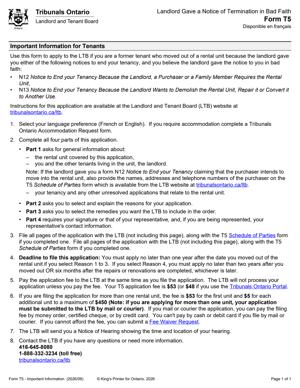
Use T5 — Landlord Gave a Notice of Termination in Bad Faith to identify the application. Compare your package with the current official form. The version checked for this article is marked 2026/09.
In a bad-faith eviction application, identify the landlord and explain the role of each respondent. A respondent is a person or company against whom you seek an order.
Where the N12 was for a purchaser’s use, and you allege the purchaser acted improperly, check the official instructions about naming both the landlord and the purchaser. The T5 Schedule of Parties provides extra space for the relevant people.
Avoid listing a property manager, corporation, and individual as though they were interchangeable. Keep records showing who owned the property, who gave the notice, and who communicated with you. Seek help where identity or legal responsibility is unclear.
Write the story in date order. Match every requested remedy to the facts supporting it. Check names, addresses, amounts, signatures, and attachments before submitting.
File and Keep Track of the Case
The LTB lists T5 among applications that can be completed and filed through the Tribunals Ontario Portal. Check current filing instructions and available alternatives if you need help using the portal. Keep the submitted application, payment record, and file number.
If the filing fee is a barrier, check the LTB’s criteria and Fee Waiver Request process. A bad-faith eviction claim still needs a complete application. A waiver request does not decide the claim’s merits.
Keep your contact details current and monitor messages. Read each notice for the hearing date, format, and further directions. If you need an accommodation to participate, request it early and explain the access need.
Preparing an application and exchanging hearing evidence are separate tasks. Read the instructions about who must receive each document. Do not assume that filing a document with the LTB completes every delivery obligation.
Disclose Evidence Before the Hearing
The usual evidence deadline is at least seven days before the hearing or case management hearing. Responding evidence is generally due at least five days beforehand. An LTB order or direction may change those requirements.
Uploading evidence to the portal does not, by itself, serve another party. Under Rule 19.1.1, that party must have consented in writing to portal service, and the consent must be uploaded. Check the permitted delivery method for each recipient.
Make your bad-faith eviction evidence readable and number the pages. Include an item list identifying the material and page references. Send the same complete package to the required recipients.
The evidence direction explains that filing an item does not guarantee its acceptance at the hearing. Relevance, duplication, privilege, and disclosure compliance can matter. Keep the original files available.
Prepare a short guide for yourself linking each issue to its supporting pages. For a rental listing, explain how you identified the unit. For an expense, identify the receipt and calculation. For a witness, explain what that person observed.
Prepare for the Hearing and Any Agreement
At a bad-faith eviction hearing, the decision-maker needs a clear explanation of the notice, move, later events, and requested remedies. Practise giving that account in date order. Separate what you know from what you infer.
For each bad-faith eviction allegation, prepare to explain the strongest supporting record and the main uncertainty. If a listing date is unclear, say so. If the landlord gives a different account, address the evidence rather than attacking their character.
Test your device and keep the hearing information available. Arrange your records so you can find page numbers quickly. Confirm witness arrangements well before the hearing date.

If settlement is discussed, consider the full written terms. Check payment dates, what claims are resolved, and what happens to the LTB application. Preserve the final agreement and proof of payments. Get advice before accepting a release you do not understand.
After an order, read the amount, deadlines, and any required steps. A compensation order does not guarantee immediate payment. Obtain current guidance about enforcement or challenging an order where needed.
Conclusion
A bad-faith eviction claim needs more than suspicion. Connect the notice to your move, preserve later events, identify the correct deadline, and support each remedy with clear facts.
The strongest preparation keeps legal reasons, evidence, and calculations distinct. RunSensible Forms can help you find and prepare relevant documents. It is not a law firm, tribunal, government agency, or official filing service.
Frequently Asked Questions
Does a higher-rent advertisement prove a bad-faith eviction?
It may be important evidence and may engage a presumption in a qualifying landlord-use N12 case. It is not an automatic win. Confirm the unit and dates, preserve the full listing, and account for the landlord’s explanation.
Does the one-year deadline start when I find the advertisement?
For T5 Reasons 1–3, the current instructions use the move-out date. A later discovery does not generally restart that period. Check the different deadline if your claim concerns a qualifying failure to honour renovation return rights.
Can I request compensation if my new rent is lower?
A higher-rent claim may not fit, but other remedies may remain relevant. General compensation does not require actual expenses. Explain the legal basis and impact rather than assuming every applicant can recover the maximum amount.
Can I apply after leaving under an LTB eviction order?
The T5 instructions permit qualifying former tenants to apply even when they left because of an LTB order based on an N12 or N13. A prior eviction proceeding does not itself answer every question about later conduct or the applicable claim.
Is the landlord’s fine paid to me?
No. An administrative fine is paid to the LTB. Compensation payable to you must be requested and supported under the relevant remedy. Keep the two categories separate when explaining the amount you seek.
Should I wait until renovations finish before seeking help?
Seek advice when you suspect a problem. The right-to-return route has specific conditions and dates. Other bad-faith notice claims can have a shorter deadline. Waiting for one event may put a different claim at risk.
Resources
- LTB — Current T5 instructions: https://tribunalsontario.ca/documents/ltb/Tenant%20Applications%20%26%20Instructions/T5_Instructions.html
- LTB — Official Form T5, version 2026/09: https://tribunalsontario.ca/documents/ltb/Tenant%20Applications%20%26%20Instructions/T5.pdf
- LTB — T5 Schedule of Parties: https://tribunalsontario.ca/documents/ltb/Tenant%20Applications%20%26%20Instructions/T5_Schedule%20of%20Parties.pdf
- Ontario — Residential Tenancies Act, 2006, especially sections 53, 57 and 57.1: https://www.ontario.ca/laws/statute/06r17
- LTB — Interpretation Guideline 12: occupation, projects, bad faith and return rights: https://tribunalsontario.ca/documents/ltb/Interpretation%20Guidelines/12%20-%20Eviction%20for%20Personal%20Use.html
- LTB — Operational update effective September 21, 2026: https://tribunalsontario.ca/2026/09/21/ltb-operational-update-legislative-changes-at-the-landlord-and-tenant-board-effective-september-21-2026/
- LTB — Rules of Procedure, especially Rules 2, 3 and 19: https://tribunalsontario.ca/documents/ltb/Rules/LTB-Rules_of_Procedure.html
- LTB — Practice Direction on Evidence: https://tribunalsontario.ca/documents/ltb/Practice%20Directions/Practice%20Direction%20on%20Evidence.html
- LTB — Application and hearing process: https://tribunalsontario.ca/ltb/application-and-hearing-process/
- LTB — Forms, filing and fees: https://tribunalsontario.ca/ltb/forms-filing-and-fees/
Disclaimer: The content provided on this blog is for informational purposes only and does not constitute legal, financial, or professional advice.
Contents