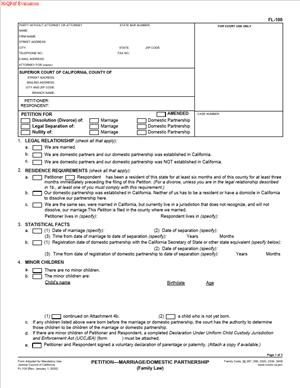
When people search Palimony in Maryland, they usually want to know one thing: if an unmarried couple breaks up, can one partner ask for money or property the way a spouse can in divorce? In Maryland, the answer is usually not through divorce law. Maryland does not give unmarried couples automatic spousal rights just because they live together. But Maryland law does allow some unmarried partners to bring contract or property claims. That can matter when one partner paid toward a house, shared major bills, or relied on a promise about ownership.
That means the real question is usually not “Can I get palimony?” The real question is, “Do I have a legal claim based on an agreement, property title, unjust enrichment, or a trust remedy?” Maryland courts and public legal guidance both point in that direction.
What “palimony” means
“Palimony” is a common word, not a Maryland family-law category. People use it to describe the money one unmarried partner wants after a breakup. It sounds like alimony, but it is not the same.
Alimony is part of divorce law. It is tied to marriage.
Palimony is a general label people use when an unmarried partner asks for support or property after a breakup.
That difference matters. In Maryland, an unmarried partner usually cannot seek divorce-style alimony simply because the couple lived together. Instead, the person usually needs another legal theory, such as:
- a written agreement,
- An oral agreement in some situations,
- unjust enrichment,
- constructive trust,
- resulting trust,
- or a title-based property claim.
Maryland does not create marriage from cohabitation
A lot of confusion starts here. Maryland does not create common law marriage just because two people live together for a long time. The Maryland People’s Law Library says that common law marriage cannot be created in Maryland, though Maryland may recognize a valid common law marriage created in another state.
This means living together does not automatically create:
- alimony rights,
- marital property rights,
- divorce rights,
- or spouse-level inheritance rights.
So before anyone talks about “palimony,” the first legal question is simple: Were the parties legally married? If the answer is no, the case usually becomes a contract or property case instead of a divorce case.
What rights unmarried partners may still have
No marriage does not always mean no claim. Maryland public legal guidance states that unmarried cohabitants can enter into enforceable written contracts. It also says they may enter into oral contracts for personal property, though real property issues are much safer in writing.
That creates three common paths.

Contract claims
The strongest case is usually a written cohabitation agreement or another written promise. A written agreement can cover:
- Who owns what,
- Who pays which bills?
- Whether one person will repay the other,
- What happens to joint property,
- And what happens if the relationship ends?
If there is no written contract, an oral agreement may still matter in limited situations. But oral claims are harder to prove, and they are weaker when real estate is involved.
Property claims
If both people are on the deed, the title often controls the basic starting point. If only one person is on the deed, the non-titled partner may still have a claim if they can prove they paid toward the purchase, mortgage, taxes, or improvements and did so under an agreement or clear understanding.
Equity claims
Maryland courts can also use equitable remedies when it would be unfair for one person to keep the benefit of the other person’s money or work. That is where unjust enrichment, constructive trust, and resulting trust can appear.
The Maryland case many people mean when they say “Palimony.”
A Maryland appellate court looked at a case involving an unmarried couple, a house, and a dispute over ownership after the relationship ended. In the facts described by the court, the couple lived together for many years, bought a house, used a joint account for the down payment, and agreed that both would be owners, even though only one person received the title due to financing issues. The non-titled partner then paid half the mortgage and other costs and helped improve the home.
After the relationship broke down, the titled partner refused to divide the home’s equity. The trial court imposed a constructive trust, and the appellate court upheld that result. The court treated the case as one about unjust enrichment and property fairness, not ordinary “palimony.” The claim was based on financial contributions and reliance, not on a promise of marriage or romantic support.
That point is important. Maryland courts may help an unmarried partner in some cases, but they usually do it through equity or contract, not through a stand-alone “palimony” rule.
What is a constructive trust?
A constructive trust is a court tool used to prevent unfairness. It does not mean there was a formal trust document. It means the court finds that one person holds property in an unfair way, so equity requires a different result.
In the Maryland cohabitation case described above, the court found that keeping the whole house in one person’s name would be unfair because the other partner had contributed money and relied on a promise of shared ownership. The remedy was to treat the titled owner as holding the property in trust for both of them.
For general readers, the idea is simple: if one person helped buy or improve property because both people agreed it would be shared, a court may stop the titled person from keeping all of it.
What Maryland usually will not allow
Maryland usually will not give an unmarried partner the same rights as a spouse has in a divorce. That means a person usually cannot get:
- divorce-based alimony,
- marital property division,
- or automatic spouse benefits,
just because the couple lived together for a long time.
Maryland public legal guidance is clear that unmarried cohabitants may have some rights, but those rights come from contracts, limited domestic partnership rules, estate planning, or property claims—not from a general marriage-like support system.
So if someone asks, “Can I get alimony from my boyfriend or girlfriend in Maryland?” the usual answer is no. But if they ask, “Can I recover money I put into the house or property we agreed to share?” the answer may be yes, depending on the proof.
What facts make a stronger case
A Maryland claim is much stronger when there is proof. Helpful proof may include:
- a written agreement,
- emails or texts about ownership,
- bank transfers,
- proof of mortgage or rent payments,
- receipts for repairs or improvements,
- proof that both people saved for a purchase,
- or statements showing that one partner promised shared ownership.
Divorce Mediation and Out-of-Court Settlements Legal Process Guide
A case is usually weaker when it is based only on:
- the length of the relationship,
- emotional support,
- shared living,
- or the idea that “we were basically married.”
Those facts may matter personally, but they do not usually create legal support rights in Maryland.
The best way to avoid this problem
For most people, the best tool is a cohabitation agreement. Maryland public legal guidance recognizes relationship or cohabitation contracts as useful written agreements between unmarried partners.
A good cohabitation agreement can say:
- Who owns the current property,
- Who will own future property,
- How bills are shared,
- Whether one person will be repaid,
- What happens if the couple separates,
- And how disputes will be handled.
For law firms and legal form platforms, this is the practical takeaway. The best time to solve a palimony-style dispute is before it happens, while the couple still agrees on the basic facts.
One quick chart
Alt text: Palimony in Maryland chart showing what claims may be available for unmarried partners and what claims usually are not available.
| Type of claim | Usually possible in Maryland? | What matters most |
| Written cohabitation agreement | Yes | Clear written terms and signatures |
| Oral agreement about personal property | Sometimes | Strong proof of the agreement |
| Claim to the house titled in one name | Sometimes | Proof of contributions and shared ownership promise |
| Constructive trust / unjust enrichment | Sometimes | Clear unfairness and reliance |
| Divorce-style alimony | Usually no | Marriage is usually required |
| Marital property division | Usually no | Marriage is usually required |
What lawyers should ask first
For lawyers and firm staff, intake matters a lot in these cases. The primary questions should be:
- Were the parties ever legally married anywhere?
- Is there a written agreement?
- Who is on the title?
- Who paid what?
- Is there proof of a promise to share the property?

That short checklist can quickly show whether the case belongs in family law, contract law, property law, or a mix of all three.
Frequently Asked Questions
What is palimony?
Palimony is a common term people use when one unmarried partner asks for money or property after a breakup. It is not the same as alimony, which belongs to divorce law.
Does Maryland recognize palimony?
Not as a simple divorce-style support right. Maryland usually handles these disputes through contract, property, or equity claims instead.
Can living together for years create marriage rights in Maryland?
No. Maryland does not create common law marriage just because two people live together. It may recognize a valid common law marriage from another state, but not one created in Maryland by cohabitation alone.
Can an unmarried partner get part of a house in Maryland?
Sometimes. A court may consider a contract claim, unjust enrichment, or constructive trust if the person helped pay for the house or relied on a promise of shared ownership.
What is a palimony agreement?
Usually, people mean a cohabitation agreement or another written contract between unmarried partners. It can explain who owns property, who pays bills, and what happens if the relationship ends.
What is the safest way to protect both partners?
A written cohabitation agreement is usually the safest option. It is much easier to enforce a clear written contract than to prove a spoken promise years later.
Resources:
- The Maryland People’s Law Library. (2025). Unmarried cohabitants’ right to support and property. https://www.peoples-law.org/unmarried-cohabitants-right-support-and-property
- The Maryland People’s Law Library. (2021). Common law marriage. https://www.peoples-law.org/common-law-marriage
- Porter v. Zuromski, 195 Md. App. 361 (Md. Ct. Spec. App. 2010). https://law.justia.com/cases/maryland/court-of-special-appeals/2010/369s09-1.html
- Maryland Code, Health–General § 6-101. (current). Domestic partnership. https://mgaleg.maryland.gov/mgawebsite/Laws/StatuteText?article=ghg&enactments=false§ion=6-101
Disclaimer: The content provided on this blog is for informational purposes only and does not constitute legal, financial, or professional advice.
Contents