Changing your name is a big step. Maybe you got married or divorced. Maybe you want a name that fits who you are. Whatever the reason, a legal name change in the United States follows clear rules. Once you understand them, the process feels much less scary. This guide explains every path to a legal name change. It covers court steps, costs, common mistakes, and the records you must update afterward. It also points you to the exact forms many courts use.
What Is a Legal Name Change?
A legal name change is an official change to the name on your government records. It happens through a recognized legal event. That event can be a marriage, a divorce, a court order, or naturalization. Naturalization is the process of becoming a U.S. citizen.
Using a new name socially is not enough. Banks, schools, and government agencies need legal proof. That proof is a document that shows both your old name and your new name. Examples include a certified marriage certificate, a divorce decree, a court order, or a naturalization certificate showing the new name (Social Security Administration).
Name change rules come from state law. Each state has its own forms, fees, and steps. The general process, though, looks similar across the country.
Four Ways to Change Your Name
There are four common paths to a legal name change. Three of them do not require a separate court case.
Marriage
Marriage is the most common reason people change a name. You do not need to file a separate petition. Your certified marriage certificate acts as your proof. Agencies like the Social Security Administration accept a marriage document as evidence of a legal name change (SSA).
Divorce
Many states let you restore a former name during a divorce. You must ask for it in your divorce papers. In Florida, for example, you must request the name change in your Petition for Dissolution of Marriage, or the judge cannot grant it (Florida Law Help). Your divorce decree then serves as your proof document.

Court Order
If your name change is not tied to marriage, divorce, or citizenship, you need a court order. You file a petition, which is a written request to the court. A judge reviews it and, if approved, signs an order or decree with your new legal name. The rest of this guide focuses on this path.
Naturalization
You can ask to change your name while becoming a U.S. citizen. If approved, your naturalization certificate shows your new name. The Social Security Administration accepts this certificate as proof of a legal name change (SSA).
The Legal Name Change Court Process, Step by Step
Court procedures vary by state and even by county. Still, most courts follow the same basic pattern. California’s court system describes these core steps: file your forms, publish notice if required, and receive a decision from a judge (California Courts Self-Help Guide).
Step 1: File a Petition With Your Local Court
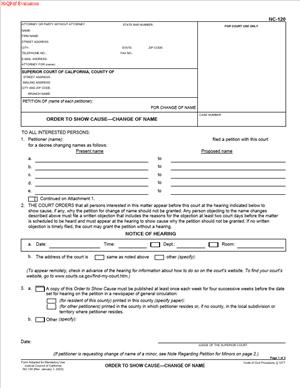
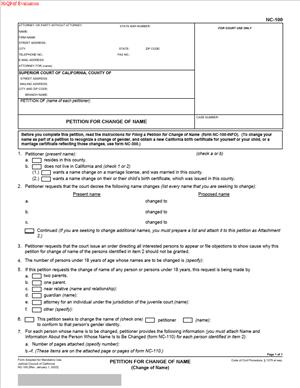
You start by filing a petition in the county where you live. In California, adults use Form NC-100, Petition for Change of Name, along with an attachment called Form NC-110 and a proposed order known as Form NC-130. New York courts use their own petition forms, and Kentucky uses Form AOC-295. Check your state court’s website for the current forms, since versions change over time.
Fill in your current name, your new name, and your reason. Be honest and complete. Courts deny petitions that hide information or that aim to dodge debts or criminal records.
Step 2: Pay the Filing Fee or Ask for a Waiver
Filing fees vary widely. California charges $435 to $450 to file (California Courts). New Jersey charges a $250 fee (NJ.gov). Other states charge less, and exact amounts can differ by county.
If you cannot afford the fee, ask the court for a fee waiver. In California, that request uses Form FW-001. Most states offer a similar option for people with low income.
Step 3: Complete Fingerprints or a Background Check, If Required
Some states screen petitioners before a hearing. Florida requires fingerprints for a state and national criminal records check before the court will hear an adult petition (Florida Law Help). Not every state does this. Read your court’s instructions carefully so you do not miss a required step.
Step 4: Publish Notice, If Required
Many states require you to publish notice of your request in a newspaper. This gives the public a chance to object. In California, the notice must run in an approved newspaper for a month before the judge decides (California Courts). Some states have removed or limited this rule. California, for example, does not require publication when the request relates to gender identity.
Step 5: Attend the Hearing and Get Your Decree
The court sets a date for a judge to review your case. Some judges decide on the papers alone. Others hold a short hearing and may ask a few questions. If the judge approves, you receive a signed order or decree. In California this is the Decree Changing Name, Form NC-130. The whole court process often takes two to three months, though timing varies by court (California Courts).
Step 6: Order Certified Copies
Buy several certified copies of your decree from the court clerk. Certified copies usually cost a small fee each. You will need them for Social Security, the DMV, your passport, banks, and more. Getting three or more copies up front saves time later.
How Much Does a Legal Name Change Cost?
The total cost of a legal name change depends on your state, your county, and your path.
Marriage and divorce name changes skip the separate court case, so they skip the petition fee. Your main costs are certified copies of your marriage certificate or decree, plus new ID fees.

Affidavit of Identity: Legal Framework, Forms, and State-Specific Procedures
A court-ordered legal name change costs more. Plan for these items:
-
Court filing fee, which can range from under $100 in some states to $435-$450 in California (California Courts)
-
Newspaper publication, where required
-
Fingerprinting or background checks, where required (Florida Law Help)
-
Certified copies of the court order
-
Replacement fees for your license and passport
Fees change over time, so confirm current amounts with your court clerk before you file. If money is tight, ask about a fee waiver. Courts grant waivers to people who receive certain public benefits or have low income.
Name Changes for Children
A child’s name change follows extra rules because both parents usually have rights. If one parent files alone, that parent generally must serve the other parent with copies of the court papers. Serving means delivering documents in a legally approved way (California Courts). The court then considers whether the change serves the child’s best interests.
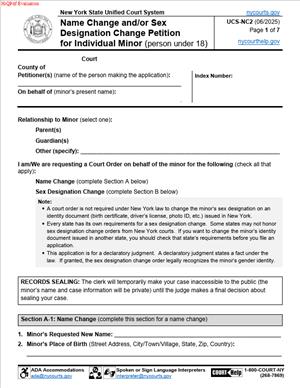
New York courts, for example, provide a specific petition for a name change for an individual minor. Some courts also offer family petitions that cover parents and children together. If the other parent objects, expect a contested hearing. Bring evidence that shows why the new name helps the child.
Updating Your Records After a Legal Name Change
Getting the court order is only half the job. Now you must update your records. Order matters here, because some agencies check your records with other agencies.
Start With Your Social Security Card
Update Social Security first. Complete Form SS-5, the Application for a Social Security Card, and show proof of your identity and your name change event (SSA). The Social Security Administration accepts only original documents or copies certified by the issuing agency. Plain photocopies and notarized copies are rejected (SSA). There is no fee for the update. Some people who changed a name through marriage can even finish the request online (SSA).
Update Your Driver’s License or State ID
Visit your state DMV after Social Security processes your change. Many DMVs verify your name against Social Security records, so doing this second avoids delays. Bring your court order or certificate and your current license. Most states charge a small replacement fee.
Update Your U.S. Passport
The passport form you need depends on your situation. If your passport was issued less than a year ago, use Form DS-5504, and there is no fee unless you want expedited service (U.S. Department of State). Otherwise, eligible travelers renew by mail with Form DS-82, and everyone else applies in person with Form DS-11. Include your certified marriage certificate, divorce decree, or court order. If you cannot show one of those documents, the State Department may require Form DS-60, an affidavit from two people who have known you by both names, plus records showing five or more years of use.
Finish With Everything Else
Work through the rest of your accounts with certified copies in hand:
-
Bank accounts, credit cards, and loans
-
Employer payroll and benefits
-
Health, auto, and home insurance
-
Voter registration
-
Utility bills, leases, and property deeds
-
Professional licenses and school records
Keep a simple checklist. Cross off each record as you finish it.
Common Mistakes That Slow a Legal Name Change
Most delays come from small, avoidable errors. Watch for these:
-
Filing in the wrong county. File where you live, not where you were born.
-
Using outdated forms. Courts revise forms, so download them fresh.
-
Skipping required publication or fingerprints. Missing steps can restart your timeline.
-
Ordering only one certified copy. Agencies often keep or process copies for weeks.
-
Updating the DMV before Social Security. Records may not match, causing rejection.
-
Sending photocopies to the Social Security Administration. Only originals or certified copies count (SSA).

How RunSensible Forms Can Help
Finding the right paperwork is often the hardest part of a legal name change. RunSensible Forms hosts official court forms so you can review, complete, and download them online. You can find California’s petition and decree forms, New York’s name change petitions, Kentucky’s petition, and fee waiver requests in one place. RunSensible Forms is not a law firm or a government agency, and this article is general information, not legal advice. For advice about your situation, talk to a licensed attorney in your state.
Conclusion
A legal name change in the United States follows one of four paths: marriage, divorce, a court order, or naturalization. The court route takes a petition, a fee, sometimes publication or fingerprints, and a judge’s approval. After that, update Social Security first, then your license, passport, and remaining accounts. Rules, fees, and forms differ by state and can change, so always confirm details with your local court. With the right forms and a clear checklist, you can complete a legal name change smoothly and start using the name that fits your life.
Frequently Asked Questions
How much does a legal name change cost?
It depends on your state and your path. Marriage and divorce name changes avoid the petition fee. A court-ordered change includes a filing fee, which reaches $435 to $450 in California, plus possible publication, fingerprinting, and certified copy costs (California Courts).
Can I change my name without going to court?
Yes, in three situations. A certified marriage certificate, a divorce decree that restores a former name, or a naturalization certificate showing a new name each work as proof of a legal name change (SSA). Any other change requires a court order.
How long does a legal name change take?
Court timelines vary. In California, a judge usually decides about two to three months after filing (California Courts). Publication, fingerprint checks, or busy courts can add time. Updating your records afterward often takes several more weeks.
Do I have to publish my name change in a newspaper?
It depends on the state. California requires publication for a month in most adult cases, but not for changes related to gender identity (California Courts). Some states have dropped publication entirely. Check your court’s current rules.
What should I update first after my name change?
Start with your Social Security card using Form SS-5 (SSA). Many DMVs check Social Security records, so update your license second. Then update your passport, bank accounts, and everything else.
Can I change my child’s name?
Yes, through a court petition. If you file without the other parent, you generally must serve that parent with the papers (California Courts). The judge decides based on the child’s best interests.
Resources
-
Change Your Name in California – California Courts Self-Help Guide: https://selfhelp.courts.ca.gov/name-change
-
Name Change – Florida Law Help: https://www.floridalawhelp.org/families-children/name-change
-
How Do I Change My Legal Name? – NJ.gov: https://www.nj.gov/transgender/name-changes/step-by-step-guide.shtml
-
Learn What Documents You Need – Social Security Administration: https://www.ssa.gov/ssnumber/ss5doc.htm
-
U.S. Citizen Adult Name Change on Social Security Card – SSA: https://www.ssa.gov/pubs/EN-05-10513.pdf
-
How Do I Change or Correct My Name on My Social Security Card? – SSA: https://www.ssa.gov/faqs/en/questions/KA-01981.html
-
Change or Correct a Passport – U.S. Department of State: https://travel.state.gov/content/travel/en/passports/have-passport/change-correct.html
Disclaimer: The content provided on this blog is for informational purposes only and does not constitute legal, financial, or professional advice.
Contents
- What Is a Legal Name Change?
- Four Ways to Change Your Name
- Marriage
- Divorce
- Court Order
- Naturalization
- The Legal Name Change Court Process, Step by Step
- Step 1: File a Petition With Your Local Court
- Step 2: Pay the Filing Fee or Ask for a Waiver
- Step 3: Complete Fingerprints or a Background Check, If Required
- Step 4: Publish Notice, If Required
- Step 5: Attend the Hearing and Get Your Decree
- Step 6: Order Certified Copies
- How Much Does a Legal Name Change Cost?
- Name Changes for Children
- Updating Your Records After a Legal Name Change
- Start With Your Social Security Card
- Update Your Driver’s License or State ID
- Update Your U.S. Passport
- Finish With Everything Else
- Common Mistakes That Slow a Legal Name Change
- How RunSensible Forms Can Help
- Conclusion
- Frequently Asked Questions
- Resources