Conservatorships in California are court cases that give one adult legal authority to help another adult with care or money decisions. This guide explains how conservatorships in California work, who may need one, and how to file for conservatorship in California.
What Is a Conservatorship in California?
A conservatorship is when a judge appoints a person to act on behalf of or make decisions for someone who needs help. The court-appointed helper is the conservator, and the person who needs help is the conservatee.
Courts use conservatorships when less restrictive options will not work. California law requires that the process protect the person’s rights, use the least restrictive support possible, and help the person remain as independent as possible.
A conservatorship is not automatic just because a person is old, disabled, or forgetful. The court must find that the legal standard is met before it appoints a conservator. In many cases, the court also requires clear and convincing evidence.
Types of Conservatorships in California
California has more than one type of conservatorship. The right type depends on the person’s needs, age, and condition.
For limited conservatorships, the judge may grant up to seven powers: residence, records, marriage, contracts, medical consent, social and sexual contacts, and education. The court must decide power by power.
Who Qualifies for a Conservatorship?
Who qualifies for conservatorship in California depends on the type of case. For a conservatorship of the person, the person must be unable to provide properly for personal needs such as health, food, clothing, or shelter. For a conservatorship of the estate, the person must be substantially unable to manage finances or resist fraud or undue influence.

A limited conservatorship is for an adult with a developmental disability. The court must use the least restrictive setup that still protects the person.
California law also says that isolated bad choices, negligence, or improvidence alone are not enough to prove inability to manage finances. The court looks at the full picture, not one mistake.
Older adults may qualify if age-related decline makes them unable to meet personal or financial needs. Mental illness may also be relevant, but the court still needs evidence that the legal standard is met.
Alternatives to Conservatorship
Courts must consider less restrictive options first. California courts say a judge can only appoint a conservator if other options will not work.
Common alternatives include:
-
A power of attorney, which lets a trusted person handle finances or legal tasks.
-
An advance health care directive, which names someone to make health care choices.
-
Supported decision-making, which helps a person make their own choices with help.
-
A trust, which can manage property without a conservatorship in some cases.
-
A representative payee, which can manage certain public benefits.
These options can work well when the person still understands choices and can give valid instructions. If they will not solve the problem, the court may consider conservatorship instead.
Step-by-Step Conservatorship Process
-
Determine whether a conservatorship is necessary. Ask whether the person can meet personal and financial needs with supports. California law says the case should be the least restrictive option.
-
Choose the correct type. Decide whether the case is for the person, the estate, both, or a limited conservatorship.
-
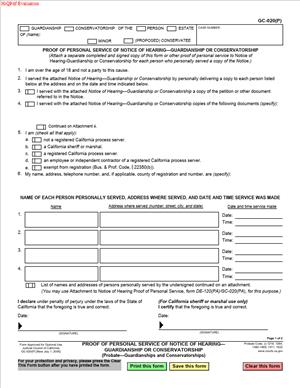
Complete Judicial Council forms. California courts use standard forms for the petition, notice, capacity declaration, citation, and related papers.
-
File with the probate court. The petition starts the case in probate court. Probate Code section 1820 covers filing the petition.
-
Pay filing fees. Courts charge filing fees unless a fee waiver applies.
-
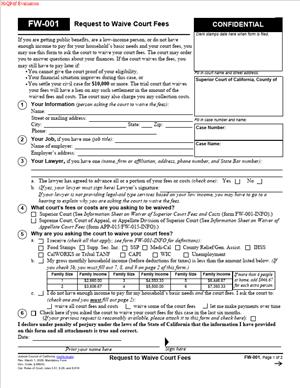
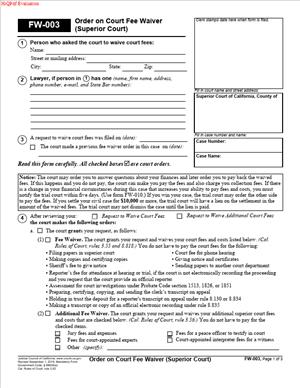
Request a fee waiver if eligible. Form FW-001-GC asks the court to waive fees in guardianship and conservatorship cases. It is effective March 1, 2026.
-
Notify required people. California law requires notice and service on the proposed conservatee and others entitled to notice. Probate Code sections 1822 through 1825 govern notice, citation, and service.
-
Court investigation. A court investigator must interview the proposed conservatee and report to the court. Probate Code section 1826 covers the investigator’s duties.
-
Medical or professional evaluations. The court may require a capacity declaration or other evidence about the person’s ability to care for themselves or manage money. Court packet materials commonly include GC-355 and related attachments.
-
Court hearing. The court hears evidence, including objections, and decides whether the case meets the legal standard. Probate Code section 1827 governs the hearing.
-
Appointment of conservator. If the judge grants the petition, the court signs an order and issues letters of conservatorship.
-
Ongoing reporting obligations. Conservators often must file inventories, plans, and accountings. Some courts also require periodic review.
California Conservatorship Forms
Different counties may require extra local forms or packets. Always check the local court’s probate packet before filing.

Temporary Child Custody Forms & Guardianship Agreement Templates
Duties of a Conservator
A conservator must act in the conservatee’s best interest and follow the court’s limits. For person matters, that often includes care, housing, and medical decisions within the court order.
For estate matters, the conservator must manage money carefully, keep records, pay valid expenses, and protect assets. In many cases, the court requires a bond, which works like insurance for the estate.
The conservator must also file reports and accountings when required. In some counties, the first accounting is due about one year after appointment, then every two years after that, but local practice can vary.
The conservator may need court approval before taking certain actions, including selling property or making major financial moves. Court authority controls the case.
Rights of the Conservatee
A conservatee keeps all rights that the court does not take away. In limited conservatorships, California law says the conservatee is not presumed incompetent and keeps all civil and legal rights except those specifically limited by court order.
The conservatee has the right to notice, the right to attend the hearing, and the right to object. Probate Code sections 1822 through 1829 cover notice, presence, and who may appear in court.
The court must also give information to the proposed conservatee about the case and their rights. Probate Code section 1835.5 addresses rights information.
A proposed conservatee may have a lawyer, and the court process must respect due process. If the person disagrees with the case, they can raise objections at the hearing.
How Much It Costs
Court filing fees are set by the court system and can change. California Courts’ fee-waiver pages confirm that fee waivers are available in guardianship and conservatorship cases.
Other costs may include:
-
Investigation fees, if charged by the local court.
-
Attorney fees, if a lawyer is hired.
-
Bond premiums, if the court orders a bond.
-
Accounting or appraisal costs, especially for estate cases.
Because fees can change by county and over time, the safest publication approach is to say: check the current superior court fee schedule before filing. California Courts’ fee-waiver materials confirm that a waiver request may be filed when fees create hardship.
How Long It Takes
A conservatorship usually takes weeks or months, not days. The timeline depends on notice, court calendars, investigation, objections, and whether the court needs more evidence.
The process can take longer if:
-
Someone objects.
-
Medical evidence is incomplete.
-
A fee waiver must be decided first.
-
The court asks for more notice or service.
-
The case involves complex assets or limited conservatorship powers.
Emergency or temporary orders may move faster, but they do not replace the full case. They are meant for short-term protection.
Changing or Ending a Conservatorship
A conservatorship can sometimes be changed if the person’s needs change. The court may increase, reduce, or remove powers if the facts support it.
A conservator may resign, and the court may appoint a replacement. The court still controls the transfer of authority.
A conservatorship can end if the court finds it is no longer needed. California law says periodic review should consider whether the conservatee has regained capacity or can do so with supports.
Common Mistakes
People often file the wrong type of case. A limited conservatorship is not the same as a general conservatorship, and the wrong choice can delay the hearing.
Another common mistake is skipping notice or service. California Probate Code requires notice and service rules to be followed.
Families also often forget that less restrictive options come first. The court may deny the petition if the record does not explain why other tools will not work.
Missing medical evidence, incomplete forms, or missing local county packets can also slow the case.

Suggested Related Forms
Useful additional forms may include:
-
GC-348, Duties of Conservator and Acknowledgment of Receipt of Handbook.
-
GC-079, Pre-Move Notice of Proposed Change of Personal Residence.
-
GC-335A, Dementia Attachment to Capacity Declaration—Conservatorship.
-
MC-025, Attachment to Judicial Council Form.
Some counties also use local packets, checklists, or supplemental filings. Local court instructions should be reviewed before filing.
Conclusion
Conservatorships in California are court-supervised cases for adults who need help with personal care, finances, or both. The court will only appoint a conservator when less restrictive options will not work, and the legal standard is met.
The safest path is to choose the right type, use the correct Judicial Council conservatorship forms, give proper notice, and follow all court reporting duties. For many families, the hardest part is not the hearing itself, but making sure every step is complete before filing.
FAQ
What is a conservatorship?
A conservatorship is a court case where a judge appoints someone to make decisions for an adult who needs help. The court-appointed person is the conservator, and the person needing help is the conservatee.
Who qualifies for a conservatorship in California?
It depends on the type of case. The court must find that the person cannot meet personal needs, cannot manage finances, or has a developmental disability that meets the law’s standards.
How do I file for a conservatorship?
You file a petition in probate court, give required notice, complete the needed forms, and attend a hearing. Probate Code sections 1820 through 1827 cover the core filing and hearing steps.
How much does a conservatorship cost?
Costs can include filing fees, bond premiums, attorney fees, investigator fees, and accounting costs. California Courts allow fee-waiver requests for eligible conservatorship cases.
How long does it take?
Many cases take weeks or months. Delays often come from notice problems, objections, missing evidence, or crowded court calendars.
Can someone object to a conservatorship?
Yes. The proposed conservatee and other interested people may appear and oppose the petition at the hearing. California law covers who may appear and how the hearing works.
What powers does a conservator have?
That depends on the order. A conservator may have powers over personal care, finances, or both. In a limited conservatorship, the court grants only the powers it finds necessary.
Can a conservatorship be ended?
Yes. If the person no longer needs it, the court can modify or end it. California law also requires ongoing review of need and capacity.
Is a conservatorship the same as a power of attorney?
No. A power of attorney is a private document. A conservatorship is a court order. They serve different purposes and follow different rules.
Do I need a lawyer?
California Courts says people seeking advice about estate or general conservatorships should talk to a lawyer. Limited conservatorship instructions are available through the courts, but legal advice may still help.
Resources
- California Courts Self-Help Center — Conservatorships https://selfhelp.courts.ca.gov/conservatorships
- California Probate Code § 1800 https://law.justia.com/codes/california/code-prob/division-4/part-3/chapter-1/article-1/section-1800/
- California Probate Code § 1801 https://leginfo.legislature.ca.gov/faces/codes_displaySection.xhtml?sectionNum=1801.&lawCode=PROB
- California Probate Code article on establishment of conservatorship https://law.justia.com/codes/california/code-prob/division-4/part-3/chapter-1/article-3/
- California Courts — Probate Law: Conservatorship https://courts.ca.gov/probate-law-conservatorship
- California Courts — Fee waivers in guardianships and conservatorships https://selfhelp.courts.ca.gov/fee-waiver/guardianship-conservatorship
- California Courts — Request to Waive Court Fees (Ward or Conservatee) https://selfhelp.courts.ca.gov/jcc-form/FW-001-GC
- San Joaquin Superior Court — Conservatorship Form Packets https://www.sjcourts.org/forms-and-filing/form-packets/conservatorship
- San Francisco Superior Court — Conservatorships of Adults https://sf.courts.ca.gov/divisions/probate-court/conservatorships-adults
- California Courts — Probate: Court Fee Waivers in Decedents’ Estates, Guardianships, and Conservatorships https://courts.ca.gov/publication/probate-court-fee-waivers-decedents-estates-guardianships-and-conservatorships-and
Disclaimer: The content provided on this blog is for informational purposes only and does not constitute legal, financial, or professional advice.
Contents