CD-100 – Application for Writ of Possession (Claim and Delivery)
Fill out nowJurisdiction: Country: United States | Province or State: California
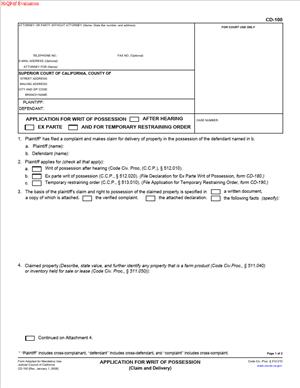
The CD-100 – Application for Writ of Possession (Claim and Delivery) is a court form used in California when you are asking the court for possession of specific personal property before a case is fully resolved. It is part of a legal process often called “claim and delivery.”
You use this form when you believe someone is wrongfully holding property that belongs to you, and you want the court to order it returned. The property must be specific and identifiable. This form is not for money claims or general disputes.
If you are representing yourself, this document can feel technical. It connects directly to a lawsuit you have already filed. It is not a stand‑alone request.
Understanding how this form works helps you avoid delays. Courts expect clear information about the property, your right to it, and why you are requesting immediate possession.
This guide explains what the CD-100 – Application for Writ of Possession (Claim and Delivery) does, when it is used, and how to complete it in a practical, step‑by‑step way.
What is CD-100 – Application for Writ of Possession (Claim and Delivery)?
Clear definition
The CD-100 – Application for Writ of Possession (Claim and Delivery) is a formal request filed with the Superior Court of California. It asks the court to issue a writ directing law enforcement to seize specific personal property and deliver it to the plaintiff.
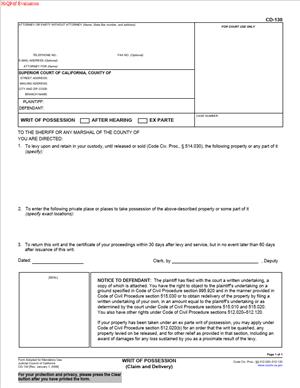
A “writ of possession” is a court order. In this context, it applies to personal property, not real estate. The form supports a request for temporary possession while the underlying lawsuit continues.
This document is typically filed after you have already started a civil case claiming a right to certain property. It provides detailed facts to justify why the court should act before final judgment.
Who typically uses this form?
This form is commonly used by plaintiffs in civil cases involving personal property. That may include individuals, small business owners, or companies.
You might see it used in disputes over vehicles, equipment, inventory, or other movable items. It is often part of cases involving secured loans, repossession rights, or ownership disagreements.
Self-represented litigants sometimes use this form when they believe someone is wrongfully keeping their property and they want a faster court order for its return.
Why might you need this form?
You might need this form if waiting until the end of the case would cause harm. For example, the property may lose value, be damaged, or disappear.
In some situations, the property is essential to your business or daily life. Delayed access could cause financial loss.
This form allows you to ask the court for temporary relief. It does not decide the entire case. Instead, it focuses on who should have possession while the case is pending.
Typical real-life scenarios
- A common situation involves a financed vehicle. If a borrower stops making payments and the lender has a security interest, the lender may file a lawsuit and request a writ of possession for the vehicle.
- Another example is a dispute between former business partners. One partner may be holding equipment that the other claims belongs to the business. The form can be used to request court‑ordered recovery of that equipment.
- It may also arise in a personal dispute. For instance, after a relationship ends, one person may refuse to return specific items that the other claims to own. If informal efforts fail, the issue may move to court.
- In commercial settings, suppliers or lessors may use this process when leased or consigned goods are not returned as agreed. The application supports a request for law enforcement assistance in recovering those items.
When would you use CD-100 – Application for Writ of Possession (Claim and Delivery)?
Use this form after filing a complaint that includes a claim for claim and delivery. The request for a writ must be connected to that claim.
This form is usually used when you want possession of the property before the case goes to trial. It is not used after the court has already entered a final judgment awarding the property to you.
The application is usually filed by the plaintiff. The defendant is the person or business currently holding the property. The court will review whether the plaintiff has shown a probable right to immediate possession.
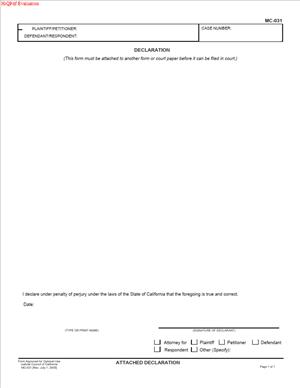
In most cases, the application should be supported by a declaration under oath. The declaration explains your ownership interest or right to possession and describes the property in enough detail for the court and enforcing officer to identify it.
This form may be especially important when the property is at risk. For example, you may believe the defendant could sell, hide, move, or damage the property before the case is resolved. In that situation, the form allows you to ask the court for earlier intervention.
The court often schedules a hearing before issuing a writ. In limited circumstances, you may ask for a temporary writ without advance notice to the defendant. That type of request requires additional procedural steps and specific facts showing why immediate action is necessary.
Legal characteristics of CD-100 – Application for Writ of Possession (Claim and Delivery)
This form is procedural. It does not create ownership rights by itself. Instead, it asks the court to recognize and enforce a claimed right to possession.
For the request to be considered, there must be an active lawsuit. The application must reference the existing case and identify the parties consistently with the complaint.
The property must be clearly described. Vague descriptions can cause delay or denial. Courts generally require enough detail so law enforcement can identify the correct items without confusion.
Accuracy is critical. Inconsistent dates, missing case numbers, or incomplete declarations can lead to rejection by the clerk or denial by the judge.
In California, a bond is often required before a writ is issued. The bond is meant to protect the defendant in case the writ was wrongfully granted. The amount and conditions are set by the court.
This form does not resolve the full dispute. It does not award damages. It does not replace a trial. It addresses temporary possession only.
Procedures may vary slightly by county within California. Local rules can affect scheduling, filing methods, and supporting documents. The overall legal framework remains statewide.
Is it legally binding?
The form itself is not binding. It is a request. It becomes legally significant only if the court grants the application and issues a writ of possession.
Once issued, the writ is a court order. Law enforcement officers may act on it to take possession of the described property and deliver it as directed.
The binding effect comes from the court’s order, not from your filing alone. Until a judge signs the order and the writ is issued, the defendant is not legally required to surrender the property under this process.
If the writ is later challenged, the court may review whether the original requirements were properly met. That is one reason why careful and complete information in the application is important.
How to fill out CD-100 – Application for Writ of Possession (Claim and Delivery)
Step 1 – Review your filed complaint
Before completing the form, confirm that your complaint includes a claim for possession of specific personal property. The information in this application must match the complaint, including party names and case number.
Step 2 – Enter the court and case information
At the top of the form, fill in the name of the Superior Court of California handling your case. Include the correct branch address and the assigned case number exactly as it appears on your filed documents.
Step 3 – Identify the parties
List the plaintiff and defendant names exactly as they appear in the complaint. Do not shorten or change them. Consistency avoids confusion and processing delays.
Step 4 – Describe the property
Provide a clear and specific description of each item you seek. Include identifying details such as make, model, serial number, vehicle identification number, or other unique markers. The description must allow law enforcement to recognize the correct property.
Step 5 – State your right to possession
Explain the basis for your claimed right to possess the property. This may refer to ownership, a written agreement, or a security interest. The explanation should be consistent with the facts alleged in your complaint.
Step 6 – Address wrongful detention
Indicate that the defendant is currently in possession of the property and is wrongfully withholding it. Provide the factual basis for that statement, such as a missed payment or refusal to return the item after demand.
Step 7 – Estimate the value of the property
State the estimated value of the property. This figure may affect the bond amount and other procedural aspects of the case. Use a reasonable and supportable estimate.
Step 8 – Complete any required declarations
If the form requires a supporting declaration, include detailed factual statements made under penalty of perjury. The declaration should support your claim of probable validity and right to possession.
Step 9 – Review bond requirements
Check whether the form or related instructions reference a bond. If a bond is required, ensure that the necessary information is provided so the court can determine the appropriate amount.
Step 10 – Sign and date the form
Sign the application where indicated. Your signature confirms that the information is true to the best of your knowledge. Include the date of signing.
Step 11 – Make copies for filing and service
Prepare the required number of copies for the court and for service on the defendant. The clerk typically keeps the original and returns stamped copies to you.
Step 12 – File the form with the court
Submit the completed CD-100 – Application for Writ of Possession (Claim and Delivery) to the clerk of the Superior Court handling your case. After filing, follow any instructions provided regarding hearing dates or further procedural steps.
Legal terms you might encounter in CD-100 – Application for Writ of Possession (Claim and Delivery)
- Writ of Possession: A court order directing a law enforcement officer to take specific personal property from the defendant and deliver it to you. In this form, you are asking the court to issue this writ before the case is fully decided. The writ only covers the property described in your application.
- Claim and Delivery: A legal procedure used to recover personal property that you believe is being wrongfully held by someone else. This document supports that request. It focuses on physical items, not money alone.
- Prejudgment: Refers to action taken before the court issues a final judgment in the case. When you apply for a writ of possession at this stage, you are asking for temporary relief. The court will review whether early recovery is justified.
- Right to Possession: Your legal basis for claiming the property. On this form, you must explain why you, not the defendant, have the superior right to possess the items. This may relate to ownership, a contract, or a security interest.
- Wrongful Detention: The defendant’s alleged improper refusal to return the property. You must describe how and when the property was taken or withheld. The court evaluates this claim before issuing any writ.
- Undertaking (Bond): A financial guarantee you may need to provide. It protects the defendant in case the writ was wrongly issued. The form may require you to state or acknowledge bond requirements.
- Probable Validity: The standard the court uses to decide whether your claim is likely to succeed. You must present enough facts to show your claim is more than speculative. The judge relies on your declarations and supporting documents.
- Description of Property: A detailed identification of the items you seek to recover. This includes make, model, serial number, quantity, and condition. Clear identification helps law enforcement execute the writ correctly.
- Estimated Value: The approximate fair market value of the property. This amount affects bond calculations and court review. You must provide a reasonable estimate based on current value, not original purchase price.
- Declaration Under Penalty of Perjury: A sworn statement that the information you provide is true. You sign the form acknowledging legal consequences for false statements. Accuracy is critical because the court relies heavily on your written declaration.
FAQs
Do I need to file this form at the same time as my complaint?
Yes. This document supports a claim for recovery of personal property and is typically tied to a filed complaint. Make sure your case number matches exactly what appears on your complaint, and confirm the court has officially accepted and stamped your complaint before submitting this form.
What information about the property must be included?
You must list enough detail so the property can be clearly identified. Include serial numbers, VINs, model numbers, quantities, and distinguishing features. If the description is vague, law enforcement may not be able to execute the writ correctly.
How do I show that I have the right to possession?
You need to state specific facts. Refer to contracts, ownership documents, payment records, or security agreements that support your claim. Attach copies if required and make sure names and dates match what you entered in the complaint.
What happens after I submit CD-100 – Application for Writ of Possession (Claim and Delivery)?
The court reviews your request to determine whether your claim has probable validity. The judge may grant the writ, deny it, or set a hearing. Check your case docket to confirm whether the application was accepted and whether additional documents are required.
Will the defendant be notified?
Yes. The defendant is generally entitled to notice and an opportunity to respond. Make sure the service information you provide is accurate, including full legal names and addresses, so the record reflects proper notice.
How is the value of the property used?
The value you enter affects potential bond requirements and the scope of the writ. Use a realistic estimate based on current market conditions. Keep documentation supporting your estimate in case the court requests it.
Do I have to post a bond before the writ is issued?
Often, yes. The court may require an undertaking before releasing the writ. Confirm the amount ordered and file proof of the bond promptly so the writ can be processed without delay.
What if I discover an error after filing this form?
Act quickly. If the error affects names, property descriptions, or values, you may need to file a corrected or amended document. Make sure any revised version clearly references your case number and replaces the incorrect information in the court record.
Checklist: Before, During, and After CD-100 – Application for Writ of Possession (Claim and Delivery)
Before
- Confirm your complaint for claim and delivery has been properly filed and stamped.
- Gather contracts, titles, receipts, or security agreements supporting your right to possession.
- Collect detailed identifying information for each item of property.
- Determine the current fair market value of the property.
- Verify the defendant’s full legal name and current address.
- Review any bond requirements that may apply.
- Prepare a clear timeline of events showing wrongful detention.
During
- Enter the court name and case number exactly as shown on your complaint.
- List all parties’ names consistently and without abbreviations.
- Provide a precise and complete description of the property.
- State specific facts supporting your right to possession.
- Explain how the defendant is wrongfully detaining the property.
- Insert an accurate estimated value for each item or the total value.
- Review all declarations before signing under penalty of perjury.
- Double-check attachments for completeness and clarity.
After
- Make stamped copies of the filed form for your records.
- Confirm whether the court scheduled a hearing or issued the writ.
- Arrange for any required bond and file proof with the court.
- Ensure proper service of documents on the defendant.
- Monitor the case docket for updates or additional orders.
- Coordinate with law enforcement if a writ is issued.
- Keep organized records of all filings and communications.
- Update your internal records to reflect the court’s action.
Common mistakes to avoid with CD-100 – Application for Writ of Possession (Claim and Delivery)
- Mistake: Providing a vague property description because you assume the court already knows the item, which can lead to denial or execution problems, so do not forget to include serial numbers and unique identifiers.
- Mistake: Listing the wrong case number due to copying errors, which can cause filing rejection or misfiled documents, so do not forget to match the exact number from your complaint.
- Mistake: Overstating the property’s value to strengthen your claim, which may increase bond requirements and harm credibility, so do not forget to use a reasonable market estimate.
- Mistake: Failing to attach supporting documents because you think your statement is enough, which can weaken probable validity, so do not forget to include key contracts or proof of ownership.
- Mistake: Using nicknames or incomplete party names, which may create service or enforcement issues, so do not forget to use full legal names exactly as registered.
- Mistake: Signing without carefully reviewing factual statements, which can expose you to penalties for false declarations, so do not forget to verify dates, amounts, and descriptions.
- Mistake: Ignoring bond instructions from the court because you assume the writ will issue automatically, which can delay enforcement, so do not forget to confirm and file proof of undertaking.
- Mistake: Waiting too long to correct filing errors, which can complicate the court record, so do not forget to act promptly if you discover inaccuracies.
What to do after filling out CD-100 – Application for Writ of Possession (Claim and Delivery)
Once you complete the form, focus on accuracy and timing. This document asks the court for immediate action. Small mistakes can slow the process.
- Step 1: Review every page carefully. Confirm that names, dates, and property descriptions match your complaint and supporting documents exactly.
- Step 2: Make at least two copies of the completed form. Keep one for your records and one for service, if required.
- Step 3: File the original with the appropriate division of the Superior Court of California. Check whether electronic filing is required in your county or if in-person submission is permitted.
- Step 4: Pay any required filing fees or confirm fee waiver status. Obtain a stamped confirmation showing the filing date.
- Step 5: Monitor the court’s response. The judge may issue the writ, request additional information, or schedule a hearing. Check the docket regularly.
- Step 6: If the court requires an undertaking, secure the bond promptly. File proof of the bond with the court so the writ can be released.
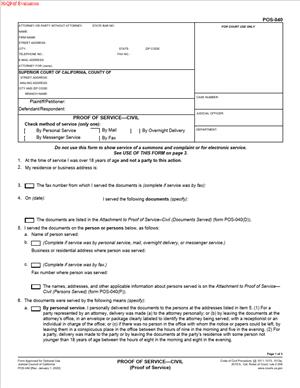
- Step 7: Arrange for the proper service of any required documents on the defendant. Ensure proof of service is completed and filed.
- Step 8: If the writ is issued, coordinate with the appropriate law enforcement agency responsible for execution. Provide them with clear copies and property details.
- Step 9: Document all communications and actions taken. Keep a dedicated file with stamped copies, bond paperwork, and proof of service.
- Step 10: Update your internal records once the property is recovered or the court issues further orders. Note dates of recovery and condition of items received.
Staying organized at this stage protects your rights and helps the court process move efficiently. Clear documentation and timely follow-up make a significant difference in how smoothly enforcement proceeds.
Disclaimer: This guide is provided for informational purposes only and is not intended as legal advice. You should consult a legal professional.