A practical guide to change child support when earnings, care schedules, or child-related costs no longer match the order.
Your work hours dropped. Your child now spends more time in your home. Or the other parent started earning more. These changes may affect support, but they do not rewrite the court order by themselves. To change child support, you need a formal process and reliable facts.
Start with the latest order. Compare its terms with what happens now. Then choose the right path: a court request, a local agency review, or an agreement submitted for approval.
This guide covers changes to an existing California child support order. It provides general legal information. Out-of-state orders, parentage disputes, and support contained in restraining orders may require different steps. Rules, fees, and forms can change. Check current court and agency instructions before filing.
When You Can Ask to Change Child Support
Either parent may seek a change. The person paying may seek a reduction. The person receiving may seek an increase. A review can also produce a result that neither expected.
Common reasons include job loss, changed wages, a new job, disability, or a different care schedule. Childcare and health coverage costs can also matter. Explain what changed since the last order and when.
Do not assume a salary drop means the same percentage drop in support. California uses a statewide guideline. It considers both parents’ income, tax information, parenting time, and other relevant inputs.
Compare the Old Facts With the New Facts
Before you ask to change child support, make a one-page summary:
- The date and monthly amount of the current order.
- The income and parenting-time information used then, if available.
- The change you want the court to consider.
- The date that change began.
- The records that support your account.

For example, write: “My employer reduced my weekly hours from 40 to 25 on September 1.” Add the employer’s notice and later pay statements. This explains the change better than “I cannot afford support.”
If several facts changed, list each one. A lower wage may coincide with lower childcare costs or a different care schedule. The court needs a complete picture.
Check for a Below-Guideline Agreement
There is an important exception to a blanket changed-circumstances rule. Under Family Code section 4065(d), parents who stipulated to support below the guideline need not show changed circumstances to seek guideline support or more.
Have the old agreement reviewed if it used a lower figure. Do not treat every agreed order as a below-guideline order. Look for the calculation and findings.
Act Promptly and Keep Following the Current Order
Do not stop paying, choose a lower amount, or tell payroll to change deductions yourself. A pending request is not a new order. Keep payment records and seek help promptly if you cannot meet the obligation.
Unpaid support is often called arrears. Asking to change child support generally does not erase amounts that became due before you filed the request. A dispute over payments credited to your account is a separate question.
The Effective Date Is a Separate Decision
Family Code section 3653 generally allows a modification to reach back to the filing date, or a later date. It does not promise that every change will start on the filing date.
Unemployment has a specific rule. A change entered because of unemployment generally reaches back to the later of service of the request or the unemployment date. The court can decline that retroactive treatment for good cause stated on the record. Federal notice rules also apply.
This makes both filing and proper service important. A call to an agency or an unfinished draft is not the same as filing a court request. Ask what has been filed and what steps remain.
Keep four dates in your notes: the change, filing, service, and the ordered start date. Do not substitute one for another. Seek specific help for military deployment or a request to undo an earlier order.
Choose the Right Process
Before you change child support, find out whether the local child support agency is involved. It is often called the LCSA or DCSS. A county named as a party is one clue. If unsure, confirm with the agency or court facilitator.
| Route | When it may fit | Important distinction |
|---|---|---|
| Court request | You need a judge to decide disputed support terms. | Filing is followed by service and a hearing. |
| Agency review | You have, or open, a child support services case. | Asking for review does not itself change the order. |
| Written agreement | Parents agree on terms and seek court approval. | Agency participation may require its signature too. |
Request an Agency Review
California Child Support Services offers review and adjustment through the agency handling an open case. There is no charge for that review. Its guidance generally uses a projected change of 20% or $50, whichever is less.
That is agency guidance, not a promise of relief or a universal minimum for every court request. The amount may go up or down. If the agency declines review, you can still ask the court to decide.
If you ask the agency to change child support, confirm who files the request and how you will receive updates. Keep a copy of what you submit. If a hearing is already set, do not assume agency discussions cancel it.
Keep Support and Custody Questions Separate
An agency can help with support. It does not handle custody or visitation disputes. If you need a new parenting order, identify that request separately.
RunSensible’s California custody modification guide covers that related process. A support recalculation should not become an indirect attempt to change where the child lives.
Build a Financial Picture to Change Child Support
To change child support on an income basis, show the amount, source, timing, and reason for the change. Compare records over a useful period. One unusually small paycheck can give a misleading picture.
Gather recent wage statements, benefit notices, and any employer letter explaining reduced hours or job loss. Collect records of childcare costs and health premiums when relevant. Keep the most recent tax return available for review.
Report Income Beyond Regular Wages
Support income can include bonuses, commissions, unemployment benefits, disability benefits, and other sources. Some need-based public assistance is excluded. Do not treat every deposit as wages or assume all benefits are excluded.
Self-employed parents should organize business income and required operating costs. A business bank balance alone does not explain what the parent earns. Separate business records from household expenses and identify the period covered.
Use a short note when a number needs context. For example: “The August bonus appears in this paycheck, but it is paid once per year.” Show the record rather than silently removing the amount.
Explain Work Limits and Job Searches
A court may consider earning capacity: what a parent can earn, rather than only current earnings. The law requires attention to the parent’s circumstances. Work history, health, skills, job searches, and available work can matter.
If you seek to change child support after losing work, keep dated applications and employer replies. Explain genuine limits on working. A voluntary choice to earn less does not guarantee a reduction.
Do not guess about the other parent’s income. Identify what you know, its source, and what remains unknown. Ask the facilitator or a lawyer about lawful ways to obtain missing financial information.
Document Parenting Time Before You Change Child Support
Time spent caring for the child is part of the support calculation. More parenting time can affect the result. It does not mean support becomes zero, even with equal time. Income differences and other inputs still matter.
When you seek to change child support because the schedule changed, keep records of actual care. Save the current order, calendars, and messages confirming exchanges. Record regular weeks and holidays separately.
California Divorce Disclosure: Deadlines and Document Checklist
Distinguish the Order, Actual Care, and a Proposed Plan
These are three different facts. Your order may describe one schedule while both parents follow another. Or you may want a schedule that has not started.
Label each clearly. Say when actual care changed and whether the parents agree about that date. Do not enter a future proposal in a calculator as though it already happened.
For example, a parent may have added a regular school-night stay. Show the weeks when it occurred and the exchange arrangements. Explain any cancellations. A full calendar is more useful than selecting only favorable dates.
If parenting time differs between children, organize each child’s schedule separately. Ask for help converting care time into the inputs the guideline calculation requires. Avoid assuming that overnight counts alone answer every timeshare question.
Use the Calculator as a Planning Tool
California’s public guideline calculator estimates support. It does not issue an order. The judge or commissioner makes the decision.
Before using it to change child support, prepare both parents’ financial inputs and the care schedule. Keep a copy showing the inputs and output. A number alone cannot show whether the estimate used accurate facts.
If an input is uncertain, label it as an assumption. You can compare scenarios for planning, but do not present an estimate as a verified fact. Ask the family law facilitator to review difficult inputs.
Do not reuse a calculation from years ago without checking it. Use the current official tool and current information. Old income figures or an outdated care percentage can make an otherwise careful request unreliable.
Prepare and File Your Court Request
The usual statewide court route uses FL-300, Request for Order, in the existing case. It asks for the terms you want and gives facts supporting them. It does not change support merely because you sign it.
Start with the complete current order and the correct case number. Keep the original petitioner and respondent labels. The parent making this new request does not automatically become the petitioner.
RunSensible’s Request for Order form page can help you locate the document. Check the official form and your county packet before preparing it.
Write a Clear Request to Change Child Support
Identify the existing support order and the adjustment you seek. Explain what changed, when it changed, and which records support it. Address the requested start date without assuming the judge must accept it.
Keep facts focused on support. An argument about unrelated relationship problems can hide the financial issue. Use dates and amounts wherever possible.
Include Current Financial Information
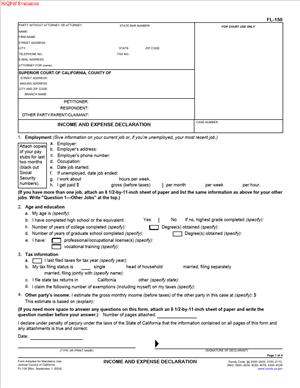
Both sides generally must file and serve current financial declarations in support hearings. FL-150, Income and Expense Declaration, is the standard form. Rule 5.260 treats it as current if completed within three months and no facts have changed.
If earnings change again, update the information. Attach income proof from the past two months. The court’s support instructions say not to attach last year’s tax return to FL-150; bring a copy to the hearing. Follow any lawful directions for further disclosure.
The Income and Expense Declaration page is a useful starting point. FL-155 is an alternative only for people who meet its eligibility instructions. It is not a general shortcut for self-employment or complex finances.
Check Filing Methods and Fees
Ask your county about local forms, hearing scheduling, copies, and e-filing. Keep the filed request showing the hearing date.
There is no filing fee to request a support change in an LCSA case. Adding other requests can create fees. Private-case fees depend on the filing and case history; confirm the current schedule. Ask about FW-001 if you need a fee waiver.
Preparing a form online is separate from filing it with the court. Confirm that the court accepted your filing. Then arrange service.
Serve the Papers and Calendar the Deadlines
Service is formal delivery of court papers. Filing and service are separate tasks. If you want to change child support, plan service when you plan the request.
Use an adult who is at least 18 and not a party. Give the server the full required packet, including blank response and financial forms where required. The server signs the proof describing what actually happened.
Check Whether Mail Service Is Allowed
Personal service generally requires delivery at least 16 court days before the hearing, unless the court sets another period. Court days exclude weekends and court holidays.
Mail is not permitted in every situation. Postjudgment requests can require recent address verification and FL-334. Follow any personal-service direction on the filed request. Ask the self-help center to check your method if unsure.
Where mail service is allowed within California, generally add five calendar days to the 16-court-day notice period. Out-of-state and international mail require more time. Check the exact rule before counting backward.
Use FL-330 for personal-service proof or FL-335 for permitted mail service. File proof promptly and follow the court’s advance-filing deadline. Do not sign for a server or use a proof form to cover delivery that never occurred.
Notify the Agency When It Is Involved
The LCSA must receive notice too. The court guide says it can serve the other parent for free if it receives two copies at least 30 days before the hearing.
If you miss that window, arrange timely service on both the agency and the other parent. The guide gives the usual 16-court-day notice period, plus applicable mailing time. Confirm who will serve whom; do not assume the agency handled it.

If You Receive a Request From the Other Parent
Read all the papers and identify every requested order. You can agree, disagree, or propose different support terms. Use the responsive declaration to a Request for Order (FL-320) with current financial information.
To respond to a request to change child support, address inaccurate inputs directly. State which income figure or care percentage you dispute and provide the record supporting your position.
The usual response filing and service deadline is nine court days before the hearing, unless the court orders otherwise. For mailing, the self-help guide recommends mailing at least five calendar days before the service deadline. Confirm earlier delivery needs if the recipient lives farther away.
Have a qualified adult serve the response and file proof. Attend the hearing. If the packet instead contains a governmental motion, summons, or restraining-order request, use its specific response instructions.
Prepare Evidence and a Short Hearing Summary
A request to change child support should let the court compare the old situation with the current one. Match each disputed input to a record.
| Issue | Useful records | What to explain |
|---|---|---|
| Lower earnings | Pay statements and employer notice | When the change began and whether it continues. |
| Variable income | Bonus records and monthly earnings summary | The period covered and unusual payments. |
| Different parenting time | Complete calendars and exchange messages | Actual care, start date, and disputed periods. |
| Changed child-related costs | Bills, receipts, and coverage statements | Which costs changed and who pays them. |
File and serve evidence in time under the applicable rules. Follow local exhibit and page limits. Do not assume the judge will accept new documents first shown at the hearing.
Use numbered pages and a short index for your own hearing file. Protect Social Security and account numbers. Keep original records and share the permitted copies. Do not crop messages in a way that changes their meaning.
Prepare three points: what changed, how you can prove it, and the support terms you request. Mark where each supporting record appears. This is a practical way to change child support with a focused presentation.
Confirm the hearing location or remote link. Ask early about interpretation or disability accommodations. Arrange childcare and allow time to check in.
When Both Parents Agree
Parents can use FL-350 to present an agreement to change child support. Start with accurate financial information and the guideline amount. Address the new amount, start date, health coverage, and relevant extra costs.
A below-guideline agreement requires additional legal findings and conditions. If the LCSA provides services in the case, it must join by signing. Do not treat a text message or two parent signatures as a completed court order.
RunSensible’s child support stipulation page identifies the agreement form. Submit the proper packet and obtain the judge-signed, filed order. Give the other parent a copy.
Check the New Order and Payment Arrangements
When the court agrees to change child support, ask who prepares the written order. Private cases may use FL-340 with FL-342. Governmental cases can use other order forms. Follow the court’s directions.
Read the signed terms, including the amount, start date, and additional expenses. If payroll deductions must change, confirm the process for an updated income withholding order. FL-195 reflects the support obligation; it is not a request to change it.
Ask whether a Child Support Case Registry Form is required in your situation. Retain the complete filed order and payment records. If the written order differs from the ruling, seek help promptly rather than altering it yourself.
Conclusion
To change child support in California, begin with the current order and dated proof of the change. Choose the correct route, provide complete financial information, arrange proper service, and obtain a new court order.
RunSensible Forms helps users find and prepare legal documents. It is not a law firm, court, agency, or official filing service. Use current official instructions and seek help when income, service, or jurisdiction is disputed.
Frequently Asked Questions
Can I change child support as soon as I lose my job?
You can seek a review or court modification promptly. The existing order still applies while you pursue relief. Provide job-loss and benefit records. Filing and service dates can affect retroactivity under the unemployment rule.
Does equal parenting time mean nobody pays support?
No. Equal care does not erase income differences or other guideline inputs. Prepare a current calculation with accurate information for both parents. The court decides the amount.
Must my income change by 20% to qualify?
No universal 20% income-change rule applies to every request. Agency guidance generally looks at a projected support change of 20% or $50, whichever is less. A court request is a separate route.
Can parents change child support without a hearing?
An approved written agreement may avoid a contested hearing. Use the proper stipulation, involve the LCSA if required, and obtain a judge-signed, filed order. Informal promises do not complete that process.
Will a reduction cancel my old support debt?
An ordinary modification generally does not reduce support that accrued before the request was filed. Payment-credit disputes and challenges to an earlier order require separate review. Do not assume a lower future amount clears the balance.
What if the other parent’s request uses wrong income figures?
Respond with current financial information and records showing the error. Address the specific input instead of making general accusations. File, serve, and attend the hearing within the applicable deadlines.
Can I change child support and custody together?
You may request both where the court process allows it, but they are separate issues. Custody requests need their own facts and may require mediation. The support agency cannot decide custody disputes.
Resources
- California Courts — child support basics
https://selfhelp.courts.ca.gov/child-support - California Courts — ask for or change child support
https://selfhelp.courts.ca.gov/request-for-order/child-support - California Courts — ask for or change support in an LCSA case
https://selfhelp.courts.ca.gov/request-for-order/LCSA - California Child Support Services — change a child support amount
https://childsupport.ca.gov/overview/modify-my-payment/ - California Child Support Services — services and limitations
https://childsupport.ca.gov/ - California Child Support Services — guideline calculator
https://childsupport.ca.gov/guideline-calculator/ - California Rules of Court — rule 5.260
https://courts.ca.gov/cms/rules/index/five/rule5_260 - California Courts — paying child support
https://selfhelp.courts.ca.gov/child-support/pay - California Courts — personal service of a Request for Order
https://selfhelp.courts.ca.gov/request-for-order/serve-request-inperson - California Courts — mail service of a Request for Order
https://selfhelp.courts.ca.gov/request-for-order/serve-request-mail
Disclaimer: The content provided on this blog is for informational purposes only and does not constitute legal, financial, or professional advice.
Contents