
Weigh the savings, costs, and paperwork before you pay your mortgage early.
Yes, paying off your mortgage early can make sense if the savings outweigh the costs and you keep enough cash. It may be less useful if you face a large penalty, have costly debt, or would drain your savings.
The right choice is not always a full payoff. A smaller extra payment or a payment at renewal may fit better.
This guide focuses on Canada, with Ontario document examples. Rules elsewhere differ. It provides general information, not personal financial, tax, or legal advice. RunSensible Forms is not a law firm or government agency.
What does paying your mortgage early involve?
First, decide what “early” means for your plan. Are you making one extra payment, raising regular payments, or clearing the whole loan?
Your principal is the loan balance you still owe. Interest is the cost of borrowing. Extra money applied to principal can reduce future interest, but the result depends on your contract.
Two dates also matter. The term is the period your current contract runs. The amortization is the estimated time needed to repay the whole loan.
For example, a loan may have a five-year term and a 25-year amortization. Paying the balance when that term ends still clears the debt ahead of the original schedule. You do not need to renew a loan you have fully repaid.
Paying your mortgage early through smaller payments
You may not need a large windfall. Your contract may permit extra lump sums or higher regular payments. Check the amount, timing, and limits before sending money.
Write down your goal first. “Reduce the balance before renewal” needs a different plan from “remove the monthly payment before retirement.” A clear goal helps you compare suitable choices.
When an early payoff may fit your goals
A lower debt balance can be useful when you want fewer fixed bills. Someone approaching retirement may value a smaller required payment more than someone building savings for a move.
Start with a household review rather than a general rule. Ask what the extra payment would improve and what it would leave unfunded.
Paying your mortgage early may fit your goals when you have:
- Cash set aside for emergencies and known expenses.
- No urgent arrears or much higher-interest debt.
- A manageable penalty, or a confirmed penalty-free payment option.
- A clear plan for retirement saving and other major goals.
- Enough income to cover the payments that remain.
These are planning questions, not a test that guarantees one answer. A household with uncertain income may place more value on cash. Another may accept lower cash reserves for a carefully planned debt reduction.
Include peace of mind in the discussion. If debt causes stress, record that benefit alongside the dollar comparison. Be clear about how much flexibility you are willing to give up.
Check penalties before paying your mortgage early
A prepayment privilege is the extra amount your contract lets you pay without a penalty. The limit and permitted payment dates vary. Unused room usually does not carry into later years.
An open loan generally permits prepayment without a prepayment penalty. A closed loan can charge a penalty for breaking the contract. Other fees may still apply.
Do not assume a small remaining balance means the final payment is penalty-free. Ask the lender about the exact transaction you plan.
Some penalties use three months of interest. Others involve an interest rate differential, often called IRD. This compares interest using rates and periods defined by the lender. Your contract determines the applicable calculation.
Before you pay your mortgage early, request a written figure for the amount and date you are considering.
Ask these questions:
- How much extra payment room remains?
- What date does that room reset?
- Does the proposed final payoff trigger a charge?
- Which charges apply now but would disappear at term end?
- Could a smaller permitted payment change the later payoff cost?
Keep the reply with your contract. If an answer is unclear, ask for an explanation before approving payment. FCAC describes prepayment information rights for customers of federally regulated institutions.
Keep enough cash outside your home
Home equity is not the same as available cash. An extra loan payment may improve your balance sheet while leaving too little for next month’s bills.
Before paying your mortgage early, separate your money into three groups: everyday spending, planned expenses, and emergency savings.
A roof replacement you already expect belongs in the planned-expense group. Sudden job loss belongs in emergency planning. Treating both as “spare money” can overstate what you can afford to prepay.
FCAC recommends keeping emergency savings accessible. It explains that a reserve can help cover surprises without relying on expensive borrowing.
Consider this example. You have $40,000 in savings and want to put $35,000 toward the loan. You also expect $8,000 in repairs. The proposal leaves $5,000 in cash before those repairs are paid.
That does not automatically rule out an extra payment. It shows why the full $35,000 needs review. A smaller payment may better fit your budget.
Set your own minimum cash amount before calculating the prepayment. Base it on household costs, income stability, and known obligations. Review it with anyone who shares responsibility for those bills.
Compare other uses for the money
Money used to pay your mortgage early cannot serve another goal at the same time. Make those alternatives visible before choosing.
Review costly debt and overdue bills
List each debt’s balance, rate, required payment, and due date. Keep required payments current. FCAC explains that directing extra money to the highest-interest debt can reduce total interest costs. It also recommends considering past-due accounts first.
For a simple illustration, $5,000 at 20% costs more in annual interest than $5,000 at 5%, before repayment changes. Your actual comparison must include fees and contract terms.
If you clear a costly debt first, decide where its former payment will go. You could rebuild savings or direct some toward the home loan. This turns one decision into a continuing plan.
Compare saving and investing fairly
Compare the same amount over the same period. Include investment fees, tax, risk, and access to funds. A hoped-for market return is not a promised result.
The Ontario Securities Commission’s debt-or-invest calculator includes tax and compounding inputs. It can help structure the comparison, but the result depends on your assumptions.
If paying your mortgage early means reducing retirement contributions, review that tradeoff too. Include any workplace contribution rules that apply to you. Avoid comparing a certain borrowing cost with an investment estimate that ignores uncertainty.
Use numbers that match the decision
Start with a lender quote and a payment schedule. Then compare paying now, making a partial payment, and waiting until the current term ends.
The following example is invented to show the method. It is not a rate quote or a lender’s calculation.
An example of paying your mortgage early
Assume you are considering a $20,000 extra principal payment. For a rough scale check, assume a 5% annual rate.
Multiplying $20,000 by 5% gives $1,000. That is a simple one-year interest illustration. It is not an exact savings forecast. Actual results depend on payment dates, compounding, the remaining schedule, and future rates.
Now suppose the proposed payment carries a $1,500 charge. The charge is larger than that rough one-year figure. This is a reason to model another payment date, not proof that the payment can never help.
Ask for schedules using the same end date. Compare total interest and charges, the balance left, and cash retained. Count only the costs that differ between the options.
For example, a discharge fee payable under either full-payoff option is different from a penalty charged only for paying now. Separating them prevents a misleading comparison.
FCAC’s calculator can help estimate payment schedules and interest. Use the lender’s current written quote for the actual transaction costs.
Consider a partial payment or better timing
Paying your mortgage early is not an all-or-nothing choice. You can compare several ways to reduce debt while keeping some flexibility.
Make a permitted lump-sum payment
If your contract allows it, a one-time payment can use money already available. Confirm that it will reduce principal and ask how the remaining schedule changes.
Keep the lender’s confirmation. Then check the next statement against the amount you authorized. This creates a simple record if something needs correction.
Increase regular payments carefully
A higher payment may suit a lasting income increase. Test it against your budget before committing. FCAC notes that you normally cannot lower an increased payment again until term end.
Use a cautious amount if your income varies. A plan that depends on every future bonus arriving may be harder to maintain than one funded by regular income.
Compare accelerated payments and term-end payoff
An accelerated schedule pays more over the year. Simply changing payment frequency does not necessarily create the same result. Ask for the total annual payments under each option.
Waiting until term end can avoid a prepayment penalty, though other closing costs may remain. Compare the waiting-period interest with the charge avoided.
How Mortgage Closings Work in Ontario: Forms, Registration, Guarantees, and Enforcement
If you plan to pay your mortgage early at maturity, contact the lender in advance. Confirm the payment instructions, required notice, and handling of any renewal. Keep the agreed date in your calendar.
Check the source of your payoff money
A bank balance does not always show the amount available after tax. Check where the money comes from before treating it as a payoff fund.
Ordinary Registered Retirement Savings Plan withdrawals are generally taxable. Some locked-in plans restrict access. A withdrawal made to clear debt may therefore leave less spendable cash than expected.
Also, tax withheld at withdrawal may not cover the final tax bill. Ask for an after-tax estimate before committing the funds.
Paying your mortgage early with money from an investment sale also deserves a tax review where relevant. Tell the adviser what you plan to sell, your expected payment date, and your other income.
The use of borrowed money matters as well. CRA explains that interest deductibility depends on the use and purpose of the borrowing, rather than the property offered as security.
Do not apply a personal-home example without review to rental, business, or mixed-use borrowing. Gather the loan records and explain how the money was used. That gives your tax adviser a better basis for comparing after-tax costs.
Separate repayment from a mortgage discharge
Paying your mortgage early and removing the lender’s registered claim are separate steps. A zero loan balance does not automatically complete the title work.
A discharge removes the registered security through the applicable process. Requirements depend on the province or territory and the loan arrangement.
Ask the lender or your legal representative to identify who will handle it. Request a breakdown of lender, professional, and registration costs rather than assuming one fee covers everything.
Check related credit before planning a full release. A home equity line of credit, or HELOC, is borrowing secured by your home. Some products combine it with the instalment loan.
Ask which debts the registered security covers. If you want to keep a secured credit facility, discuss that separately from clearing the instalment balance. If you want the security discharged, related products may need repayment and closure.
In Ontario, land records can be accessed through the province’s online land registry services. Ask your representative what updated record will confirm completion.
RunSensible’s guide to property ownership records and title searches provides background. It does not replace a review of your own title and lender requirements.
Build a payoff file before sending funds
Give yourself one place to keep the decision, payment, and completion records. This helps you track what remains open after the money leaves your account.
Use this suggested checklist when paying your mortgage early:
- Collect the current contract and latest statement.
- Confirm the remaining principal and term-end date.
- Ask for a dated payout statement and itemized charges.
- Check the quote’s expiry and any daily interest adjustment.
- Confirm the payment route through a trusted lender contact.
- Record who will arrange any discharge or release.
- Keep proof of payment and request written payoff confirmation.
- Obtain the agreed evidence that the title work is complete.
These are planning steps, not a substitute for the lender’s instructions. Ask what changes if payment arrives on a different date.
Do not stop regular withdrawals solely because you sent a lump sum. Confirm how the lender will handle the final scheduled payment and any surplus.
If your usual payment includes property taxes or optional insurance, ask how those arrangements change. Homeownership expenses continue after the loan is cleared.
Keep the file even after completion. It should let you identify the loan, the payment, the lender’s confirmation, and any remaining secured borrowing without relying on memory.
Know where related forms fit
Most homeowners will not need every document listed below. A form used to create financing is not automatically a form for ending it.
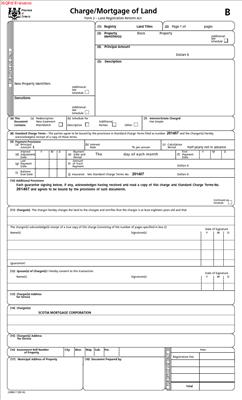
The Fixed Rate Mortgage Charge page explains a document that creates secured borrowing. It may help you understand your existing file or a proposed refinance. It is not a discharge.
The Request for Mortgage Funds – Confirmation of Mortgage Registration concerns new funding. It is relevant if replacement financing forms part of the plan, rather than a cash payoff alone.
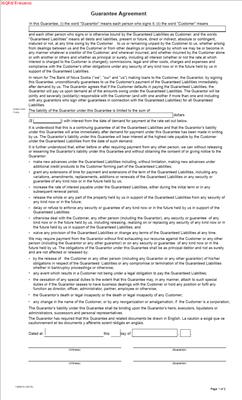
If your file contains a guarantee, identify it for legal review. The Guarantee Agreement – Collateral Mortgage page provides context for that arrangement. Ask what written release is needed for your specific obligations.
For more background, read how mortgage closings work in Ontario. Use the forms directory to understand relevant documents, then confirm the lender’s required version and professional process.
Do not sign a new guarantee or security document merely to mark an old loan as paid. First establish what the document would do and why it is needed.
Test the plan against a change in circumstances
Before you pay your mortgage early, try a second budget with lower income or higher home costs. The purpose is to see whether the plan leaves room to adjust.
Imagine two households with the same loan balance. One has steady income, separate repair savings, and no planned move. The other expects a work break and needs money for moving costs. The same extra payment could feel comfortable for one and restrictive for the other.
Write down the next major expense you expect. Give it an amount, a likely date, and a funding source. If that source is also the money earmarked for debt repayment, revise one of the plans.
If you want to pay your mortgage early before retirement, compare the budget before and after retirement. Include continuing ownership costs and the savings you will still need. Do not assume every dollar of the former loan payment becomes free spending money.

Finally, decide when you will review the choice. A practical review date could follow a lender quote, a job change, or a clearer repair estimate. You can keep the goal of paying your mortgage early while changing the amount or timing.
Conclusion
Paying your mortgage early can make sense when it improves your finances without leaving essential needs unfunded. Start with the contract, preserve needed cash, and compare realistic alternatives.
Get written costs for your proposed amount and date. Include other debt, tax effects, retirement goals, and the value of flexibility.
If you proceed, follow the payoff through to completion. Confirm the balance is cleared, review any related credit, and obtain evidence of the agreed discharge. A sound decision includes both the savings calculation and the closing records.
Frequently Asked Questions
Is paying my mortgage early always the cheapest choice?
No. A penalty, tax cost, or more expensive unpaid debt can change the result. Compare the same amount and time period across options. Include the cash you need to keep available.
Will a lump-sum payment lower my next regular payment?
Do not assume it will. Ask the lender whether it changes the required payment, remaining repayment period, or both. Use the confirmed schedule in your budget rather than planning around an expected reduction.
Should I wait until renewal to pay my mortgage early?
Compare both dates. Waiting may avoid a penalty, but interest continues while the loan remains outstanding. Ask about notice, payment timing, and other charges before deciding.
Does a zero balance mean the lender’s claim is removed?
No. Repayment and discharge are separate. Confirm which registered security and related debts are involved, who handles the process, and what evidence you will receive.
Can I use a credit line instead of keeping savings?
A credit line is borrowing, not cash you own. It carries costs and conditions. Review the terms rather than assuming it offers the same protection as accessible savings.
Do I need to complete all ten related forms?
No. They cover different transactions and roles, including refinancing, guarantees, and sales. Some are lender-specific or for legal professionals. Use only documents that fit your transaction and jurisdiction after checking the applicable requirements.
Resources
- FCAC — Mortgage terms and amortization
https://www.canada.ca/en/financial-consumer-agency/services/mortgages/mortgage-terms-amortization.html - FCAC — Paying off your mortgage faster
https://www.canada.ca/en/financial-consumer-agency/services/mortgages/pay-mortgage-faster.html - FCAC — Mortgage fees: Prepayment penalties
https://www.canada.ca/en/financial-consumer-agency/services/mortgages/reduce-prepayment-penalties.html - FCAC — Breaking your mortgage contract
https://www.canada.ca/en/financial-consumer-agency/services/mortgages/break-mortgage-contract.html - FCAC — Setting up an emergency fund
https://www.canada.ca/en/financial-consumer-agency/services/savings-investments/setting-up-emergency-funds.html - FCAC — Paying back your debt
https://www.canada.ca/en/financial-consumer-agency/services/debt/paying-debt.html - OSC Investor Office — Pay Down Debt or Invest Calculator
https://www.getsmarteraboutmoney.ca/calculators/pay-down-debt-or-invest-calculator/ - FCAC — Choosing a mortgage that is right for you
https://www.canada.ca/en/financial-consumer-agency/services/mortgages/choose-mortgage.html - CRA — Making withdrawals from an RRSP
https://www.canada.ca/en/revenue-agency/services/tax/individuals/topics/rrsps-related-plans/making-withdrawals.html - CRA — Tax rates on withdrawals
https://www.canada.ca/en/revenue-agency/services/tax/individuals/topics/rrsps-related-plans/making-withdrawals/tax-rates-on-withdrawals.html - CRA — Income Tax Folio S3-F6-C1, Interest Deductibility
https://www.canada.ca/en/revenue-agency/services/tax/technical-information/income-tax/income-tax-folios-index/series-3-property-investments-savings-plans/series-3-property-investments-savings-plan-folio-6-interest/income-tax-folio-s3-f6-c1-interest-deductibility.html - FCAC — Discharging a mortgage
https://www.canada.ca/en/financial-consumer-agency/services/mortgages/mortgage-discharge.html - FCAC — Home equity lines of credit
https://www.canada.ca/en/financial-consumer-agency/services/mortgages/home-equity-line-credit.html - Ontario — Land Registry
https://www.ontario.ca/page/overview-land-registry - FCAC — Mortgage prepayment: know your rights
https://www.canada.ca/en/financial-consumer-agency/services/rights-responsibilities/rights-mortgages/rights-prepayments.html
Disclaimer: The content provided on this blog is for informational purposes only and does not constitute legal, financial, or professional advice.
Contents