Mortgage closing in Ontario is the legal process that finalizes a mortgage loan and registers the lender’s security against real property. It confirms the borrower’s repayment obligations, the property securing the debt, and the documents needed to make the transaction enforceable. It also creates a record that may later support enforcement if the borrower or guarantor defaults. At the centre of the process are two key elements: the mortgage registration documents and, where required, Independent Legal Advice (ILA) for guarantors, spouses, or other non-borrowing signatories.
The rules are not the same across Canada. Each province has its own land registration system, mortgage terminology, enforcement rules, and professional standards.
- In Ontario, the Land Registration Reform Act and the Land Titles Act govern how mortgage charges are created and registered, with most transactions now processed through the electronic Teraview platform administered by Teranet.
- In British Columbia, mortgages take the form of mortgage charges or liens under the Land Title Act, with registration through the BC Land Title and Survey Authority (LTSA), and ILA certificates for guarantors governed by local legal profession standards.
- In Quebec, mortgages are called hypothecs, governed by the Civil Code of Quebec, and registered in the Register of Personal and Movable Real Rights (RPMRR) or the land register maintained by the Registre foncier.
- Federally chartered banks operating in Ontario are also subject to the Bank Act (Canada), which establishes certain standard mortgage terms and imposes disclosure obligations that interact with provincial registration requirements.
Using a collateral mortgage form when the transaction calls for a conventional charge, or failing to obtain a properly witnessed ILA certificate before a guarantor signs, can render a security interest unenforceable or expose a lawyer to professional liability.
Choosing the correct form set is essential in every mortgage closing. Use RunSensible Forms to find the right legal forms for your transaction type, province, and institution with greater confidence. Find the right legal forms online with RunSensible.
What Mortgage Closing Documents Can Impose, Grant, and Regulate
Mortgage closing documents perform several legal functions at the same time. They create registrable land security, define the debt and repayment structure, confirm priority and funding conditions, extend personal liability through guarantees, and preserve evidence that signatories understood the obligations they accepted.
Core Functions of the Mortgage Closing Framework
The primary function is to create a priority security interest. Once a mortgage charge is registered against the title in Ontario, it takes its place in the land titles system according to the date and time of registration. This priority position is central to the lender’s security and affects how competing interests are ranked.
The closing documents also define the financial terms of the obligation. These may include the mortgage amount, interest rate, payment schedule, amortization period, prepayment rights, and default provisions. In a fixed-rate mortgage, the interest rate is set for the agreed term, giving both borrower and lender certainty over the payment structure.
Where guarantors are involved, the documents may extend liability beyond the borrower. A guarantee agreement can make a guarantor personally responsible for the borrower’s debt, even though the guarantor did not receive the loan proceeds. Depending on the wording, the guarantee may be continuing, capped, or broad enough to survive renewals, extensions, or amendments to the mortgage.
Some mortgage closings also involve collateral security. A collateral mortgage may secure more than the immediate mortgage loan. It may also secure other present or future obligations owed to the same lender, if the documents are drafted that way. This makes the form selection especially important because a collateral structure can expose the borrower or guarantor to a wider scope of liability than a conventional mortgage charge.
Key Documents and What They Accomplish
The mortgage closing process turns a lending arrangement into an enforceable legal structure. It connects the loan, the secured property, the borrower’s obligations, the lender’s rights, and any guarantor exposure into one coordinated transaction.
At the property level, the process can secure repayment against a specific parcel of land. Once the lender’s interest is registered, it becomes part of the public title record, helps establish priority, and supports enforcement if the borrower defaults. It also controls the release of mortgage funds. Before funds are advanced, the process confirms key closing conditions, such as registration status, title details, intended priority, payout obligations, trust conditions, and any required undertakings.
Where guarantors or other at-risk parties are involved, the process can extend liability beyond the borrower and create a record of informed consent. In practical terms, mortgage closing documents can:
- Register the lender’s security against the property
- Confirm funding conditions before loan proceeds are released
- Extend liability to guarantors or supporting parties
- Preserve evidence that key signatories understood the transaction before signing
Additional Conditions Mortgage Documents May Impose
Mortgage documents may also impose ongoing obligations on the borrower. These often relate to the condition, ownership, and protection of the secured property.
Common borrower obligations may include requirements to:
- Maintain property insurance
- Pay property taxes
- Keep the property in good repair
- Avoid unauthorized transfers
- Preserve the lender’s priority
- Comply with standard charge terms
- Avoid further encumbrances without consent
Guarantee documents may also include more technical clauses. These can address waiver of defences, postponement of claims against the borrower, consent to loan amendments, consent to renewals or extensions, and the lender’s right to proceed directly against the guarantor.
These provisions should be explained clearly during the ILA process, especially where the guarantor is assuming risk without receiving direct loan proceeds.
Prepare each stage of the mortgage closing process with the correct Ontario legal forms. Find Ontario mortgage forms with RunSensible.

Step-by-Step Ontario Mortgage Closing Process
Ontario mortgage closing is a staged process. Each step moves the transaction closer to enforceable security, proper funding, and a clear record of consent. The sequence matters because a missed signature, incorrect registration detail, or incomplete ILA process can delay funding, affect priority, or create enforcement risk.
Step 1 — Structure the Transaction and Identify the Risk-Bearers
The first step is to determine what the transaction actually requires. Counsel should review the lender’s instructions, the title record, the legal description, the parties receiving the benefit of the loan, and any spouse, guarantor, or matrimonial-home issues.
At this stage, the file should answer key questions:
- Who is borrowing the money?
- Which property secures repayment?
- Is any guarantor or spouse assuming risk?
- Is Independent Legal Advice required?
- Are there existing mortgages, liens, or other title issues?
- Does the lender require conventional or collateral security?
If this step is handled poorly, the wrong parties may be brought in too late, the lender may refuse to fund, or the security may later be challenged.
Step 2 — Prepare the Registration and Authorization Package
Once the transaction structure is confirmed, the mortgage must be prepared for registration. In Ontario, this means aligning the registration package with the title record, property identification number, legal description, parties, mortgage amount, and applicable standard charge terms.
The client authorization package is also critical. The solicitor’s authority to register electronically must be properly documented before the mortgage is released for registration. If a material change is made after signing, the authorization should be updated before registration proceeds.
This stage is designed to ensure that the electronic registration accurately reflects the transaction the client approved.
Step 3 — Complete Guarantees, Consents, and Independent Legal Advice
Before funding, any required guarantees, spouse consents, or Independent Legal Advice steps should be completed. This is especially important where a non-borrowing party is assuming legal or financial exposure.
The purpose of this stage is to create a clear record that each at-risk signatory understood the nature and consequences of the transaction. ILA should not be treated as a post-closing formality. If it is required, it should be completed before the guarantor or other at-risk party signs the relevant documents.
Common risk points include:
- A spouse consenting to or supporting a mortgage
- A guarantor backing another person’s debt
- A related person signing without receiving loan proceeds
- A collateral structure that exposes additional property
- A transaction where undue influence or misunderstanding may later be alleged
A missing or poorly completed ILA record can create serious enforcement and professional liability concerns.
Step 4 — Register the Mortgage and Confirm Priority
The next step is registration. In Ontario, mortgage charges are commonly registered electronically through the land registration system by an authorized legal professional.
Registration establishes the lender’s interest in the title and records the date and time of registration. This matters because priority is generally determined by the order in which interests are registered.
Before and during registration, counsel should confirm:
- The correct property identification number
- The correct legal description
- The correct parties
- The correct mortgage amount and terms
- The absence of unpermitted prior interests
- The lender’s intended priority position
Errors at this stage can lead to rejected registration, delayed funding, priority disputes, or lender refusal to advance funds.
Step 5 — Request and Release Mortgage Funds
Once registration is complete or once the lender has accepted a proper solicitor’s undertaking, the funding process can proceed. The solicitor provides the lender with the required registration details, funding request, trust conditions, payout instructions, and undertakings.
This step connects the legal security to the actual mortgage advance. It confirms that the lender’s conditions have been satisfied or will be satisfied in accordance with the solicitor’s undertakings.
Funding documents should avoid over-certifying matters that the solicitor cannot properly confirm. Inaccurate funding confirmations can create trust issues, wire delays, and professional liability exposure.
Step 6 — Complete Post-Registration Reporting and File Retention
The closing process does not end when funds are released. Post-registration reporting completes the evidentiary record and confirms that the lender, borrower, and file all reflect the final registered transaction.
This stage may include delivery or retention of:
- Registration particulars
- Final reports to the lender
- Copies of registered documents
- Title insurance information, where applicable
- Tax information
- Client identification materials
- ILA certificates and related notes
- Undertaking completion records
Proper post-closing reporting supports future renewals, assignments, discharges, enforcement steps, and file audits. It also helps prove that the transaction was completed in the correct order and with the required authority.
Mortgage Closings Legal Documents and Forms
The strength of an Ontario mortgage closing file depends on documentary discipline. Each form should have a defined legal function, a defined audience, and a defined place in the closing sequence.
The goal is to ensure that the right documents create the security, authorize registration, support funding, confirm priority, protect at-risk signatories, and preserve the record needed for future enforcement.
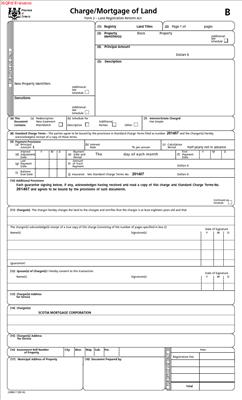
Fixed Rate Mortgage Charge
The mortgage charge is the foundational filing in most Ontario mortgage closings. It creates the lender’s registered security against the property and connects the debt to the land.
A properly prepared charge should align with the title record and lender instructions. Key details include:
- The correct property identification and legal description
- The borrower’s legal name as it appears on the title
- The lender’s correct legal name
- The principal amount
- The applicable interest structure
- Any incorporated standard charge terms
Once registered, the charge becomes part of the public land-registration record. Errors in names, property details, financial terms, or schedules can cause registration delays, lender objections, or priority issues.
Confirmation of Mortgage Registration
The confirmation of registration closes the loop between preparation and enforceable security. It shows that the mortgage has been registered and identifies the registration particulars relied on by the lender.
This confirmation typically records:
- The registered instrument number
- The date and time of registration
- The property details
- The mortgage amount
- The lender’s intended priority position
This document matters because lenders need proof that their security interest has attached to the title. It also becomes part of the file record used for renewals, assignments, discharges, and enforcement.
Request for Mortgage Funds
The request for funds connects the legal closing process to the actual mortgage advance. It tells the lender that the transaction is ready for funding, subject to the stated registration status, title position, trust conditions, and undertakings.
This form usually addresses:
- The amount requested
- The closing date
- Registration or pending-registration details
- Required payouts
- Title insurance information, where applicable
- Trust conditions and solicitor undertakings
It should not overstate what counsel can properly confirm. Inaccurate funding requests can create wire delays, trust-account issues, lender refusal to advance, or professional liability exposure.

Easement in Gross and an Easement Appurtenant: Understanding Property Rights
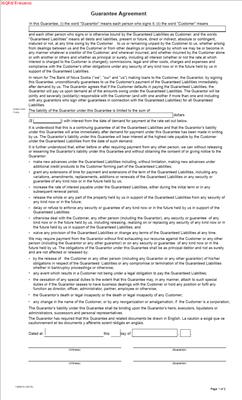
Conventional Mortgage Guarantee Agreement
A conventional mortgage guarantee extends personal liability beyond the borrower. It gives the lender an additional person to pursue if the borrower defaults, without necessarily charging the guarantor’s own property.
This type of form is often used where the lender requires added support from:
- A spouse or family member
- A director or shareholder
- A related business party
- A person supporting a borrower with limited income, credit, or security
The key result is personal recourse. The guarantor may become responsible for repayment even though they did not receive the loan proceeds. For that reason, the guarantee should be reviewed carefully and supported by Independent Legal Advice where required.
Collateral Mortgage Guarantee Agreement
A collateral mortgage guarantee can create broader exposure than a conventional guarantee. Depending on the structure, it may combine personal liability with security against the guarantor’s own land or other collateral.
This form requires particular care because it may secure:
- The immediate mortgage debt
- Future advances
- Renewals or extensions
- Related obligations owed to the lender
- Other indebtedness, if the wording allows it
The practical risk is that the guarantor may be placing property at risk for another party’s debt, often without receiving direct loan proceeds. That makes clear explanation, proper sequencing, and a strong ILA record especially important.
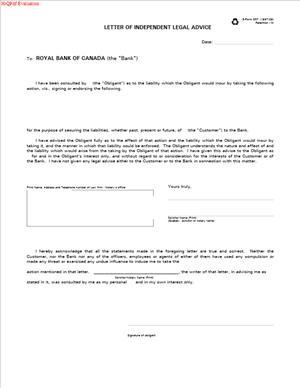
857 Letter of Independent Legal Advice and Certificate of Independent Legal Advice
ILA documents do not create the mortgage debt or register the lender’s charge. Their role is procedural and evidentiary.
They help show that an at-risk signatory received independent advice before accepting legal or financial exposure. This is especially important where a guarantor, spouse, co-signer, or related party may later claim misunderstanding, pressure, undue influence, or lack of informed consent.
A properly completed ILA record should confirm:
- The identity of the person receiving advice
- The documents reviewed
- The legal and financial risks explained
- The independence of the advising lawyer
- That the meeting occurred privately
- That the person appeared to understand
- That no apparent duress or undue influence was observed
For lenders, ILA strengthens the enforceability record. For signatories, it provides a safeguard before assuming risk. For lawyers, it documents that the advice was given independently and before the transaction proceeded.
Each mortgage closing document serves a specific legal purpose. RunSensible Forms helps you find the right form for each step of the Ontario mortgage closing process. Find the right mortgage forms with RunSensible.
Aftermath: Enforcement, Compliance, and Ongoing Obligations
Once a mortgage is closed and registered, the legal obligations it creates do not conclude—they enter an ongoing performance phase that can persist for decades. For lenders, the registered charge is a public instrument that creates priority rights, enforcement entitlements, and administrative duties. For borrowers, the mortgage creates payment obligations, insurance covenants, and property maintenance requirements. For guarantors, the guarantee creates contingent liability that remains live until the underlying debt is fully discharged.
Enforcement: What Happens When a Mortgage Defaults
In Ontario, a mortgagee’s enforcement options upon default are governed primarily by the Mortgages Act, R.S.O. 1990, c. M.40, and the Rules of Civil Procedure. The lender may pursue power of sale—the most common remedy—which allows the lender to sell the property without court involvement after providing the required statutory notice (at least 35 days under the Mortgages Act). Alternatively, the lender may commence foreclosure proceedings, which extinguish the borrower’s equity of redemption and vest title in the lender.
Against guarantors, the lender may pursue a separate action in contract, relying on the guarantee agreement and the ILA certificate as the evidentiary foundation of the claim. The guarantee creates personal liability, meaning the lender can pursue the guarantor’s personal assets—not merely the mortgaged property—if the property sale does not fully satisfy the debt.
Regulatory Monitoring and Reporting
Federally regulated lenders (chartered banks and federal credit unions) are subject to OSFI (Office of the Superintendent of Financial Institutions) oversight, which includes mortgage underwriting standards set out in Guideline B-20. These standards require lenders to maintain documented evidence of income qualification, property appraisals, and—critically—the existence of required guarantee documentation. Provincially regulated credit unions and mortgage companies operating in Ontario are subject to oversight by FSRA (Financial Services Regulatory Authority of Ontario). FSRA-regulated entities must maintain mortgage files meeting specified documentation standards.
Modification, Renewal, and Discharge
At the end of a mortgage term, the borrower typically renews the mortgage with the existing lender or refinances with a new one. Renewal with the same lender does not always require new registration, depending on the lender’s form of charge. A conventional charge may be renewed by an amending agreement; a collateral charge typically remains registered and is re-evidenced through a loan agreement. Refinancing with a new lender requires discharge of the existing charge and registration of a new one—an entirely new closing process requiring new mortgage documents and, if guarantees are involved, new ILA certificates.
Discharge of a mortgage is evidenced by a Discharge of Charge form registered in Teraview upon satisfaction of the debt. Until the discharge is registered, the charge remains on title and encumbers the property. Solicitors acting for borrowers in sale transactions must ensure the discharge is registered on or before closing, or arrange for a discharge undertaking from the lender if the discharge cannot be obtained in advance.
Record Keeping and Documentation Retention
The Law Society of Ontario requires solicitors to retain real estate transaction files for at least six years after the matter concludes. Lenders are subject to their own institutional record retention policies, typically aligned with federal or provincial regulatory requirements. From a practical standpoint, mortgage documents—including ILA certificates—should be retained indefinitely where there is any prospect that the guarantee may be called upon. If enforcement litigation arises, the ability to produce original documents and their chain of custody can be determinative.
Common Mistakes and Best Practices
Procedural precision is not a courtesy in mortgage closings—it is a legal requirement. The gap between a technically complete closing and a fatally deficient one can be as narrow as a single unsigned certificate or a property description that does not match the parcel register. The following analysis identifies the most common errors and the best practices that prevent them.

Common Mistakes
- Using the wrong charge form: Selecting a collateral mortgage charge form when the lender requires a conventional charge, or vice versa, will result in rejection by the lender or, worse, a registered charge that does not align with the loan agreement. Always confirm the required form type with the lender’s instruction letter before preparing documents.
- Mismatched property descriptions: The legal description in the mortgage charge must exactly match the parcel register. Using a civic address, an abbreviated description, or a description from a prior instrument that has since been amended is a registration error that Teraview will reject. Solicitors must pull a current parcel register and copy the legal description precisely.
- ILA obtained from a non-independent lawyer: If the independent lawyer has any existing relationship with the borrower, acts for the borrower in the same transaction, or is in the same firm as the borrower’s solicitor, the ILA may be challenged as insufficiently independent. The guarantor must retain a lawyer with no conflict.
- Guarantor signs before ILA session: The ILA session must precede the guarantor’s signature on the guarantee agreement. A signed guarantee followed by an ILA session reverses the protective purpose of independent legal advice. Courts have invalidated guarantees on this basis.
- Incomplete ILA certificate: A certificate that omits the guarantor’s identification details, the specific documents reviewed, or the lawyer’s confirmation of understanding creates an evidentiary gap that may be fatal in enforcement proceedings. Every field must be completed.
- Missing Confirmation of Registration before fund release: Releasing mortgage funds without either a registration confirmation or a formal undertaking to register is a material breach of lender instructions and creates personal liability for the solicitor. This step is non-negotiable.
Best Practices
The most effective practice is to establish a closing checklist that mirrors the three tiers of the document system: mortgage instrument, registration and compliance, and ILA documentation. The checklist should be completed sequentially, with no tier advancing until the prior tier is confirmed complete. Digital practice management tools that flag incomplete conditions before fund requisition can eliminate many of these errors at the system level.
Solicitors should confirm lender-specific form requirements at the outset of every transaction. Large institutional lenders often have prescribed forms for ILA certificates and guarantee agreements, and submitting a non-conforming form will delay or prevent closing. The lender’s mortgage instruction letter is the authoritative source for these requirements.
Where a guarantor is involved, communication should begin early. Advising the guarantor to retain independent counsel before the closing date—not the night before—allows the independent lawyer adequate time to review the documents, conduct the ILA session, and complete the certificate without time pressure. Rushed ILA sessions are precisely the ones most likely to be challenged later.
File documentation should be comprehensive. Every conversation, every confirmation of receipt, every undertaking given or received should be documented in writing and retained in the file. If enforcement ever becomes necessary, the file will be the evidence.
Mortgage closing depends on using the right document at the right stage. From mortgage charges and funding confirmations to guarantees and ILA certificates, RunSensible Forms helps legal professionals access the forms that support a complete Ontario closing file. Find the right mortgage closing forms with RunSensible.
Final Thoughts
Mortgage closing in Ontario is a multi-layered legal process that requires simultaneous management of property law, contract law, professional obligations, and institutional lender requirements. No single document completes the transaction alone. The Fixed Rate or Collateral Mortgage Charge creates the security interest. The Request for Mortgage Funds and the Confirmation of Registration confirm that the security was properly perfected before funds moved. The ILA Letter and Certificate ensure that the guarantee obligations are enforceable because they were accepted knowingly and freely. Each layer depends on the others.
Selecting the correct pathway—conventional versus collateral charge, guarantee versus co-borrower structure, institutional lender versus private lender forms—is the first critical decision in every transaction. It determines which forms are required, which registrations must be made, and which procedural safeguards apply. A mistake at this stage cannot easily be corrected after closing without significant expense, delay, and potential liability.
Procedural discipline means that every step is documented, every form is complete, and every deadline is treated as a hard constraint. In a legal system where registration priority is determined by timestamp and guarantee enforceability can turn on the sequence of a signature and an advice session, the order and completeness of procedural steps is not a technicality—it is the substance of the transaction.
The ongoing obligations that follow closing—payment performance, insurance maintenance, registration of discharge on payoff, and retention of ILA documentation in anticipation of potential enforcement—require the same rigor as the closing process itself. A mortgage transaction is not complete when funds advance and the charge registers. It is complete only when all obligations under it are fully performed, and the charge is discharged from title. Until that moment, every party remains bound by the documents executed at closing.
FAQs
What is the difference between a conventional mortgage charge and a collateral mortgage charge in Ontario?
A conventional mortgage charge secures only the specific loan described in the charge document, up to the registered amount. A collateral mortgage charge secures all present and future obligations of the borrower to the same lender, often registered at a higher notional amount than the loan itself. The practical difference is significant at renewal: a conventional charge can more easily be transferred to a new lender, while a collateral charge typically must be discharged and a new registration made, incurring additional legal and registration costs.
When is independent legal advice legally required in Ontario?
ILA is not required by statute in every guarantee transaction in Ontario, but it is required by lender policy in virtually all institutional transactions and is a practical necessity for enforceability. Courts in Ontario have set aside guarantee agreements where the guarantor was a spouse or family member of the borrower, the lender knew of the relationship, and no ILA was obtained. The legal standard is whether the lender took reasonable steps to ensure the guarantor understood what they were signing. ILA is the clearest evidence of those steps.
What forms are required to close a fixed-rate mortgage in Ontario?
A standard fixed-rate mortgage closing in Ontario requires: the Fixed Rate Mortgage Charge (registered in Teraview), the Request for Mortgage Funds (submitted to the lender), and the Confirmation of Mortgage Registration (provided to the lender after registration). If a guarantor is involved, the Guarantee Agreement (conventional or collateral, depending on the charge type) and the ILA Letter and Certificate are also required before the lender will advance funds.
How long does mortgage registration take in Ontario?
Electronic registration through Teraview is typically completed within minutes to a few hours on the closing date, assuming the document is properly prepared, and no deficiencies are identified by the system. Rejection for technical errors—incorrect PIN, mismatched description, missing required fields—requires correction and resubmission, which can delay registration by hours or require rescheduling of the closing date in severe cases.
Who can provide independent legal advice to a guarantor in Ontario?
The ILA must be provided by a lawyer who is entirely independent from the lender, the borrower, and the transaction. The lawyer must not be in the same firm as the borrower’s solicitor, must not have any existing professional relationship with the borrower, and must not be retained by the lender. The guarantor should choose their own independent counsel. The independent lawyer is then solely responsible to the guarantor, with no duty to the other parties.
What happens if the Confirmation of Mortgage Registration is not delivered to the lender?
If a solicitor fails to deliver the Confirmation of Mortgage Registration, the lender has no documented evidence that its security was perfected. The lender may demand immediate proof, refuse to treat the mortgage as closed, or initiate a claim against the solicitor under the undertaking given with the Request for Mortgage Funds. In the worst case, if the charge was never actually registered—as might happen if a technical error was not caught—the lender holds an unsecured advance. The solicitor faces personal liability for any resulting loss.
Can a guarantee agreement be enforced if no ILA certificate exists?
Possibly, but with significantly greater difficulty and litigation risk. Ontario courts assess guarantee enforceability based on all circumstances, including whether the guarantor had the opportunity to obtain advice, whether they appeared to understand the documents, and whether the lender acted in good faith. The absence of an ILA certificate does not automatically void a guarantee, but it removes the lender’s most powerful evidence of informed consent—particularly in spousal or family guarantee situations where courts apply heightened scrutiny.
How is a mortgage discharged in Ontario, and what happens if the discharge is delayed?
Mortgage discharge is accomplished by registering a Discharge of Charge document in Teraview after the lender confirms the debt has been fully repaid. The lender is obligated to provide the discharge within a reasonable time after payoff. If discharge is delayed, the charge remains on title and can prevent the borrower from selling or refinancing the property. Borrowers may have remedies against the lender for unreasonable delay in providing the discharge, including damages for any losses caused by the encumbered title.
Resources
- Land Registration Reform Act, R.S.O. 1990, c. L.4 — Ontario e-Laws
- Land Titles Act, R.S.O. 1990, c. L.5 — Ontario e-Laws
- Mortgages Act, R.S.O. 1990, c. M.40 — Ontario e-Laws
- Ontario Land Registration System — ServiceOntario / Teranet
- Residential Real Estate Transactions Practice Guidelines — Law Society of Ontario
- OSFI Guideline B-20: Residential Mortgage Underwriting Practices and Procedures — Office of the Superintendent of Financial Institutions
- FSRA — Financial Services Regulatory Authority of Ontario (Mortgage Regulation)
- Bank Act (Canada), S.C. 1991, c. 46 — Justice Laws Website
- Fixed Rate Mortgage Charge Form — RunSensible Forms (Ontario)
- Request for Mortgage Funds / Confirmation of Registration Form — RunSensible Forms (Ontario)
- Conventional Mortgage Guarantee Agreement Form — RunSensible Forms
- Collateral Mortgage Guarantee Agreement (Form 857) — RunSensible Forms (Ontario)
Disclaimer: The content provided on this blog is for informational purposes only and does not constitute legal, financial, or professional advice.
Contents