An appeal of a disability or medical-benefits denial before a judge is an administrative review process. It allows a claimant to challenge an adverse agency decision and seek review by an Administrative Law Judge (ALJ) or authorized adjudicator. Depending on the program and jurisdiction, the decision-maker may review the record, consider medical evidence, hear testimony, and issue a binding or reviewable ruling on eligibility, entitlement, coverage, payment, or continued services.
The process is not uniform across all benefit systems. In Social Security cases, hearings are commonly conducted before an ALJ under 20 C.F.R. §§ 404.929 and 416.1429 and 42 U.S.C. § 405(b). In Medicare matters, a third-level appeal is generally heard by the Office of Medicare Hearings and Appeals under 42 C.F.R. § 405.1002. Medicaid appeals proceed through state fair hearing systems, which vary by jurisdiction. In VA matters, the comparable adjudicator is typically a Veterans Law Judge at the Board of Veterans’ Appeals rather than an ALJ.
What matters most at the outset is identifying the correct appeal pathway. That step determines which agency has jurisdiction, which deadlines apply, which forms must be filed, and what standards govern the evidence and review process.
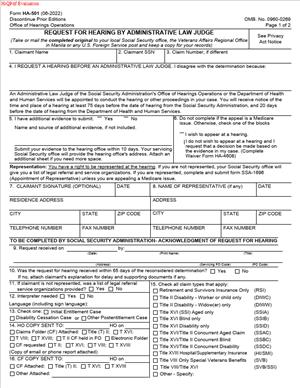
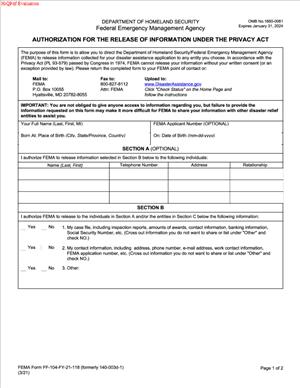
- Forms are jurisdiction-specific. Form HA-501 is a Social Security hearing request form. OCA Official Form No. 960 is a New York HIPAA-compliant medical release. FEMA Form FF-104-FY-21-118 is a Privacy Act disclosure authorization for FEMA disaster-assistance matters. These forms are not interchangeable across forums.
- Procedural compliance is critical. Filing in the wrong forum, using the wrong form, or missing a deadline may result in delay, dismissal, loss of continuation-of-benefits protections, or forfeiture of appeal rights.
A claimant should therefore determine the governing legal and regulatory framework before taking further action. That threshold step controls how the appeal is initiated, how the administrative record is developed, and how notice rights and evidentiary issues are preserved throughout the proceeding.
Find jurisdiction-specific legal form templates and download documents built for the filing requirements with RunSensible Forms.
What the ALJ Appeal Mechanism Can Require, Grant, or Restrict
A disability or medical-benefits appeal before a judge is a formal administrative process for reviewing a denial. It allows the claimant to challenge the agency’s decision, submit evidence, build the administrative record, and seek a written ruling.
The process usually begins with a hearing request. The agency then compiles the record, the claimant submits supporting materials, and the adjudicator reviews the case under the governing procedural rules. The matter may end in a decision, remand, dismissal, or other reviewable action.
What the Appeal Can Require or Accomplish
- Substantive review: The adjudicator may affirm, reverse, or modify the denial, or remand the matter for additional development.
- Procedural rulings: The adjudicator may enforce deadlines, exclude untimely evidence, rule on representation issues, and dismiss the appeal for procedural defects.
- Record development: The claimant may submit medical records, witness statements, expert evidence, and other materials relevant to eligibility, coverage, payment, or continued services.
In some jurisdictions, a timely appeal may also preserve continuation of benefits or services pending review. Valid representation forms and medical-release authorizations may be necessary to obtain records, receive notices, and fully develop the claim. As a result, the appeal mechanism can determine not only whether relief is granted, but also whether the claimant is able to present the case effectively at all.

Common Stages and Process Flow of Appeal
The exact sequence depends on the program and jurisdiction, but most disability or medical-benefits appeals follow the same basic path: identify the denial, calculate the filing deadline, submit the hearing request, complete representation and record-access documents, track hearing notices and evidence deadlines, and then attend the hearing and pursue further review if necessary. In Social Security, this usually means a request for a hearing after reconsideration; in Medicare, it generally means a Level 3 OMHA hearing after QIC reconsideration; and in New York Medicaid-related matters, it means a fair hearing through OTDA’s hearing system.
Step 1: Identify the denial and the correct appellate forum
Start with the denial or reconsideration notice. That notice usually determines the next legally available forum, the form to use, and the filing address. In SSA cases, the reconsideration notice tells the claimant whether the next step is a hearing before an Administrative Law Judge and whether Form HA-501 is appropriate. In Medicare, the reconsideration instructions identify whether the next step is an OMHA ALJ hearing. In New York fair-hearing matters, the agency notice and OTDA instructions identify the fair-hearing path. Filing in the wrong forum can cause rejection, transfer delay, or loss of time.
Step 2: Calendar the filing deadline and any continuation-rights deadline
The first deadline is not the only deadline that matters. In SSA, a hearing request generally must be filed within 60 days after receipt of the prior determination, and SSA generally presumes receipt within 5 days of the notice unless the claimant shows otherwise. In Medicare OMHA cases, the request is generally due within 60 calendar days after receipt of the reconsideration, with the same 5-day receipt presumption. In New York fair-hearing matters, the notice controls the time to request review, and aid-continuing usually depends on requesting the hearing before the effective date of the reduction or termination. Missing the continuation deadline can change a benefits-preservation issue into a late-filing issue.
Step 3: File the hearing request with the correct form or equivalent written request
This step invokes the appellate process. In SSA, the claimant may request a hearing by filing Form HA-501 or another written request that identifies the claimant, the determination being challenged, the reasons for disagreement, and any representative information. In Medicare, the usual Level 3 form is OMHA-100. In New York, OTDA accepts fair-hearing requests through its request system. The request should be complete enough to identify the appellant, the decision under review, and the basis for disagreement.
Step 4: Complete representation and record-access documents
After the appeal is filed, the case must be made hearing-ready. In SSA, a claimant who wants representation generally uses Form SSA-1696, and SSA’s current representative-registration rules require new representatives to register through SSA-1699 before SSA will recognize a new appointment. In Medicare, a representative is generally appointed through CMS-1696 or another writing that satisfies the program’s requirements. Where medical records are needed, a valid HIPAA-compliant authorization may also be necessary; in New York, OCA Official Form No. 960 is an approved form used to authorize the release of health information in appropriate settings. Without proper representation and record-release documents, the appeal may be filed, but the administrative record may remain incomplete.
Step 5: Track hearing notices and evidence deadlines
Once the case is pending, the claimant has to monitor scheduling and submission deadlines closely. In SSA, notice of hearing is generally issued at least 75 days before the hearing unless that notice period is waived, and evidence generally should be submitted or identified no later than 5 business days before the hearing unless an exception applies. In OMHA hearings, written notice is generally provided at least 20 calendar days before the hearing unless waived. New York fair hearings also require notice and an impartial hearing process. Missing these deadlines can result in excluded evidence, inadequate preparation, or dismissal for failure to appear.
Step 6: Attend the hearing and take the next review step if needed
At the hearing, the claimant or representative presents the basis for reversal, submits supporting records, responds to questions, and preserves procedural objections. SSA hearings may be online, in person, or by phone. Medicare OMHA hearings may proceed through in-person or video-based formats, depending on the case setup. If the result is unfavorable, further review usually has its own deadline: SSA Appeals Council review generally must be requested within 60 days of receipt of the hearing decision, and Medicare Appeals Council review generally must be filed within 60 days after receipt of the ALJ decision or dismissal. Additional judicial review may then be available under the governing statute and amount-in-controversy rules.
Start with RunSensible’s jurisdiction-specific legal forms and access structured compliance tools for ALJ proceedings and related filings.
Disability Appeal Forms and Filing Documents
These documents should not be treated as a single universal appeal packet. Each form belongs to a specific forum and serves a distinct procedural function, such as initiating review, appointing a representative, authorizing disclosure of records, or supporting access to the administrative file. The threshold issue is always the same: which form applies in the governing jurisdiction, and what legal authority it creates.
HA-501 — Social Security Hearing Request
In Social Security disability matters, Form HA-501 is the foundational hearing request. It is used to request a hearing before an Administrative Law Judge after the reconsideration stage, although SSA also permits a written letter requesting a hearing. The form identifies the claimant, the determination being challenged, the basis for disagreement, and any representative information. It is the operative filing that moves the case into hearing-level review.
OMHA-100 — Medicare ALJ Hearing Request
In Medicare claims and coverage appeals, the comparable foundational filing is generally Form OMHA-100. This form is used to request an Administrative Law Judge hearing after an unfavorable second-level appeal. It ties the appeal to the reconsideration decision and frames the issues for hearing-level review within the Medicare appeals structure.
SSA-1696 — Social Security Appointment of Representative
Form SSA-1696 is the current Social Security appointment-of-representative form. It authorizes an attorney or qualified non-attorney representative to act for the claimant in an SSA matter and governs how SSA recognizes that appointment. It is the core representation document in Social Security proceedings.
SSA-1699 — Social Security Representative Registration
Form SSA-1699 is not a hearing request and does not replace Form HA-501. It is the representative registration form used by SSA for appointed representative services. It applies to representative registration and recognition requirements, not to the initiation of the appeal itself.
CMS-1696 — Medicare Appointment of Representative
Form CMS-1696 is the Medicare appointment-of-representative form. It gives another person legal authority to assist with a Medicare appeal. In Medicare matters, it performs the same representation function that SSA-1696 performs in Social Security cases.
03-127W — Philadelphia Municipal Court Representative Form
Form 03-127W is a Philadelphia Municipal Court civil case representative form. It is a local court document, not a federal disability-benefits or Medicare appeals form. Its significance here is jurisdictional: a form that is valid in one tribunal does not substitute for the representation form required in another.

Health Care Decision-Making and Legal Authorization Process Forms
OCA Form 960 — New York HIPAA Release
OCA Official Form No. 960 is a New York HIPAA-compliant authorization for the release of health information. It is used to authorize disclosure of medical records and can be important when treatment records are needed to support disability, medical necessity, or procedural-error arguments. Its primary function is evidentiary rather than jurisdictional.
FEMA Form FF-104-FY-21-118 — FEMA Privacy Act Release
FEMA Form FF-104-FY-21-118 is a Privacy Act authorization for the release of FEMA records. It may be necessary when a claimant needs FEMA-held records, but it is not a substitute for SSA, Medicare, or state medical-benefits release forms. Its practical value is limited to the agency and record system for which it was created.
Submission and Procedural Confirmation
Even the correct form is not enough without proof of submission and retention of the supporting file. The claimant should preserve the denial notice, hearing request, representative appointment, privacy release, and all submission confirmations. In administrative appeals, procedural proof can affect timeliness, notice, evidentiary access, and the ability to respond to a jurisdictional challenge.
Find the right filing path with RunSensible and access legal form templates built for jurisdiction-specific use.
Aftermath: Enforcement, Compliance, and Ongoing Obligations
A hearing decision does not end the process. Once issued, the decision carries whatever legal effect the governing program assigns to it. In Social Security, a favorable decision may result in benefit effectuation and payment through SSA’s internal processing system. In Medicaid, a favorable fair-hearing decision may require the agency to restore, continue, or authorize benefits or services through its compliance procedures. In Medicare, an ALJ decision controls the appealed claim or coverage dispute unless it is changed on further review. The ruling is therefore not advisory. It is an operative administrative act.
Enforcement and Further Review
Post-decision enforcement depends on the forum. In Social Security, the usual path is agency implementation, Appeals Council review if sought, and then federal court review within the applicable deadline. In Medicare, further review generally proceeds through the Medicare Appeals Council and then the federal district court if the judicial-review requirements are met. In some state systems, including New York’s fair-hearing practice, a claimant may need to file a compliance complaint if the agency does not carry out the decision. A favorable ruling should not be treated as self-executing if the agency fails to implement it.
Continuing Compliance Obligations
Obligations may continue even after the hearing decision is issued. Representatives remain subject to program-specific rules governing recognition, conduct, and fees. Privacy releases may need to be renewed, replaced, or revoked if the matter continues into another forum. Program-specific release forms should not be reused across agencies without confirming that they remain valid for the next stage of the case.
Recordkeeping After the Decision
Recordkeeping should continue after the ruling. The file should preserve the denial notice, hearing request, proof of filing, appointment documents, releases, exhibits, hearing notices, and final decision in one organized record. If enforcement, reopening, modification, or further appeal becomes necessary, that file becomes essential to proving compliance, preserving deadlines, and re-entering the review process efficiently.
Common Disability Appeal Filing Mistakes and Best Practices
Procedural precision matters in disability and medical-benefits appeals. A claim may have merit but still fail if it is filed in the wrong forum, supported by the wrong forms, or poorly documented. Forms such as HA-501, SSA-1696, CMS-1696, OCA Form 960, and FEMA Form FF-104-FY-21-118 serve different legal functions and are not interchangeable.
Common Mistakes
- Using the wrong form in the wrong forum. A local court form or agency-specific release may not be valid in a federal benefits appeal.
- Missing filing or continuation deadlines. The deadline to appeal may differ from the deadline to preserve ongoing benefits or services.
- Delaying record collection. Waiting too long to obtain medical or agency records can leave the file incomplete or lead to late evidence issues.
- Omitting a valid representative appointment. Without it, notices and record access may not be properly routed.
- Failing to keep proof of filing. Missing confirmations, receipts, or acknowledgments can create disputes over timeliness and compliance.
- Failing to appear. In some systems, nonappearance without good cause can result in dismissal.
Best Practices
- Use the denial notice as the control document. It usually identifies the agency, deadline, and next review step.
- Match each form to its legal purpose. Use the correct hearing request, representative form, and release form for the governing forum.
- Build the file early. Request records promptly and organize exhibits by provider, date, and issue.
- Keep procedural proof in one place. Retain the notice, filed forms, releases, hearing notices, and submission confirmations.
- Explain late filings directly. If delay is unavoidable, submit a written good-cause explanation with supporting proof.
A well-organized file helps preserve appeal rights, support evidentiary admission, and present the claim in a clear and reviewable form.
Find jurisdiction-specific legal form templates faster with RunSensible Forms and prepare filings with greater procedural accuracy.

Final Thoughts
Appealing a disability or medical-benefits denial before a judge is a document-driven administrative process, not simply a request for a second opinion. The claimant must identify the correct system at the outset because Social Security, Medicare, Medicaid, VA, and other benefits programs do not use the same forms, adjudicators, deadlines, or evidentiary rules. Selecting the proper procedural pathway is, therefore, the first legal step, because it determines whether the appeal can proceed and how the record will be reviewed.
- The documentation framework is central to the appeal. A claimant generally needs a proper hearing request, a valid representative appointment if representation is used, legally sufficient medical or agency-record authorizations, and proof that filing and notice requirements were satisfied.
- Each form must match its legal purpose and forum. Forms such as HA-501, SSA-1696, CMS-1696, OCA Form 960, and FEMA Form FF-104-FY-21-118 are not interchangeable and should be used only in the system for which they were created.
- Procedural discipline affects the outcome. Hearing notices, evidence deadlines, attendance requirements, continuation-of-benefits rules, and post-decision review rights can all determine whether the claim is heard on the merits.
- The process continues after the decision. A favorable ruling may still require agency implementation, compliance monitoring, and continued recordkeeping, while an unfavorable ruling may require prompt action to preserve further administrative or judicial review.
A well-managed appeal is therefore both a legal and compliance exercise. The claimant who preserves deadlines, organizes the record, and documents each procedural step is usually in the strongest position to obtain meaningful review and, where the record supports it, reversal or modification of the denial.
FAQs
What does it mean to appeal a disability or medical-benefits denial before a judge?
It means asking an Administrative Law Judge or another authorized hearing officer to review an adverse agency decision, consider the administrative record and any permitted additional evidence, and issue a binding or reviewable ruling. In Social Security, this is typically a hearing before an ALJ after reconsideration. In Medicare, it is generally a Level 3 hearing before the Office of Medicare Hearings and Appeals. In state systems, including Medicaid fair-hearing systems, the hearing may be conducted by a state ALJ or another impartial hearing officer.
Which form should I use to request the hearing?
The correct hearing-request form depends on the program. For Social Security disability cases, the usual form is HA-501. For Medicare claims and coverage appeals, it is generally OMHA-100. For Medicaid or other state-administered benefits, the controlling notice and state hearing system usually determine the required form or filing method. There is no single universal appeal form across these systems.
Is Form 03-127W the standard representative form for benefits appeals?
No. Form 03-127W is a Philadelphia Municipal Court representative form used in that court’s civil proceedings. It is not the standard representation form for federal disability or Medicare appeals. In Social Security, the current appointment-of-representative form is SSA-1696. In Medicare, the usual appointment form is CMS-1696. Representation documents are jurisdiction-specific and should be matched to the correct forum.
What records and release forms should I gather before the hearing?
The file should usually include the denial notice, any reconsideration or prior appeal decision, treatment records, diagnostic testing, medication history, provider opinions, and any documents showing procedural error or notice issues. A valid medical or privacy release may also be needed to obtain records. For example, OCA Form 960 is a New York HIPAA-compliant release, while FEMA Form FF-104-FY-21-118 is a Privacy Act release for FEMA records. The release form should match the agency or provider holding the records.
What deadlines matter most?
The main deadline is the deadline to request the hearing, but it is often not the only one that matters. In Social Security, a hearing request is generally due within 60 days after receipt of the reconsideration notice, with receipt usually presumed within 5 days of the notice date. In Medicare, an ALJ hearing request is generally due within 60 calendar days of the reconsideration decision. In state fair-hearing systems, there may also be a separate and shorter deadline to preserve aid continuing, continued services, or other interim protections.
Can I submit new evidence after I file the appeal?
Usually yes, but timing rules apply. In Social Security, evidence should be submitted as early as possible, and written evidence generally must be submitted or identified no later than 5 business days before the hearing unless an exception applies. Other systems also apply deadlines for late-filed records or may require a good-cause showing. Early record development is important because delayed evidence can be excluded or given less procedural weight.
Do I have to attend the hearing, and what happens if I miss it?
Attendance is usually critical. Depending on the program, the hearing may be held in person, by telephone, by video, or through another approved format. If a claimant fails to appear and does not establish good cause, the hearing request may be dismissed or otherwise adversely affected. A hearing should never be treated as optional unless the governing forum expressly allows the matter to proceed on the written record alone.
What happens after the judge issues a decision?
A favorable decision usually moves into implementation, which may include benefit payment, restoration of services, or agency effectuation of the ruling. An unfavorable decision may be subject to further administrative review and then judicial review, depending on the program. In Social Security, the next step is generally Appeals Council review. In Medicare, the next step is generally reviewed by the Medicare Appeals Council. Post-decision obligations may also continue, including recordkeeping, compliance with representation rules, and renewal or replacement of release forms if the case moves into another forum.
Resources
- Request for Hearing by Administrative Law Judge (Form HA-501) — Social Security Administrationhttps://www.ssa.gov/forms/ha-501.pdf
- Appointment of Authorized Representative (Form 03-127W) — Social Security Administrationhttps://www.ssa.gov/forms/ssa-1696.pdf
- Authorization for Release of Health Information Pursuant to HIPAA (Form No. 960) — Social Security Administrationhttps://www.ssa.gov/forms/ssa-827.pdf
- Authorization for the Release of Information under the Privacy Act (FF-104-FY-21-118) — GSA Forms Libraryhttps://www.gsa.gov/reference/forms
- Social Security Act — Title II, Section 205(b), 42 U.S.C. § 405(b) — Legal Information Institutehttps://www.law.cornell.edu/uscode/text/42/405
- Regulations Governing SSA Hearings, 20 C.F.R. Part 404 Subpart J — Electronic Code of Federal Regulationshttps://www.ecfr.gov/current/title-20/chapter-III/part-404/subpart-J
- HIPAA Privacy Rule, 45 C.F.R. Part 164 — HHS Office for Civil Rightshttps://www.hhs.gov/hipaa/for-professionals/privacy/index.html
- Privacy Act of 1974, 5 U.S.C. § 552a — U.S. Department of Justicehttps://www.justice.gov/opcl/privacy-act-1974
- Appeals Modernization Act Overview — VA.gov https://www.va.gov/decision-reviews
- SSA Office of Hearings Operations — Hearing Office Locator https://www.ssa.gov/appeals/ho_locator.html
- SSA Appeals Council — Request for Review (Form HA-520) https://www.ssa.gov/forms/ha-520.pdf
- Social Security Administration — Program Operations Manual System (POMS) https://secure.ssa.gov/poms.nsf/Home
- Disability Rights Advocates — Federal Disability Law Resources https://www.dralegal.org
- National Organization of Social Security Claimants’ Representatives (NOSSCR) https://www.nosscr.org
Disclaimer: The content provided on this blog is for informational purposes only and does not constitute legal, financial, or professional advice.
Contents