The History of Marriage in the United States is not one straight story. Marriage laws have changed many times. They changed because of race, religion, gender roles, age rules, and court decisions. In 1565, Luisa de Abrego, a free Black woman from Spain, married Miguel Rodríguez in St. Augustine, Spanish Florida. National Archives material describes that marriage as the first known and recorded Christian marriage in what is now the continental United States. Later, the country created laws that banned some people from marrying. Then, courts and lawmakers removed many of those bans.
Today, marriage in the United States is still a legal system run mostly by the states. States decide things like licenses, waiting periods, and age rules. But the U.S. Supreme Court has also said marriage is a basic right in important cases like Loving v. Virginia and Obergefell v. Hodges. That means states cannot make some kinds of marriage illegal just because of race or because the couple is same-sex.
What marriage meant in early America
In early America, marriage was both a personal promise and a public legal act. It affected property, children, inheritance, religion, and community life. In the colonies and early states, marriage rules were often tied to church customs, local laws, and the social beliefs of the time. Women usually had fewer legal rights than men, and marriage often shaped a woman’s legal and economic status.
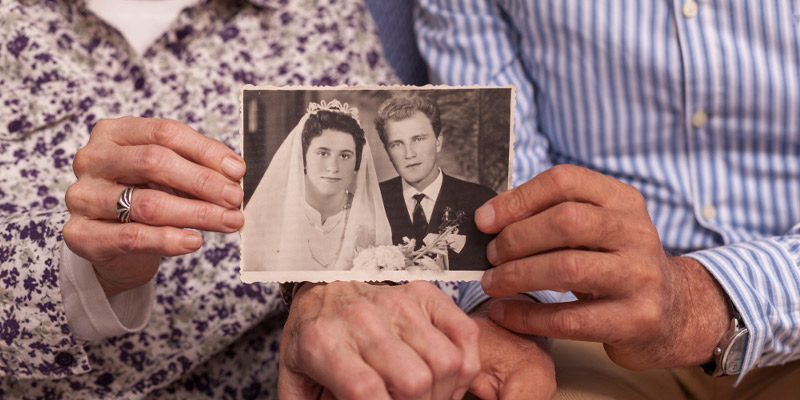
The first recorded Christian marriage in what is now the continental United States happened in 1565 in St. Augustine. That marriage was between Luisa de Abrego and Miguel Rodríguez. It matters because it shows that the story of marriage in the United States began long before the United States became a country, and it began in Spanish Florida, not in the English colonies. It also shows that race and marriage have been tied together since the earliest written records on this land.
Marriage and race: one of the biggest legal battles
For much of U.S. history, many states banned interracial marriage. These laws are sometimes called anti-miscegenation laws. They were built on racism, not fairness. Wikipedia’s history summary notes that when the United States was founded, many states forbade marriage between white people and non-white people. Later, some states kept these bans for generations.
A major turning point came in 1967 with Loving v. Virginia. Richard Loving, a white man, and Mildred Loving, a woman of African American and Native American ancestry, were married legally in Washington, D.C. But Virginia treated their marriage as a crime. The U.S. Supreme Court struck down Virginia’s law and the remaining state bans on interracial marriage. Britannica and Oyez both describe Loving as a major ruling that ended those marriage bans across the country.
This case changed more than one couple’s life. It changed the marriage law for the whole country. It also helped shape a bigger legal idea: marriage is a basic civil right, and states cannot block it using racial rules.
Marriage and women’s legal rights
For a long time, marriage law was tied to unequal rules for men and women. Married women often had less control over property and legal decisions. Over time, reforms in property law, voting rights, education, and employment changed what marriage looked like in daily life. Marriage slowly became less about legal dependence and more about shared rights and choices, though that change took many decades.
These changes also affected why people married. In earlier periods, marriage often had a strong economic purpose. Over time, Americans began to talk more about love, partnership, and personal choice. Wikipedia’s summary of marriage history in the United States notes that expectations about spouses changed across time, especially after the social changes of the 1960s and later decades.
Marriage rates changed over time
Marriage has always been common in the United States, but it is less universal now than it once was. U.S. Census Bureau data shows that the share of married-couple households has fallen over the long term. In 2025, fewer than half of U.S. households were married-couple households, compared with about two-thirds in 1975. The Census Bureau also reports that the median age at first marriage has gone up a lot over time.
That means people are more likely to marry later than earlier generations. It also means the public often asks new questions, such as the average age of marriage, the average length of marriage, and how marriage rates changed over time. These are not just social questions. They shape housing, taxes, child-rearing, and estate planning, too.

How to Get an Elopement Marriage License
Timeline Table: Key moments in U.S. marriage history
Alt text: Timeline table showing major milestones in the History of Marriage in the United States, from 1565 to modern same-sex marriage law.
| Year | Event | Why it mattered |
| 1565 | Luisa de Abrego married Miguel Rodríguez in St. Augustine | The first known recorded Christian marriage in what is now the continental U.S. |
| 1600s–1900s | Many states banned interracial marriage | Marriage law was used to enforce racial separation |
| 1967 | Loving v. Virginia | Supreme Court ended state bans on interracial marriage |
| 2000 | Alabama removed anti-miscegenation language from its constitution | Last state to remove old constitutional language against interracial marriage |
| 2015 | Obergefell v. Hodges | Supreme Court required states to license and recognize same-sex marriage |
Same-sex marriage and modern marriage law
Another major legal change came in the fight over same-sex marriage. Before 2015, some states allowed same-sex marriage and others did not. This created confusion for couples who moved from one state to another or needed federal recognition.
In Obergefell v. Hodges in 2015, the U.S. Supreme Court held that the Fourteenth Amendment requires states to license and recognize same-sex marriage. Oyez describes it as the case that required states to both permit and recognize those marriages. That ruling changed marriage law nationwide.
This was a major step in the modern history of marriage in the United States. It made the law more equal for same-sex couples, but it also showed how marriage law often changes through long court fights rather than one quick act of Congress.
What marriage law looks like now
Today, marriage in the United States is still mostly run by state law. States set the rules for:
- marriage licenses,
- waiting periods,
- who can perform a ceremony,
- and the usual legal age to marry.
Wikipedia’s overview explains that the general age to marry without parental consent is 18 in most states, though there are exceptions, such as Nebraska and Mississippi, and the details can change by state. That means there is no single U.S. marriage code. There is a national constitutional floor on major rights, but day-to-day rules still differ.
The result is a mixed system. The Supreme Court has said states cannot block marriage based on race or same-sex status, but states still control many practical steps. That is why people often search for terms like “marriage laws by state,” “legal age to get married,” and “can you marry at 18.” Those are still state-by-state questions.
What marriage still does in law
Marriage is still more than a ceremony. It affects taxes, inheritance, medical decision-making, property, immigration, and family law. Wikipedia’s overview notes that marriage has legal effects that other adult relationships usually do not. That is why marriage remains important even as fewer households are married than in past decades.
Marriage can also affect immigration. U.S. law has long treated marriage as one path for immigration sponsorship, but the law also includes rules against marriage fraud. That is one reason marriage has stayed closely tied to government paperwork and legal proof, not just private choice.

Why this history matters today
The history of marriage in the United States helps explain why marriage law is still debated. Questions about age, equality, family structure, religion, and state power did not disappear. They changed form. What was once a fight about interracial marriage later became a fight about same-sex marriage. Questions about age, consent, and who decides marriage rules remain active in state law today.
For a general reader, the big lesson is simple: marriage law in the United States was never fixed. It kept changing as the country changed. That is why older rules can look unfair or shocking today, and why current rules may keep changing too.
Frequently Asked Questions
What is marriage in the United States?
Marriage in the United States is both a legal and social institution. It is usually controlled by state law, but major constitutional rulings also shape who can marry and which marriages states must recognize.
Who was Luisa de Abrego?
Luisa de Abrego was a free Black woman from Spain who married Miguel Rodríguez in St. Augustine in 1565. That marriage is described in historical sources as the first known recorded Christian marriage in what is now the continental United States.
When did interracial marriage become legal across the United States?
It became legal nationwide in 1967 when the U.S. Supreme Court decided Loving v. Virginia and struck down remaining state bans on interracial marriage.
When did same-sex marriage become legal across the United States?
Same-sex marriage became legal nationwide in 2015 after the U.S. Supreme Court decided Obergefell v. Hodges. The Court said states must license and recognize same-sex marriages.
What is the average age of first marriage in the U.S.?
The U.S. Census Bureau tracks this and shows that the median age at first marriage has risen a lot over time. People now marry later than they did in earlier generations.
Do all states have the same marriage laws?
No. States still control many practical parts of marriage, such as licenses, waiting periods, and age rules, even though some big rights are set by the U.S. Constitution and Supreme Court rulings.
Footnotes (APA style)
- Wikipedia contributors. (n.d.). Marriage in the United States. Wikipedia. https://en.wikipedia.org/wiki/Marriage_in_the_United_States
- Oyez. (n.d.). Obergefell v. Hodges. https://www.oyez.org/cases/2014/14-556
- Encyclopaedia Britannica. (n.d.). 50 years ago: Loving v. Virginia. https://www.britannica.com/story/50-years-ago-loving-v-virginia
- Britannica Kids. (n.d.). Loving v. Virginia. https://kids.britannica.com/students/article/Loving-v-Virginia/632611
- U.S. Census Bureau. (2024). U.S. Divorce Rates Down, Marriage Rates Stagnant From 2012 to 2022. https://www.census.gov/library/stories/2024/10/marriage-and-divorce.html
- U.S. Census Bureau. (2025). Median age at first marriage: 1890 to present (Figure MS-2). https://www.census.gov/content/dam/Census/library/visualizations/time-series/demo/families-and-households/ms-2.pdf
- U.S. Census Bureau. (2025). Fewer Than Half of U.S. Households Are Married-Couple Households. https://www.census.gov/newsroom/press-releases/2025/families-and-living-arrangements.html
Disclaimer: The content provided on this blog is for informational purposes only and does not constitute legal, financial, or professional advice.
Contents