An Ontario small claims settlement conference is a private court meeting held before trial in a defended case. It helps the parties discuss a solution, narrow the issues, and prepare for trial if no deal is reached. The judge may share views about the case, but does not decide the lawsuit at this meeting.
Good preparation can save time and money. It can also help you see the strong and weak parts of your case. This guide explains what to bring, how to assess your position, and how to record any agreement. It gives general legal information, not legal advice for your facts.
What an Ontario Small Claims Settlement Conference Does
The Ontario court guide lists several goals for a settlement conference. The meeting may settle the whole case or only part of it. It can also help both sides disclose key facts, identify the issues, and prepare for trial.
An Ontario small claims settlement conference usually takes place after a defendant files a defence. The court sends the parties a notice with the date, time, location, and attendance method. The court aims to hold the conference within 90 days after the first defence is filed, though scheduling may vary.
The judge who leads the conference will not be the trial judge. Settlement talks are private. The parties should not disclose them before the case ends unless everyone agrees.
Who must attend the Ontario small claims settlement conference
Each party must attend. A lawyer or paralegal may also attend, but their client must still be present. A company should send someone who can approve a settlement. If another person must approve the deal, that person should be available by phone.
Witnesses do not attend the Ontario small claims settlement conference. They may be listed for a possible trial, but the conference is for the parties and their representatives.
Missing the meeting can have serious results. The court may order costs or require another conference. In some situations, repeated non-attendance by a defendant can lead to judgment. Contact the court as soon as possible if you cannot attend.
Build a Clear Case File Before the Conference
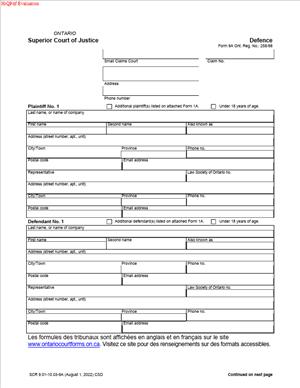
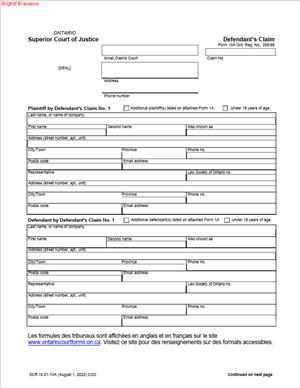
Start with the pleadings. These are the documents that state each side’s case. For most cases, they include the Plaintiff’s Claim and Defence. A Defendant’s Claim may also exist.

Read each pleading slowly. Mark every fact that the parties agree on. Then mark each disputed fact. Your Ontario small claims settlement conference preparation should focus on what remains disputed.
Ontario small claims settlement conference evidence checklist
Create one folder with the documents that support your position. Useful items may include:
- contracts, quotes, purchase orders, or invoices;
- payment records and account statements;
- letters, emails, and relevant text messages;
- dated photos or videos;
- repair estimates, receipts, and expert reports;
- delivery records and inspection reports; and
- a simple calculation of the amount claimed or disputed.
Do not bring a pile of unsorted papers. Put documents in date order. Add page numbers. Make a short index so you can find each item quickly.
The official Ontario guide says new documents that were not attached to a claim or defence must be served on every other party and filed with the court at least 14 days before the conference. The same 14-day rule applies to Form 13A, the List of Proposed Witnesses. Check your court notice and the current rules because procedures can change.
Link each fact to proof
Make a three-column worksheet for your own use:
| Point to prove | Best proof | Possible weakness |
|---|---|---|
| Work was incomplete | Contract, photos, inspection report | Contract wording may be unclear |
| Repair cost was reasonable | Two dated repair estimates | Repairs have not yet been paid |
| Payment was requested | Invoice and follow-up emails | One email lacks delivery proof |
This worksheet is not a court form. It helps you explain the case in a calm, direct way. It also shows where a fair compromise may make sense.
Prepare Your Witness List and Case Summary
Form 13A lists the witnesses you may call if the matter goes to trial. Include accurate contact details and a short description of what each witness can explain. Do not list people who only repeat the same evidence.
For example, a building inspector may explain defects and repair needs. A bookkeeper may explain invoices and payments. A person who only heard your story later may add little.
Use the focus keyword in your summary: Ontario small claims settlement conference
Prepare a one-page summary for the Ontario small claims settlement conference. Use these headings:
- What happened?
- What facts are agreed on?
- What facts remain disputed?
- What evidence supports each disputed fact?
- What result do you want?
- What result could you accept?
Keep the summary factual. Avoid insults, guesses, and long legal arguments. A clear timeline is often more helpful than strong language.
Decide What a Fair Settlement Could Look Like
Settlement does not always mean splitting the claim in half. The result can include money, payment dates, return of property, repair work, or another practical term.

Ontario Small Claims Court: How to File a Claim Under the New $50,000 Limit
Before the Ontario small claims settlement conference, calculate three positions:
- Your preferred result.
- A fair compromise based on the evidence and risk.
- Your lowest acceptable result, or highest amount you can pay.
Do not reveal your private bottom line at the start. It is a planning tool. Use it to avoid making a rushed choice during the meeting.
A simple settlement example
A customer claims $12,000 for incomplete renovation work. The contractor says $4,000 remains unpaid. Photos show some defects, but the contract does not clearly cover every requested repair.
The parties might settle through a smaller payment, completion of listed repairs, or a payment plan. They could also agree that each side ends its claim. The best terms depend on the evidence, cost, delay, and chance of collecting after judgment.
An offer should say exactly what each party must do and by when. State whether the amount includes interest and costs. If payments will be made over time, list every due date and explain what happens after a missed payment.
What Happens During the Conference
The exact order may vary. Usually, each side gives a short view of the case. The judge asks questions, identifies the key issues, and explores settlement. The judge may point out risks that a party has overlooked.
At an Ontario small claims settlement conference, listen closely and take notes. Answer the question asked. If you do not know an answer, say so. Do not interrupt the other party.
The judge may make procedural orders. If the case does not settle, the court records the remaining issues and information needed for trial planning. You will receive an endorsement record or order that sets out any directions made.
If you reach an agreement
Write every term down before leaving. Form 14D can record terms of settlement. Form 14A may be used for a formal offer, while Form 14B records acceptance of an open offer. Form 14C withdraws an offer before it is accepted.
Check names, amounts, dates, payment method, interest, costs, and any release terms. State what happens to the court case and any Defendant’s Claim. Do not leave blank spaces that could create doubt.
If you do not settle
The Ontario small claims settlement conference can still be useful. You should leave with a clearer view of the disputed issues, any missing evidence, the witnesses, and the trial steps. Follow all deadlines and directions in the court’s order.
Common Preparation Mistakes
Avoid these errors before an Ontario small claims settlement conference:
- waiting until the last day to organize and serve documents;
- failing to file Form 13A on time;
- bringing witnesses to the conference;
- attending without authority to settle;
- claiming an amount without showing the math;
- using old, incomplete, or unreadable forms;
- treating settlement as an admission of defeat; and
- signing vague payment or release terms.
Also check that every form uses the same party names and court file number. Small differences can confuse.

Final Ontario Small Claims Settlement Conference Checklist
One week before your own internal deadline, confirm that you have:
- read the notice of settlement conference;
- checked the attendance method and technology needs;
- reviewed the claim, defence, and any Defendant’s Claim;
- organized documents by date and numbered the pages;
- served and filed new evidence as required;
- completed and exchanged Form 13A;
- prepared a one-page case summary;
- calculated the amount in dispute;
- set realistic settlement ranges;
- drafted clear payment or other settlement terms; and
- arranged for a person with settlement authority to attend.
Keep proof of service and copies of everything filed. Rules, forms, and hearing methods can change. Always check the current court notice, official rules, and current form version.
Conclusion
An Ontario small claims settlement conference is a chance to solve the dispute before trial. It is also a planning meeting when settlement is not possible. The strongest preparation is simple: know the disputed facts, match each fact to proof, meet disclosure deadlines, and arrive with realistic terms.
RunSensible Forms can help you locate and complete relevant documents. It is not a law firm, court, government agency, or official filing service. Get legal advice if the claim involves a limitation period, complex evidence, a large loss, or terms you do not understand.
Frequently Asked Questions
What is an Ontario small claims settlement conference?
It is a private court meeting in a defended Small Claims Court case. The parties discuss settlement, narrow issues, disclose relevant evidence, and prepare for trial if needed.
Do witnesses attend the settlement conference?
No. Parties and their representatives attend, but witnesses do not. Proposed witnesses are listed on Form 13A for possible trial use.
When must I exchange my documents?
The official Ontario guide says new documents and Form 13A must be served and filed at least 14 days before the conference. Follow the current rules and your court notice.
Can the judge decide my case at the conference?
The main purpose is settlement and case management, not a trial. The judge may make procedural orders. Special consequences may apply when a party fails to attend.
Must I accept a settlement offer?
No. Settlement is voluntary. Review the evidence, risks, costs, timing, and collection prospects before accepting. Get legal advice if you do not understand the terms.
What happens if the case settles?
Record every term in writing. Ontario Small Claims Court forms include Form 14D for terms of settlement and Form 14B for accepting an offer made on Form 14A.
What happens if the case does not settle?
The court identifies the issues left for trial and may give directions. Follow the endorsement record or order and prepare the required evidence and witnesses.
Resources
- Ontario Superior Court of Justice — Guide to Small Claims Court Process
https://www.ontariocourts.ca/scj/areas-of-law/small-claims-court/guide-to-small-claims-court-process/ - Ontario Ministry of the Attorney General — Getting Ready for Court
https://www.ontario.ca/document/guide-procedures-small-claims-court/getting-ready-court - Ontario Ministry of the Attorney General — Serving Documents
https://www.ontario.ca/document/guide-procedures-small-claims-court/serving-documents - Ontario Small Claims Court Forms
https://ontariocourtforms.on.ca/en/rules-of-the-small-claims-court-forms/ - Rules of the Small Claims Court, O. Reg. 258/98
https://www.ontario.ca/laws/regulation/980258
Disclaimer: The content provided on this blog is for informational purposes only and does not constitute legal, financial, or professional advice.
Contents