What does “Mortgage Paperwork” mean in Canadian Practice
In Canadian residential lending, “mortgage paperwork” is a controlled sequence of instructions, registrable security, funding certifications, and risk records—not a pile of PDFs. Lender instruction scope has expanded, increasing the odds that a lawyer gets pressed to certify facts outside a classic title-only retainer.
Immediate firm payoff: treat each file as a process with required evidence. If your forms force the evidence, you reduce funding delays, claims exposure, and write-downs.
Table 1 — Mortgage paperwork Canada workflow map (law-firm view)
Alt text: Mortgage paperwork Canada workflow table mapping forms to stages, signatories, risks, and automation fields.
| Key form/document | Primary purpose | Who signs/completes | “Miss” that causes claims or funding delays | Form fields worth automating | |
| Client intake + ID/verification record | ID/verification + fraud screening | Clerk/lawyer | Weak ID notes; inconsistent verification | Legal name(s), DOB, ID type/expiry, address verification, source of funds flags | |
| Lender instructions + internal scope checklist | Define what you will/won’t certify | Lawyer | Accepting overbroad certifications | Lender/product, conditions precedent, “we certify” clauses flagged | |
| Draft registrable Charge/Mortgage + standard terms reference | Create registrable security | Clerk/lawyer | Wrong legal description or wrong standard terms filing reference | PIN/parcel, legal description, registered amount, standard terms filing no. | |
| Fixed Rate Mortgage Charge package (terms + execution) | Evidence loan terms and covenants | Borrower(s) | Name mismatch; missing spousal/guarantor execution | Rate/term/payment fields; name normalization; signing method; witness/commission data | |
| Request/Requisition for Mortgage Funds + undertakings | Trigger disbursement | Lawyer | Request sent late; certifications unsupported on funding date | Reg instrument no., reg date/time, payout schedule, wire data, trust undertakings | |
| Final report + registration confirmation | Prove perfection and compliance | Lawyer | Late final reporting; missing enclosures | Title search date/time, instrument no., insurance/tax proofs, undertakings satisfied | |
| Chattel mortgage + PPSA registration data | Perfect security of goods | Borrower + lawyer | No PPSA registration; wrong serial number | Collateral desc., serial/VIN, debtor name/address, secured party details |
The registrable core: Charge/Mortgage of Land + standard charge terms
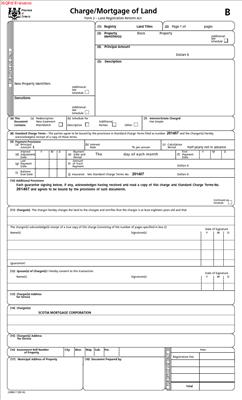
Most provinces register a mortgage/charge against the title. In Ontario’s land titles practice, the Charge/Mortgage of Land form can incorporate Standard Charge Terms by filing number, making those terms part of the security package.
Banks and monoline lenders publish standard charge term sets (fixed/variable) that govern borrower obligations and enforcement mechanics. A fixed-rate mortgage charge/terms package typically spells out the borrower’s covenants and remedies on default.
Operational risk: staff treats “standard terms” as boilerplate; lenders and courts treat them as enforceable contract terms. Build a short “clause spotter” checklist for recurring issues (default/acceleration, insurance, assignment/rents, prepayment mechanics).

Fixed Rate Mortgage Charge: what to review, and how to make it repeatable
A “Fixed Rate Mortgage Charge” usually has two moving parts:
- The registrable instrument (charge/mortgage on title), and
- The standard charge terms (contractual covenants) are often incorporated by reference.
Review points that reduce rework and client blowback
- Names/capacity: match ID, title, and lender documents to avoid rejects and post-funding exceptions.
- Standard charge terms reference: Confirm the correct filing reference where required.
- Prepayment mechanics: Fixed-rate documentation often defines how payout/prepayment charges are calculated and triggered.
- Construction / progress-draw overlays: Some “fixed-rate” packages include construction-period rate mechanics and draw conditions.
Form design move (revenue + efficiency): build one “Fixed Rate Mortgage Charge intake” form that captures the variables that actually change: principal, rate type, term, payment frequency, property identifier, standard terms reference, and special conditions.
Registration + funding: where law firms lose the most time
Funding delays usually come from: (a) registration timing, (b) unsupported certifications, or (c) missing trust conditions.
Electronic registration controls (Ontario example)
Ontario supports electronic registration workflows through Teraview procedures for creating and submitting land title documents in an electronic environment. Ontario also implemented digital certification changes integrated with Teraview/OnLand processes. For Ontario e-registration, firms commonly use an Electronic Registration Bank Account (ERBA); submission authorizes debits for registration fees and land transfer tax from the ERBA.
Process control that pays: a “Registration Readiness” form that forces:
- last title search date/time,
- PIN/legal description confirmation,
- execution complete,
- ERBA funded and authorized (where applicable),
- planned registration window.
The “Request for Mortgage Funds” is a certification instrument—treat it like one
The CBA warns that requisition/request-for-funds documents may require lawyers to certify items such as “good and marketable title” or third-party payment status, sometimes as of the future funding date.
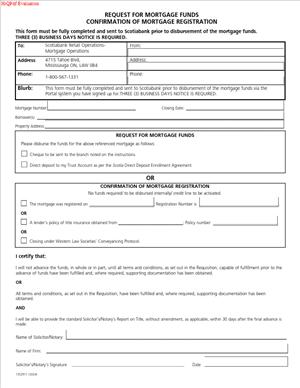
Scotiabank’s Request for Mortgage Funds – Confirmation of Mortgage Registration requires completion prior to disbursement and states that three (3) business days’ notice is required. (That single line drives a lot of last-minute chaos if your team doesn’t calendar it on day one.)
Table 2 — Funding request benchmarks and certification risks (selected sources)
Alt text: Mortgage paperwork Canada table comparing lender request-for-funds notice periods, certifications, and controls.
| Source example | Document type | Notable operational requirement | Certification “scope creep” risk | Control to implement |
| Scotiabank | Request for Mortgage Funds – Confirmation of Mortgage Registration | 3 business days’ notice required. | Certifying registration and conditions without evidence on funding date. | A form-driven timer: request date, target funding date, approvals + attachments |
| RBC | Request for Mortgage Funds (example form) | Form confirms compliance with instructions and completion status. | Certifications tied to pre-disbursement conditions. | Separate “Conditions Satisfied” checklist; attach proof (tax/insurance/title results) |
| CBA Toolkit | Request for funds guidance | Flags future-dated certifications and “good and marketable title”. | Lawyers assume responsibility outside the retainer scope. | Clause library + escalation rule: partner review if instructions exceed scope |
Independent Legal Advice (ILA): high-liability, high-variance, fully standardizable
ILA becomes critical when you have conflicts, undue influence risk, or asymmetric information—especially with spouses and guarantors. The CBA’s toolkit lists common triggers, including spouse/title mismatches and nominal-consideration transfers.
Ontario’s Law Society provides practice guidance on ILA/independent legal representation, including requirements and best-practice references. BC’s Law Society publishes an ILA checklist and explicitly recommends using a checklist and keeping notes as a meeting record.
Build ILA as an audit file, not a signature event
A defensible ILA pack typically includes:
- conflict check results,
- retainer letter confirming independence,
- capacity/duress screen,
- document-by-document explanation record,
- risks explained in plain language,
- signed certificate.
Ontario Certificate of Independent Legal Advice – 1150413 gives firms a standardized output that supports consistent file documentation.

Table 3 — ILA trigger matrix (what to document and why)
Alt text: Mortgage paperwork Canada ILA trigger matrix with recommended evidence and form fields.
| Trigger | Why it’s risky | Minimum evidence to retain | Form fields to add |
| Family member guarantor | Undue influence; misunderstanding of liability | Notes showing liability explained; independent decision confirmed | Relationship, “no pressure” attestation, key risks summary |
| Spouse signs, but not on the title | Later claim of non-understanding | Explanation of the effect on property rights; capacity check | Marital status, title status, docs reviewed, advice summary |
| Refinance removes spouse | Value transfer + conflict risk | Consideration details: financial disclosure summary | Consideration, reason for change, recommendation for separate counsel |
| Private/alternative mortgage | Higher fees, stricter remedies | Term/fee disclosures discussed | Fee list, maturity, default remedy summary |
| Corporate borrower + personal guarantee | Directors may miss personal exposure | Corporate authority check; guarantee scope | Role, guarantee scope, collateral granted, advice confirmation |
Guarantee + collateral mortgage structures: explain the structure, then control the file
A guarantee backed by land security materially changes the file. It adds personal covenant exposure plus real property security.
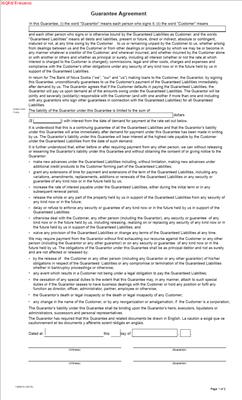
Ontario Guarantee Agreement – Collateral Mortgage – 1369415 as a two-part structure: a guarantee plus a mortgage/charge registered on title that can secure guaranteed obligations now and in the future.
Banks also distinguish conventional versus collateral mortgage charges. Scotiabank explains that a conventional charge secures only the mortgage loan, while a collateral charge structure relates to broader borrowing flexibility (product-dependent) and can affect switching dynamics.
Table 4 — Conventional vs collateral charge (practice impact for law firms)
Alt text: Mortgage paperwork Canada comparison table for conventional vs collateral mortgage charges and law-firm reporting impacts.
| Feature | Conventional charge | Collateral charge | What your firm should document |
| What is secured | Typically, the specific mortgage loan | Can secure broader obligations per the terms | Plain-language scope summary in reporting letter |
| Registered amount | Often closer to the loan principal | Often registered higher (varies by lender/product) | Registered amount vs advance; client explanation record |
| Renewals/switching | Often simpler to discharge/switch | Switching may be more complex/costly | Renewal/switch counselling note; discharge roadmap |
| Link to guarantees | Often separate guarantee only | Guarantee + charge may be integrated | ILA for guarantor; cross-reference index |
Evidence note: There is no single authoritative public dataset ranking “switching difficulty” by lender. Treat it as product- and fact-dependent, and document what you told the client.
Chattel mortgages for mobile/modular homes: security is personal property, not land
Mobile, modular, and mini homes sometimes remain personal property, especially in parks or where the unit is not legally treated as part of the land. Lenders then rely on chattel mortgages/security agreements and perfection under provincial PPSA regimes.
BC’s PPSA expressly applies to transactions creating security interests and includes chattel mortgages in its covered forms. Ontario’s PPSA provides core definitions of “goods,” “collateral,” and “security agreement” that govern chattel security structures.
Controls that prevent expensive clean-ups:
- serial/VIN accuracy (one digit can defeat usefulness),
- PPSA search protocol before advance,
- documented plan for what happens if the unit becomes affixed (jurisdiction- and fact-specific; no single pan-Canadian checklist covers all permutations as of June 2025).
A law-firm playbook: turn paperwork into a managed service line
Mortgage work becomes unprofitable when exceptions create unplanned lawyer time. Fix it by controlling inputs and standardizing outputs.
Build a “mortgage file minimum dataset”
Capture once, reuse everywhere:
- party identifiers (borrower, guarantor, spouse),
- property identifiers (PIN/legal description),
- lender/product identifiers,
- funding date targets + notice periods,
- special conditions + “certify” clauses tagged for review.

Convert due diligence into mandatory form fields
Ontario’s Law Society highlights mortgage/real estate fraud risk and publishes practical due diligence guidance for mortgage or loan transactions. Translate that guidance into forced-choice fields: remote signing flags, unusual payout directions, third-party payment requests, rapid title changes, and source-of-funds anomalies.
Tie forms to revenue
- Track each funding delay by root cause (registration timing, missing evidence, lender callback).
- Update your checklists quarterly based on actual delay data.
- Standardize certifications so juniors don’t over-certify beyond evidence.
Suggested internal links (anchor texts):
- “mortgage paperwork Canada checklist”
- “mortgage legal forms Canada for law firms”
- “Mortgage Documents Checklist Canada (closing + funding).”
Frequently Asked Questions
What documents do you sign for a mortgage in Canada?
Usually, the registrable mortgage/charge instrument (or chattel security for personal property), the lender’s standard charge terms, and lender funding/certification documents. Packages vary by lender and province.
Do I need independent legal advice for a mortgage in Canada?
Not always. ILA is common when a guarantor signs, when a spouse is not on title, or when a refinance changes ownership. Lender instructions can also require it.
How long does mortgage registration take in Canada?
It varies by province, office workflow, and instrument type. Ontario supports electronic registration procedures through Teraview. Published national turnaround benchmarks are not standardized.
What happens after mortgage funds are requested?
The lender reviews the requisition, verifies the conditions, and releases funds in accordance with its process. These forms often include undertakings about trust handling and the use of proceeds.
What is a collateral mortgage in Canada?
It is a charge structure that may secure broader present and future obligations under its terms, compared with a conventional charge securing only the mortgage loan. Product details vary, so document client advice carefully.
What is a chattel mortgage in Canada?
A chattel mortgage secures a loan against personal property (goods) rather than real property (land). PPSA regimes govern perfection/priority, including debtor and (where applicable) serial-number-based registration practices.
Resourcers
- Canadian Bar Association (CBA). (n.d.). Mortgage instructions toolkit.
https://www.cba.org/Our-Work/Toolkits/Mortgage-Instructions-Toolkit - Scotiabank. (n.d.). Standard charge terms and mortgage documentation (fixed-rate products).
https://www.scotiabank.com/ca/en/personal/mortgages.html - Law Society of Ontario. (n.d.). Electronic registration, ERBA, and trust accounting guidance.
https://lso.ca/practice-supports-and-resources/practice-management-topics/financial-management - Canadian Bar Association (CBA). (n.d.). Request for funds – professional responsibility guidance.
https://www.cba.org/Our-Work/Toolkits/Mortgage-Instructions-Toolkit/Request-for-Funds - Canadian Bar Association (CBA). (n.d.). Independent legal advice (ILA) – mortgage transactions.
https://www.cba.org/Our-Work/Toolkits/Mortgage-Instructions-Toolkit/Independent-Legal-Advice - Law Society of Ontario. (n.d.). Independent legal advice and independent legal representation.
https://lso.ca/lawyers/practice-supports-and-resources/topics/client-relationships/independent-legal-advice - Government of British Columbia. (n.d.). Personal Property Security Act (BC).
https://www.bclaws.gov.bc.ca/civix/document/id/complete/statreg/96359_01 - RunSensible Forms. (n.d.). Scotiabank Chattel Mortgage – Mobile/Modular/Mini Homes & Personal Property.
https://www.runsensible.com/legal-forms/ - Law Society of Ontario. (n.d.). Due diligence in mortgage or loan transactions.
https://lso.ca/practice-supports-and-resources/practice-management-topics/fraud-prevention - Law Society of Ontario. (n.d.). Real estate and mortgage fraud prevention.
https://lso.ca/protecting-the-public/initiatives/fraud-awareness
Disclaimer: The content provided on this blog is for informational purposes only and does not constitute legal, financial, or professional advice.
Contents