Month-to-month rental agreements and fixed-term leases operate under different legal mechanisms that affect termination rights, notice obligations, rent adjustments, and enforcement remedies. Selecting one over the other determines how and when a tenancy can be ended, what procedural steps must be followed, and what liabilities may arise if those steps are missed.
Because these agreements are governed by state and local statutes, misalignment between the contract types and applicable law frequently leads to disputes. Improper notice, unenforceable clauses, or reliance on informal practices can invalidate terminations, delay evictions, or create unintended financial exposure.
What you will learn:
- How each agreement is formed and legally classified
- What statutory notice is required to modify or terminate each contract type
- When rent terms may be changed and when they are legally locked
- How fixed-term leases convert to periodic tenancies
- Which documents are required at each stage of the rental relationship
- Where compliance failures most commonly occur across jurisdictions
Use legally accurate rental and lease forms that align with your tenancy type. Draft, customize, and manage documents with Runsensible and get the right form.
Core Definitions of Rental Agreement contracts
Rental agreements and lease agreements function as enforceable contracts governed by property law and general contract principles. While the terms are often used interchangeably in informal contexts, the distinction between a periodic rental agreement and a fixed-term lease has specific legal consequences.

Month-to-Month Rental Agreement (Periodic Tenancy)
A month-to-month rental agreement establishes a tenancy that renews automatically at the end of each rental period until lawfully terminated. The agreement does not specify a fixed end date. Instead, continuation depends on statutory notice rather than contractual expiration.
Periodic tenancies may be created through:
- A written agreement that expressly provides for month-to-month renewal
- The expiration of a fixed-term lease without renewal
- An oral agreement is permitted by law
Because termination depends entirely on notice compliance, month-to-month agreements are heavily regulated by statutory timing, delivery, and form requirements.
Fixed-Term Lease Agreement
A fixed-term lease creates a tenancy for a defined duration with a specific start and end date. The contractual obligations of both parties remain in effect for the entire term unless the lease is lawfully terminated earlier.
At the end of the term, the lease may:
- Expire without renewal
- Be replaced by a new fixed-term lease
- Convert to a month-to-month tenancy by statute or by agreement
Unlike periodic tenancies, fixed-term leases rely on contractual expiration rather than notice to conclude the tenancy.
Legally Required Elements of Any Rental Contract
Regardless of structure, a rental agreement must contain certain essential terms to be enforceable:
- Identification of all parties to the agreement
- Description of the rental property
- Rent amount and payment terms
- Duration of the tenancy or renewal mechanism
- Termination and notice provisions
In many jurisdictions, leases exceeding one year must be in writing to satisfy Statute of Frauds requirements. Even where oral agreements are technically permitted, written contracts provide clarity, enforceability, and evidentiary protection.
How a Month-to-Month Rental Agreement Works
Month-to-month rental agreements operate through statutory continuation rather than contractual duration. Their legal effect depends less on the original agreement and more on compliance with notice, timing, and local regulation.
Formation and Renewal
A month-to-month tenancy arises when a rental agreement does not specify a fixed end date or when a fixed-term lease expires and the tenancy continues without renewal. In many jurisdictions, the law automatically converts an expired lease into a periodic tenancy if rent continues to be accepted.
The agreement renews automatically at the end of each rental period. No affirmative action is required to extend the tenancy, and renewal occurs by operation of law unless a valid termination notice is served.
Because renewal is automatic, documentation errors at formation—such as missing termination clauses or ambiguous rent terms—tend to compound over time rather than resolve themselves.
Legal Requirements for Notice
Termination or modification of a month-to-month agreement depends entirely on proper notice. Statutes typically regulate:
- The minimum notice period required to terminate the tenancy
- Longer notice periods for rent increases or material changes
- The form of notice (written vs. oral)
- Acceptable delivery methods
Most jurisdictions require written notice, and many specify how notice must be delivered to be legally effective. Failure to meet statutory notice requirements can invalidate termination attempts, delay evictions, or expose a party to damages.
Where rent control or just-cause eviction laws apply, additional procedural steps may be required beyond basic notice.
Legal Advantages and Compliance Risks
Month-to-month agreements allow rapid adjustment of terms and relatively quick termination, subject to statutory limits. This flexibility reduces long-term contractual exposure but increases regulatory exposure.
Common compliance risks include:
- Improper notice timing or delivery
- Rent increases that violate local caps or frequency limits
- Terminations that conflict with just-cause or anti-retaliation statutes
- Reliance on outdated or non-jurisdictional forms
Because enforcement hinges on statutory compliance rather than contract expiration, month-to-month agreements demand continuous legal accuracy rather than one-time execution.
How a Fixed-Term Lease Works
Fixed-term leases operate through contractual duration rather than statutory continuation. Legal rights and obligations attach for the entire term and remain enforceable unless modified or terminated in accordance with law.
Contract Formation
A fixed-term lease is created by specifying a defined start date and end date. The lease binds both parties for the stated period and limits unilateral modification.
Because fixed-term leases are enforceable for their full duration, precision at formation is critical. The lease should clearly state:
- The lease term and expiration date
- Rent amount and payment schedule
- Renewal or holdover provisions
- Permitted grounds for early termination
In many jurisdictions, leases exceeding one year must be in writing to satisfy statutory requirements. Ambiguity in term length or renewal language often leads to unintended month-to-month conversion.
Legal Obligations During the Lease Term
Once executed, the lease locks in core terms. Rent generally cannot be increased mid-term, and material conditions cannot be altered without mutual agreement or statutory authorization.
During the lease term:
- Tenants retain the right to occupy the premises through the end date if contractual obligations are met
- Landlords retain the right to enforce lease conditions, but may not terminate without a legally recognized cause
- Habitability and maintenance duties apply regardless of lease language
The fixed term provides predictability but limits flexibility. Enforcement depends on contract interpretation rather than statutory notice alone.
Early Termination and Legal Consequences
Breaking a fixed-term lease before expiration typically results in contractual liability unless statutory or contractual exceptions apply. Common legally recognized grounds include:
- Failure to maintain habitable conditions
- Statutory protections related to military service
- Certain safety-related or domestic violence statutes
Absent a statutory basis, early termination may require payment of rent through the end of the term, subject to the landlord’s duty to mitigate damages. Lease clauses addressing assignment, subletting, or replacement tenants materially affect exposure and should be drafted with care.
Documentation of notice, mitigation efforts, and lease provisions is essential when disputes arise.
Not sure which rental form applies to your situation or jurisdiction? Using the wrong document can invalidate notice, delay enforcement, or create liability. Find forms matched to your specific legal need with RunSensible forms and find your required document with ease.
Legal Compliance Steps for Landlords
Landlords must manage rental agreements as regulated legal instruments rather than informal arrangements. Compliance failures most often occur during notice, modification, or termination, not at initial execution.
Contract Drafting and Documentation
Rental agreements should be drafted in writing with clear, jurisdiction-appropriate terms. Verbal modifications or side agreements undermine enforceability and complicate dispute resolution. Each agreement should clearly state the tenancy structure, renewal mechanism, rent terms, and termination procedures.
Statutory Notice Compliance
All notices affecting tenancy status or rent must comply with statutory requirements. This includes:
- Correct notice period
- Proper form and content
- Legally acceptable delivery methods
Retaining proof of delivery is critical. Failure to document notice service frequently invalidates otherwise lawful actions.
Regulatory Awareness
Local rent control, just-cause eviction laws, and anti-retaliation statutes often impose additional procedural requirements. These regulations may limit rent increases, restrict termination grounds, or extend notice periods beyond general state law.
Recordkeeping and Dispute Management
Consistent documentation supports enforcement and defense. Landlords should maintain:
- Signed agreements and amendments
- Copies of all notices served
- Records of rent payments and communications
- Maintenance and habitability documentation
Dispute resolution clauses, where enforceable, should be clearly drafted and aligned with local law.
Legal Compliance Steps for Tenants
Tenants assume contractual and statutory obligations upon entering a rental agreement. Legal exposure most often arises from missed notice requirements, early termination, or reliance on informal understandings that conflict with written terms or statute.
Understanding Termination Obligations
Tenants must comply with notice requirements when terminating a tenancy. In month-to-month agreements, failure to provide legally sufficient notice may extend rent liability into the following rental period. In fixed-term leases, early termination without statutory or contractual justification may result in liability for unpaid rent or fees.
Termination rights should be evaluated against both the lease language and applicable statutory protections.
Monitoring Rent and Lease Modifications
Rent increases and material lease changes must comply with statutory notice rules. Tenants should verify that any rent adjustment aligns with required notice periods and applicable rent-control limitations.
Informal requests or verbal agreements do not alter enforceable lease terms unless properly documented.
Documentation and Evidence Preservation
Written records play a central role in enforcing tenant rights and defenses. Tenants should retain:
- Executed copies of rental agreements and renewals
- Written notices sent or received
- Proof of rent payments
- Records of maintenance requests and responses
Clear documentation becomes essential if disputes arise regarding termination, habitability, or financial liability.

Residential Leasing Forms and Documents
Monthly and fixed-term rental agreements are enforced through documents. Each stage of a tenancy—formation, modification, termination, enforcement, and financial close-out—relies on specific legal forms that carry defined statutory functions. The agreement itself establishes the relationship, but the supporting paperwork determines how rights and obligations are exercised in practice.
Each rental form performs a narrow legal role. Problems arise when a document is used outside its intended purpose, such as serving a month-to-month termination notice on a fixed-term lease, issuing a rent increase during a locked lease term, or filing enforcement paperwork that does not comply with jurisdiction-specific statute. These mistakes frequently invalidate actions, delay possession, and create avoidable liability.
Effective form selection requires aligning the document with the tenancy structure, the legal action being taken, and the law governing the property. The sections below identify the principal rental forms used in residential leasing.
1. Forms That Create the Tenancy
These documents establish the legal relationship between landlord and tenant.
- RTB-1 – Residential Tenancy Agreement (British Columbia)
The mandatory standard lease is used in British Columbia to create residential tenancies. It applies to both fixed-term and periodic tenancies under provincial law and sets rent, duration, services, and termination rules. - Fixed-Term Residential Lease Agreement (U.S.)
A written contract creating a tenancy for a defined start and end date. It locks rent and occupancy for the lease term. - Month-to-Month Rental Agreement (U.S.)
A periodic contract that renews each rental period automatically and terminates through statutory notice rather than expiration. - Lease Renewal Agreement
Extends or replaces an expiring fixed-term lease with updated terms. - Move-In Condition Inspection Report
Records the property’s condition at possession and supports later security-deposit accounting.
These documents control the core structure of the tenancy and determine whether the agreement operates as a monthly or fixed-term agreement.
2. Addenda and Disclosure Forms
These forms attach to the base agreement and address statutory or habitability obligations.
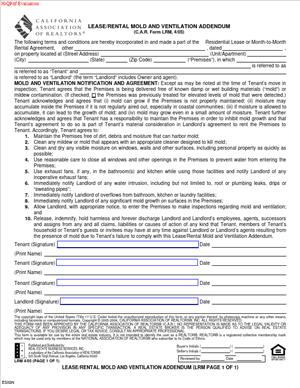
- Lease or Rental Mold and Ventilation Addendum (California)
A disclosure modifying the lease to address mold prevention, ventilation duties, and tenant cooperation requirements. - Lead-Based Paint Disclosure (U.S. Federal Requirement)
Required for pre-1978 housing and informs tenants of known lead hazards. - Utility and Services Disclosure Addenda
Allocate responsibility for water, electricity, gas, and other services. - House Rules, Parking, and Pet Addenda
Supplement occupancy rules without changing the base lease structure.
Addenda become enforceable only when properly incorporated into a valid lease agreement.
3. Forms Used to End or Not Renew a Tenancy
Termination documents are among the most regulated rental forms and must follow statutory timing and delivery rules.
- N9 – Tenant’s Notice to End the Tenancy (Ontario)
Used by tenants to terminate a month-to-month tenancy or to end a fixed-term lease at its natural expiration. - Tenant’s Statement About Sexual or Domestic Violence and Abuse (Ontario)
Allows shortened-notice termination when paired with an N9 under safety-based statutory protections. - RTB-8 – Mutual Agreement to End a Tenancy (British Columbia)
A written contract is used when both landlord and tenant agree to terminate a tenancy early. - Landlord Notice to Terminate Month-to-Month Tenancy (U.S.)
Used by landlords to lawfully end a periodic tenancy through statutory notice. - Notice of Non-Renewal of Fixed-Term Lease (U.S.)
Prevents automatic holdover or conversion to month-to-month where required by law. - Tenant Notice to Vacate (U.S.)
Used by tenants to provide an advance termination notice in periodic tenancies.
Termination forms must match the tenancy structure—monthly versus fixed-term—or they may be unenforceable.
4. Rent and Breach Enforcement Notices
These documents demand compliance before court or tribunal action begins.
- 5-Day Notice of Past Due Rent (U.S.)
Demands payment of delinquent rent within a statutory period before escalation. - AB226 – 5-Day Notice to Pay Rent or Quit (U.S.)
Requires the tenant to pay overdue rent or surrender possession within the notice window. - Notice to Cure Lease Violations
Addresses non-monetary defaults such as unauthorized occupants or prohibited use. - Notice of Intent to File Eviction
Provides a formal warning before possession proceedings commence.
These notices operate as procedural prerequisites to eviction or possession actions.
5. Eviction and Dispute Resolution Forms
When informal resolution fails, formal filings control the process.
- UCS-LTN3 – Tenant Answer/Counterclaim for Non-Payment Eviction (New York)
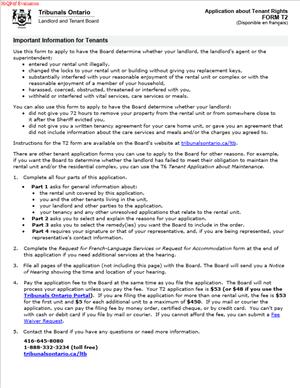
Allows tenants to respond and assert defenses in non-payment eviction proceedings. - T2 – Application About Tenant Rights (Ontario)
Used by tenants to bring statutory claims before the Landlord and Tenant Board. - Schedule of Parties for Multi-Tenant Applications (Ontario)
Lists multiple tenants involved in a single proceeding. - L1.L9 – Information Update (Ontario)
Updates case information during tribunal proceedings. - Eviction Complaint or Petition (U.S.)
Initiates court action for possession. - Summons and Notice of Hearing
Provide procedural notice of court dates and filings.
These forms govern litigation, not contract creation, but directly affect possession and liability.
6. Post-Tenancy Accounting Documents
These documents close out the financial relationship after move-out.
- Security Deposit Itemization Statement
Explains deductions and refunds under statutory deadlines. - Deposit Refund or Demand Letter
Issues payment or asserts remaining liability. - Damage Assessment Report
Documents post-occupancy property condition. - Proof of Final Accounting Delivery
Shows compliance with statutory notice and mailing requirements.
Failure to use proper post-tenancy forms often triggers deposit disputes and statutory penalties.
Rental Forms Reference Table
| Category | Form Name | Jurisdiction | Applies To | Primary Use |
| Create the Tenancy | RTB-1 – Residential Tenancy Agreement | British Columbia (CA) | Fixed-Term & Month-to-Month | Establishes a residential tenancy and sets rent, services, and termination rules. |
| Addenda & Disclosures | Lease or Rental Mold and Ventilation Addendum | California (US) | Fixed-Term & Month-to-Month | Adds statutory mold prevention and ventilation obligations to a lease. |
| Termination | N9 – Tenant’s Notice to End the Tenancy | Ontario (CA) | Month-to-Month / End of Fixed-Term | Used by tenants to terminate a periodic tenancy or end a fixed-term at expiration. |
| Termination | Tenant’s Statement About Sexual or Domestic Violence and Abuse | Ontario (CA) | Fixed-Term & Month-to-Month | Supports shortened-notice termination for safety-based claims. |
| Termination | RTB-8 – Mutual Agreement to End a Tenancy | British Columbia (CA) | Fixed-Term & Month-to-Month | Documents the mutual early termination between the landlord and the tenant. |
| Rent Enforcement | 5-Day Notice of Past Due Rent | United States | Fixed-Term & Month-to-Month | Demands payment of delinquent rent before escalation. |
| Rent Enforcement | AB226 – 5-Day Notice to Pay Rent or Quit | United States | Fixed-Term & Month-to-Month | Requires payment or surrender of possession within the statutory period. |
| Litigation | UCS-LTN3 – Tenant Answer / Counterclaim for Non-Payment Eviction | New York (US) | Fixed-Term & Month-to-Month | Allows tenants to respond and assert defenses in non-payment cases. |
| Litigation | T2 – Application About Tenant Rights | Ontario (CA) | Fixed-Term & Month-to-Month | Used by tenants to file statutory claims before the LTB. |
| Litigation | Schedule of Parties for Multi-Tenant Applications | Ontario (CA) | Fixed-Term & Month-to-Month | Lists multiple tenants involved in one tribunal application. |
| Litigation | L1.L9 – Information Update | Ontario (CA) | Fixed-Term & Month-to-Month | Update party, address, or filing data in tribunal proceedings. |
Every stage of a tenancy depends on using the correct legal document. The wrong form can invalidate notice, delay enforcement, or create liability.
Find the exact leasing document you need with RunSensible
Legal Risks and Compliance In Rental Agreements
Monthly and fixed-term rental agreements allocate risk differently through their termination mechanics, notice requirements, and regulatory exposure. The legal consequences of selecting one structure over the other often emerge at termination or modification rather than at formation.

Termination and Notice
Month-to-month tenancies terminate through statutory notice. The tenancy continues indefinitely until a legally compliant notice is served. Defective notice—whether in timing, form, or delivery—prevents lawful termination and may delay possession or invalidate rent changes.
Fixed-term leases terminate by contract expiration. Notice is generally unnecessary unless required by statute or lease language. Early termination outside contractual or statutory grounds exposes the terminating party to liability.
Rent Modifications
Rent adjustments in month-to-month agreements are governed by statute. Increases typically require advance written notice and must comply with local caps, frequency limits, or rent control ordinances where applicable.
In fixed-term leases, rent is contractually locked for the duration of the term. Mid-term increases are unenforceable unless expressly permitted by the lease and allowed by law.
Stability and Control
Month-to-month agreements favor flexibility but reduce predictability. Tenants face potential instability, while landlords face increased turnover and regulatory scrutiny.
Fixed-term leases prioritize stability and enforceability. Tenants gain predictable occupancy, and landlords gain predictable income, but both surrender unilateral flexibility during the lease term.
Common Compliance Failures
Across both structures, recurring legal errors include:
- Using non-jurisdictional or outdated forms
- Failing to document notice delivery
- Including unenforceable termination or penalty clauses
- Misapplying month-to-month rules to fixed-term leases and vice versa
Many disputes stem not from the agreement type itself, but from procedural noncompliance during modification or termination.
Final Thoughts
Monthly and fixed-term rental agreements operate as legally binding contracts with distinct processes, obligations, and risks. Each agreement type defines how rent can be collected or modified, how the tenancy may be terminated, and what statutory notices must be served.
Compliance depends on using the correct legal forms at every stage:
- Formation: Written leases or rental agreements and move-in inspection reports establish the tenancy and clarify obligations.
- Modification: Lease addenda and statutory disclosures ensure that changes to terms comply with local law.
- Termination: Statutory notices and mutual termination agreements govern lawful endings of tenancy.
- Enforcement and Disputes: Nonpayment or breach notices, counterclaim forms, and tribunal applications protect rights and document compliance.
- Post-Tenancy Accounting: Security deposit statements and damage reports reconcile obligations after move-out.
Failing to use the appropriate forms or to follow procedural rules exposes both landlords and tenants to disputes, delayed enforcement, or financial liability. Harmonizing tenancy type, statutory requirements, and documentation ensures enforceable agreements, predictable outcomes, and reduced legal risk.
FAQs
What is the main difference between a month-to-month rental agreement and a fixed-term lease?
A month-to-month agreement renews each rental period automatically and continues until proper legal notice is given, while a fixed-term lease runs for a defined start and end date and typically ends by contract expiration rather than notice.
Which type of rental agreement offers more flexibility for landlords and tenants?
Month-to-month agreements generally offer more flexibility because they allow changes or termination with statutory notice, whereas fixed-term leases prioritize stability by locking in terms for the entire lease duration.
Do both month-to-month and fixed-term agreements need to be in writing to be enforceable?
While some jurisdictions allow oral agreements, most fixed-term leases—especially those longer than one year—must be in writing, and written contracts are strongly recommended for both structures to ensure clarity and enforceability.
How does a fixed-term lease legally convert into a month-to-month tenancy?
If a fixed-term lease expires and the tenant remains in possession while the landlord continues accepting rent, many jurisdictions automatically convert the tenancy into a month-to-month arrangement unless the lease or statute provides otherwise.
What notice requirements apply when terminating a month-to-month tenancy?
Termination depends entirely on statutory notice rules, which regulate the minimum notice period, acceptable delivery methods, and required content. Failure to strictly comply can invalidate the termination and delay enforcement.
When are rent increases legally permitted under each agreement type?
Rent increases in month-to-month tenancies are governed by statute and typically require advance written notice, while rent in a fixed-term lease is usually locked for the entire term and cannot be increased mid-lease without legal or contractual authorization.
What legal consequences arise from early termination of a fixed-term lease?
Early termination can expose the terminating party to liability for unpaid rent through the lease end date unless a statutory or contractual exception applies, subject to the landlord’s duty to mitigate damages.
Why are incorrect forms and notice documents a major compliance risk in rental agreements?
Each document serves a specific legal function tied to the tenancy type. Using the wrong form—such as applying month-to-month termination rules to a fixed-term lease—can invalidate actions, delay possession, and create financial or legal exposure.
Resources
- Residential Tenancies Act, 2006 — Ontario landlord and tenant statutory framework
https://www.ontario.ca/laws/statute/06r17 - Tenancy agreements — Province of British Columbia official rental tenancy overview
https://www2.gov.bc.ca/gov/content/housing-tenancy/residential-tenancies/starting-a-tenancy/tenancy-agreements - Landlord‑Tenant Law — Office of the Missouri Attorney General
https://ago.mo.gov/get-help/programs-services-from-a-z/landlord-tenant-law/ - Residential Tenancies Act (CanLII) — Ontario legal text (scrollable legal statute)
https://www.canlii.org/en/on/laws/stat/so-2006-c-17/latest/so-2006-c-17.html - Guide to Ontario’s Standard Lease — provincial guide for landlords and tenants
https://www.ontario.ca/page/guide-ontarios-standard-lease - Private renting and tenancy rights (UK Citizens Advice guide)
https://www.citizensadvice.org.uk/housing/tenancy-agreements/ - Ontario RTA Legal Text — Landlord and Tenant Board role (CanLII)
https://www.canlii.org/en/on/laws/stat/so-2006-c-17/latest/so-2006-c-17.html - Tenancy agreement guide — British Columbia Tenant Resource & Advisory Centre
https://tenants.bc.ca/your-tenancy/tenancy-agreements/ - Uniform Residential Landlord and Tenant Act (URLTA) — sample model law context (U.S.)
https://en.wikipedia.org/wiki/Uniform_Residential_Landlord_and_Tenant_Act
Disclaimer: The content provided on this blog is for informational purposes only and does not constitute legal, financial, or professional advice.
Contents