To close a Texas LLC, you must do more than stop sales or shut a bank account. A domestic LLC usually needs an approved winding-up decision, completed business closeout work, current state tax filings, a valid Certificate of Account Status, and an accepted Certificate of Termination. Federal, payroll, licensing, and local steps may apply too.
This guide explains the sequence in plain language. It focuses on a voluntary closing of a domestic limited liability company formed in Texas. A company formed in another state follows a different Texas withdrawal or termination path. This article provides general information, not legal or tax advice.
What It Means to Close a Texas LLC
Texas law uses two related ideas: winding up and termination. Winding up is the work of settling the LLC’s affairs. Termination is the formal end of the entity’s legal existence after that work is complete.
The Texas Secretary of State’s Form 651 instructions say that a filing entity must wind up under Chapter 11 of the Texas Business Organizations Code. After winding up, it files a Certificate of Termination. The filing used for a domestic LLC is generally Form 651.
That order matters. Filing a form is not a shortcut around unpaid bills, unfinished contracts, member disputes, or unfiled tax reports. Form 651 includes a statement that the entity has complied with the rules governing winding up. A signer should not make that statement before the work is truly complete.
Stopping operations alone does not close a Texas LLC. Neither does allowing the registered-agent service to lapse, ignoring franchise-tax reports, or waiting for the state to take action. Those choices may create penalties, forfeiture, missed notices, or loss of control over the closing process.
Confirm whether you have a domestic or foreign LLC
Before you close a Texas LLC, confirm where it was formed.
- A domestic Texas LLC was created by filing a Certificate of Formation with the Texas Secretary of State. It usually uses Form 651 after winding up.
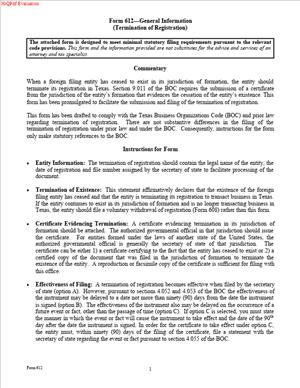
- A foreign LLC was formed under another state’s or country’s law and later registered to do business in Texas. It does not use Form 651 to end the entity’s existence. It may withdraw its Texas registration or file a termination of registration, depending on what happened in its home jurisdiction.

This distinction prevents a common rejection. If the home-state company remains active but wants to stop doing business in Texas, review the Secretary of State’s current withdrawal process. If the home-state company already ended, Texas Form 612 may apply.
How to Close a Texas LLC in the Correct Order
The cleanest way to close a Texas LLC moves from internal approval to winding up, tax clearance, state filing, and final account cleanup. Some steps overlap, but the state filing should not get ahead of the facts it certifies.
Table alt text: Ordered checklist to close a Texas LLC through approval, winding up, tax clearance, Form 651, and final records.
| Stage | Main action | Evidence to keep |
|---|---|---|
| 1 | Confirm entity type and status | Formation record and status search |
| 2 | Approve winding up | Signed consent, resolution, or minutes |
| 3 | Settle business affairs | Ledger, notices, releases, and asset records |
| 4 | Complete Texas tax filings | Filed reports and payment confirmations |
| 5 | Obtain Form 05-305 | Valid Certificate of Account Status |
| 6 | File Form 651 | Accepted, file-stamped termination record |
| 7 | Finish federal and local closeout | Final returns, account closures, and retained records |
Step 1: Check the LLC’s legal name, management, and status
Start with the exact legal name and Texas Secretary of State file number. Confirm whether the LLC is member-managed or manager-managed. Form 651 asks for each governing person’s name and address. For an LLC, that generally means each manager if managers run the company, or each managing member if the LLC is member-managed.
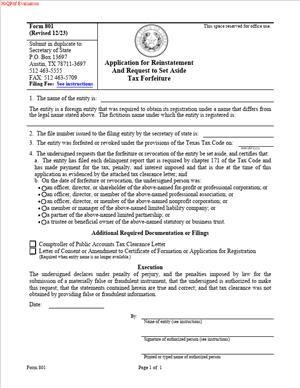
Check tax and entity status early. An LLC with missing reports, tax forfeiture, a terminated existence, or a disputed name may need a different sequence. If the LLC has been forfeited for tax reasons, it may need to correct its franchise-tax record and use the applicable reinstatement process before it can complete a planned voluntary closing. Form 801 concerns tax forfeiture; Form 811 covers other listed reinstatement paths.
Do not rely on a third-party directory as proof of state status. Compare the Secretary of State record, the Comptroller account, the formation document, and the company agreement.
Step 2: Approve the decision to wind up
When you plan to close a Texas LLC, review the company agreement first. It may set voting thresholds, notice rules, meeting procedures, or special conditions for winding up. The agreement may also say who manages the process and how remaining property is divided.
Document the decision even for a single-member company. A short written consent or resolution can identify:
- the LLC’s exact legal name;
- the date of approval;
- the event requiring winding up;
- the members or managers who approved it;
- the person authorized to handle tax and state filings; and
- the planned effective date, if known.
Keep this approval with the LLC’s permanent records. It is generally not attached to Form 651, but it supports the authority behind the filing. If ownership, voting power, or authority is disputed, get advice from a Texas business attorney before signing anything.
Step 3: Wind up the business and protect creditors
Winding up is the heart of the process to close a Texas LLC. The Texas Business Organizations Code, Chapter 11 supplies the governing framework, while the company agreement may add rules.
The LLC should stop taking on ordinary new business except work needed for an orderly close. It may still collect receivables, finish or transfer existing work, sell assets, resolve claims, and take other steps that support winding up.
Build a complete list of obligations. Include loans, credit cards, leases, subscriptions, taxes, customer refunds, contractor invoices, payroll, benefits, utilities, judgments, warranty duties, and member advances. Review personal guarantees separately because ending the LLC does not automatically release a member or manager from a personal promise.
Notify creditors and counterparties when appropriate. Ask for final invoices and written payoff figures. Follow contract notice clauses when ending leases, software plans, vendor agreements, or insurance. If a claim is disputed or the LLC cannot pay all debts, pause distributions and speak with counsel. Insolvency, pending litigation, and secured debt can change the safe order of payment.
The LLC should also inventory its property. That includes cash, equipment, vehicles, inventory, deposits, accounts receivable, websites, domain names, trademarks, customer files, and other intellectual property. Decide whether each item will be sold, assigned, returned, destroyed, or distributed. Record fair values and transfers. A separate tax consequence may arise when business property is sold or distributed.
Only distribute what remains after debts and adequate provisions for obligations have been handled. Follow the company agreement and applicable law. Keep a closing ledger that shows every receipt, payment, sale, reserve, and distribution.
Step 4: Handle employees, contractors, and operating accounts
If you close a Texas LLC that has workers, coordinate the last day of work, final wages, benefits, expense reimbursements, and payroll deposits. Texas wage law, federal employment rules, benefit-plan documents, and company policies may each affect timing. Do not assume the state termination filing ends employment duties.
The IRS says an employer may need to file a final Form 941 or Form 944, a final Form 940, Forms W-2 and W-3, and a statement naming the person who will keep payroll records. The final payroll return must be marked as required by the form. Employment-tax records generally must be kept for at least four years. See the IRS closing-a-business guidance for current federal steps.
Report qualifying contractor payments on the correct information return. For example, Form 1099-NEC may apply to report nonemployee compensation.
Keep the business bank account open long enough to clear checks, receive deposits, pay taxes, and cover final obligations. Then close bank accounts, merchant processing, credit lines, subscriptions, and automatic payments. Save the final statements. Cancel permits, professional licenses, local registrations, sales-tax accounts, and other Comptroller tax accounts through the agency that issued them.
If the LLC used a DBA, ending the entity does not by itself clean up every assumed-name record. Form 504 may be used for an assumed name filed with the Secretary of State. County-level filings must be addressed with the relevant county clerk.
Step 5: Get Texas tax clearance to close a Texas LLC
To close a Texas LLC, treat tax clearance as a separate process from filing Form 651. The Texas Comptroller’s termination page gives the current sequence.
First, file every outstanding annual franchise-tax report and Public or Ownership Information Report. Next, file any required final franchise-tax report. The Comptroller describes the final period as beginning the day after the last annual report accounting-period end date and ending on a date within 60 days of the planned termination date.
Then pay all tax, penalties, and interest. File, pay, and close other Comptroller tax accounts too. A business with a sales-tax permit, mixed-beverage account, or another Texas tax account cannot assume franchise-tax clearance closes those accounts automatically.
After these tasks are complete, request the correct certificate through Webfile or with Comptroller Form 05-359. The names are easy to mix up:
- Form 05-359 is the request for a Certificate of Account Status to terminate an entity or registration.
- Form 05-305 is the Certificate of Account Status the Comptroller issues for termination.
Form 05-305—not the request—is attached to the Secretary of State termination filing. The certificate is valid through December 31 of the year issued. It must also be valid through the effective date of Form 651.
A public webpage printout showing franchise-tax account status is not enough. Both the Secretary of State’s instructions and termination FAQs warn against using that printout in place of Form 05-305.
Step 6: File Form 651 to close a Texas LLC
Once winding up is complete and Form 05-305 is ready, prepare the Certificate of Termination. You can review and complete Form 651 on RunSensible Forms and compare it with the Secretary of State’s current instructions before filing.
Form 651 asks for:
- the LLC’s exact legal name;
- entity type, formation date, and file number;
- each governing person’s name and address;
- the event that required winding up;
- confirmation that winding up is complete;
- the filing’s effective date; and
- an authorized signature.
The Secretary of State says an authorized manager should sign for a manager-managed LLC. An authorized managing member should sign for a member-managed LLC. The certificate does not need notarization.

How to Start a Texas LLC in 2026: Forms, Fees, and Filing Steps
The current Form 651 filing fee is $40. The Secretary of State accepts online submissions through its filing systems and provides mail or delivery instructions for paper filings. Paper submissions are filed in duplicate under the published instructions. Always check the current form, fee schedule, submission method, and address immediately before filing because procedures can change.
The termination can take effect when accepted and filed. A filer may also choose a permitted delayed date, date and time, or future event. The Form 651 instructions limit a delayed date or event framework to the statutory 90-day window. Coordinate the effective date with the validity of Form 05-305, final tax period, payroll, contracts, insurance, and asset transfers.
Step 7: File final federal returns and close the IRS account
Even after you close a Texas LLC with the state, federal tax work remains. An LLC’s federal return depends on how the IRS classifies it. A single-member LLC may be disregarded and reported on the owner’s return. A multi-member LLC is often taxed as a partnership. An LLC may also elect corporate or S corporation treatment.
The IRS directs a closing business to file its final return and mark the applicable final-return box. A partnership generally files Form 1065 and final Schedules K-1. An LLC taxed as an S corporation generally files Form 1120-S and final Schedules K-1. A C corporation generally files Form 1120. Additional forms may apply to asset sales or liquidation.
The EIN is the permanent number assigned to that business, but the IRS business account can be closed. The IRS currently asks for a letter containing the full legal name, EIN, address, and reason for closing. It will not close the account until required returns are filed and taxes are paid. Keep a copy of the letter and proof of delivery.
This is a good time to confirm past tax classification. Form 8832 may help identify an earlier entity-classification election, but it is not a universal closing form. Ask a tax professional which final return and attachments match the LLC’s actual classification.
Common Mistakes When You Close a Texas LLC
Using the wrong tax document
Form 05-359 requests the certificate. Form 05-305 is the certificate attached to Form 651. A franchise-tax status screen is neither document. Mixing them up is a direct path to rejection.
Filing Form 651 before winding up is complete
The form certifies compliance with winding-up rules. Do not file while assets are unassigned, owners are still disputing distributions, or major debts and claims remain unresolved.
Closing the bank account too early
Final tax payments, refunds, chargebacks, payroll items, and vendor checks may still move after operations stop. Keep enough money and access in place to finish the closing ledger.
Forgetting separate accounts and jurisdictions
Form 651 does not cancel county DBAs, city permits, professional licenses, federal payroll duties, or registrations in other states. Create a list of every agency and account tied to the LLC.
Treating a foreign LLC like a Texas-formed LLC
A foreign LLC usually ends or withdraws its Texas registration rather than filing Form 651. Confirm the home jurisdiction’s status and select the matching Texas process.
Making owner distributions too soon
Creditors, taxes, reserves, and disputed claims come before owners receive what remains. Premature distributions may create repayment demands or personal exposure.
Discarding records after acceptance
After you close a Texas LLC, termination does not end audits, claims, warranty issues, or questions from former workers. Name a records custodian. Keep tax, payroll, property, approval, creditor, contract, and filing records for the periods that apply to each document.
A Practical File to Keep After Termination
Create one secure closing folder. It should contain the company agreement, approval resolution, final balance sheet, asset list, creditor notices, payoff letters, releases, final payroll records, tax returns, payment confirmations, Form 05-305, accepted Form 651, account-closure notices, insurance records, and a list of where originals are stored.
Also keep the contact information of the person who will receive future notices. Vendors and agencies may continue sending automated mail after you close a Texas LLC. A monitored address reduces the risk of missing an audit letter, refund check, claim, or corrected tax form.
For the beginning of the entity’s lifecycle, see RunSensible Forms’ guide to starting a Texas LLC. Its management and tax-registration details help explain which records must be closed at the end. The broader guide to forms for launching a business can also serve as a reverse checklist. If business assets are sold during winding up, review the general overview of taxes on private sale transactions and confirm the result with a tax adviser.
Conclusion: Close a Texas LLC With a Verifiable Paper Trail
The safest way to close a Texas LLC is to follow the facts in order: confirm the entity and authority, approve winding up, settle the business, finish Texas reports and payments, obtain Form 05-305, and file Form 651. Then complete the federal, payroll, license, DBA, banking, and recordkeeping steps that do not end automatically.
To close a Texas LLC carefully, do not treat Form 651 as the whole process. It is the final state filing that rests on work already completed. A clear ledger, written approvals, valid tax certificate, accepted termination record, and organized archive give former members and managers the strongest practical proof of a careful close.

Before filing, compare every form, fee, and submission method with the current Texas Secretary of State, Texas Comptroller, and IRS guidance. Get legal or tax advice when the LLC has unpaid debt, insolvency, disputed ownership, pending claims, employees, significant property, or operations in more than one state.
Frequently Asked Questions
How much does it cost to close a Texas LLC?
The Texas Secretary of State currently lists a $40 fee for Form 651, the Certificate of Termination for a domestic entity. Other costs may include professional help, contract termination charges, taxes, or fees to close permits and registrations. Confirm the state fee before filing.
Do I need a Certificate of Account Status before filing Form 651?
Yes, a taxable domestic LLC generally attaches the termination certificate issued by the Texas Comptroller. Request it through Webfile or Form 05-359. Attach the issued Form 05-305. A public franchise-tax status printout is not sufficient.
Can I close a Texas LLC online?
The Texas Comptroller allows many entities to request the Certificate of Account Status through Webfile. The Secretary of State says termination filings can be submitted online through its filing systems. Availability and instructions can change, so check both agencies before filing.
Can a Texas LLC terminate if it still owes money?
Form 651 states that the entity has complied with the winding-up provisions. Known debts, claims, reserves, and distributions must be handled under the company agreement and Texas law. An LLC that cannot pay its obligations or has disputed claims should get legal advice before filing.
What final federal tax return does an LLC file?
It depends on federal tax classification. A disregarded single-member LLC may report on the owner’s return. A partnership usually files Form 1065. An S corporation files Form 1120-S, and a C corporation files Form 1120. Mark the return final as instructed and file any required schedules.
Does Form 651 cancel the LLC’s EIN?
No. The EIN is permanently assigned to the business. After filing required returns and paying federal taxes, the business can ask the IRS to close its business account by letter under the IRS’s current instructions.
How is closing a foreign LLC in Texas different?
A foreign LLC was formed outside Texas. It generally withdraws or terminates its Texas registration rather than using Form 651 to end the entity. The correct filing depends on whether the LLC remains active in its home jurisdiction or has already terminated there.
Can a voluntarily terminated Texas LLC be reinstated?
Texas permits reinstatement in listed circumstances. The Secretary of State says there is no general time limit for reinstating a voluntarily terminated domestic entity if it otherwise would have continued to exist. Form 811 and its conditions should be reviewed; tax-forfeited entities use a different path.
Resources
- Texas Secretary of State, Form 651 instructions: https://www.sos.state.tx.us/corp/instructions/651.shtml
- Texas Secretary of State, Terminations and Reinstatements FAQs: https://www.sos.state.tx.us/corp/termreinfaqs.shtml
- Texas Comptroller, Reinstating or Terminating a Business: https://comptroller.texas.gov/taxes/franchise/reinstate-terminate.php
- Texas Business Organizations Code, Chapter 11: https://statutes.capitol.texas.gov/Docs/BO/htm/BO.11.htm
- Internal Revenue Service, Closing a Business: https://www.irs.gov/businesses/small-businesses-self-employed/closing-a-business
Disclaimer: The content provided on this blog is for informational purposes only and does not constitute legal, financial, or professional advice.
Contents