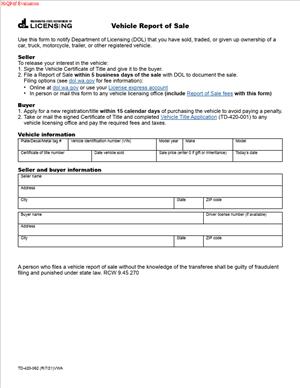
TD-420-062 – Vehicle Report of Sale
Fill out nowJurisdiction: Country: United States | Province or State: Washington
The TD-420-062 – Vehicle Report of Sale is a form used in Washington when you sell or transfer a vehicle. It notifies the state that you are no longer the owner. This protects you if the vehicle is later involved in parking tickets, traffic violations, or other issues.
If you are about to complete this form, you are likely selling a car, truck, motorcycle, or other registered vehicle. You may be transferring ownership to a private buyer, a family member, or another party. This document creates a clear record of the sale date.
Filling out the form correctly matters. The date and details you enter can affect your liability after the vehicle leaves your possession. Even small errors can cause confusion about who was responsible at a certain time.
This guide walks you through what the form is, when it is used, and how to complete it clearly and accurately.
What is TD-420-062 – Vehicle Report of Sale?
Clear definition
The TD-420-062 – Vehicle Report of Sale is a written notice that a vehicle has been sold or transferred to someone else. It records key details about the vehicle, the seller, the buyer, and the date of sale.
It does not transfer ownership by itself. Instead, it reports that a transfer took place. The state uses this information to update its records and link the vehicle to the new owner once the transfer process is completed.
The form typically includes the vehicle identification number (VIN), license plate number, sale date, purchase price, and the names and addresses of both parties. These details create an official timeline of the transaction.
Who typically uses this form?
Most often, the seller of a vehicle completes and submits this form. The seller may be a private individual, a business, or another entity listed as the registered owner.
If you are the registered owner on the vehicle title, you are usually the person responsible for reporting the sale. This applies whether you sell the vehicle for cash, trade it, or give it as a gift.
In some situations, businesses that sell vehicles as part of their operations may also use the form as part of their internal process. However, private sellers commonly interact with this document directly.
Why might you need this form?
You need this form to create a formal record that you no longer own the vehicle. Without that record, the state may still show you as the registered owner.
If the buyer delays transferring the title, tickets or toll charges could still be associated with your name. The report of sales helps show the exact date and time when responsibility shifted.
The form can also help clarify disputes about ownership. If questions arise later, the reported sale date becomes an important reference point.
Typical real-life scenarios
- You sell your car to a private buyer through an online listing. After you sign the title over, you complete the report of sale to document the transfer date and buyer information.
- You transfer a vehicle to a family member. Even though money may not change hands, you still record the transfer using the form to show the new owner and the date.
- You sell a motorcycle that has been sitting unused. The buyer drives it away the same day. Filing the report of sale marks the moment you gave up control of the vehicle.
- You trade in a vehicle as part of a larger transaction. A record of the sale is created to reflect that ownership changed, even if the vehicle is being resold later.
When would you use TD-420-062 – Vehicle Report of Sale?
You use this form when a vehicle registered in Washington is sold or otherwise transferred to another person. The key event is the change in ownership.
This typically happens in a private sale between individuals. It may also occur when transferring a vehicle to a family member, business partner, or as part of a divorce or estate process.
The timing matters. The report is usually completed shortly after the sale occurs. The sale date entered on the form reflects the day the vehicle was delivered to the buyer or when control changed.
If you remain listed as the registered owner in state records, the form helps correct that. It signals that responsibility for the vehicle’s operation has shifted to someone else.
Both parties have roles in a vehicle transfer. The seller reports the sale, and the buyer typically applies for a new title and registration. Each action updates a different part of the state’s record system.
Legal characteristics of TD-420-062 – Vehicle Report of Sale
This form functions as an official notice. Its effectiveness depends on accurate and complete information. The vehicle identification number, sale date, and buyer details must match the underlying transaction.
A common cause of problems is incorrect vehicle information. A single-digit error in the VIN can link the report to the wrong vehicle or prevent it from being processed properly.
Another frequent issue is entering the wrong sale date. The date establishes when the seller’s responsibility ended. Inconsistent dates between the title and the report can create confusion.
Legally, the form does not replace the vehicle title. The title remains the primary ownership document. The report of sale simply informs the state that the ownership listed on the title has changed.
Different states use different forms and deadlines for reporting sales. While many states require sellers to notify the motor vehicle agency, the details and time frames can vary. In Washington, this specific document is used for that purpose.
The form also does not guarantee that the buyer will complete their side of the transfer. It records the seller’s notice, but it does not force the buyer to register the vehicle immediately.
Is it legally binding?
The TD-420-062 – Vehicle Report of Sale is legally significant because it creates an official record with the state. Once properly submitted and accepted, it can serve as evidence of the reported sale date.
It is not a contract between buyer and seller. The sale agreement is typically reflected in the signed title and any separate bill of sale. The report of sale supports that transaction by documenting it in the state’s records.
Its legal effect depends on accurate completion and timely submission. If the information is false or incomplete, the form may not provide the protection you expect. When completed correctly, it strengthens your position if questions arise about who owned the vehicle at a certain time.
How to fill out TD-420-062 – Vehicle Report of Sale
Step 1 – Identify the vehicle
Begin by entering the full vehicle identification number. Copy it carefully from the title or the vehicle itself. Then provide the license plate number and, if requested, the year, make, and model. Double-check each character before moving on.
Step 2 – Enter the sale date
Write the exact date when the vehicle was sold or transferred. This is the day you gave possession or control to the buyer. Make sure this date matches the date written on the title or other transfer documents.
Step 3 – Provide the sale price
Enter the actual purchase price of the vehicle. If the transfer was a gift, indicate that clearly if the form allows it. The amount you list becomes part of the official record.
Step 4 – Add buyer information
Fill in the buyer’s full legal name and address. Use complete and accurate details. Avoid nicknames or incomplete addresses, as these can cause processing delays.
Step 5 – Add seller information
Enter your name and address exactly as they appear on the vehicle’s registration or title. If there are multiple registered owners, follow the form’s instructions for listing each one.
Step 6 – Review for accuracy
Pause before submission and read through every entry. Confirm the VIN, sale date, buyer name, and price. Small errors can affect how the report is recorded.
Step 7 – Sign and submit the form
Sign the form where indicated. By signing, you confirm that the information is true to the best of your knowledge. Then submit the completed document using the available submission method, so it becomes part of the official record.
Legal terms you might encounter in TD-420-062 – Vehicle Report of Sale
- Seller of Record: This is the person or business currently listed as the legal owner in the state’s vehicle title records. On this form, you are identifying yourself as the seller of record. The name you enter must match the name on the title or official ownership record.
- Buyer Information: This refers to the full legal name and address of the person or entity purchasing the vehicle. The form uses this information to update state records and shift responsibility. Accuracy matters because it affects who is contacted about future notices or penalties.
- Date of Sale: This is the exact calendar date when ownership changed hands. It is not the date you fill out the form unless the transaction happened that day. The date of sale determines when your responsibility for the vehicle ends in the state’s records.
- Sale Price: This is the total amount paid for the vehicle. The amount you report may be used for tax calculation and recordkeeping. It should reflect the actual agreed purchase price, not an estimate or rounded figure.
- Vehicle Identification Number (VIN): The VIN is a unique 17-character code assigned to the vehicle. On this document, the VIN confirms which specific vehicle was sold. One incorrect character can point to the wrong vehicle, so double-check it against the title and the vehicle itself.
- License Plate Number: This is the plate currently assigned to the vehicle at the time of sale. The form may ask for it to cross-reference the vehicle in state systems. If the plate was removed or transferred, you still need to report what was displayed at the time of sale.
- Odometer Disclosure: While the mileage disclosure is often handled on the title, you may see references to the vehicle’s mileage. Odometer information helps document the vehicle’s condition at the time of sale. Incorrect mileage reporting can create legal and financial issues later.
- Release of Liability: This is the practical effect of submitting the report. Once properly filed, the state records show that you are no longer responsible for the vehicle after the date of sale. This can protect you from future parking tickets, toll charges, or other violations tied to the vehicle.
- Authorized Signature: This is the legally recognized signature of the seller or an authorized representative. If a business owns the vehicle, the signer must have authority to act on its behalf. The signature confirms that the information you provided is true and complete.
FAQs
What if I made a mistake on the date of sale?
If you realize the date is wrong before submitting, correct it neatly and ensure all other entries remain clear. If you already submitted the document, you may need to file a corrected report so the state’s records reflect the accurate transfer date. The date matters because it determines when your responsibility ends, so review it carefully before final submission.
Do I need to submit TD-420-062 – Vehicle Report of Sale if I already signed over the title?
Yes. Signing over the title transfers ownership between you and the buyer, but this form updates the state’s record to show you are no longer the registered owner. Without filing it, you may still appear responsible for the vehicle in official systems.
What if I do not have the buyer’s full address?
You should make reasonable efforts to obtain the complete legal name and address before submitting this document. The buyer’s information is part of the official record change. Incomplete details can delay processing or cause confusion if issues arise later.
How soon should I file this form after the sale?
You should submit it as soon as possible after the transaction. The effective date recorded is the date of sale you enter, but the protection of a release of liability depends on the report being properly filed. Delays can increase the risk of being linked to tickets or incidents that occur after the buyer takes possession.
Can I submit this document if there were multiple sellers listed on the title?
If more than one owner was listed, the names must match the state’s ownership record. Depending on how ownership was structured, all sellers may need to be identified. Make sure the seller’s information aligns exactly with the title to avoid rejection.
What happens if the state rejects my submission?
If the filing is rejected, you will usually be informed that required fields were missing or inconsistent. Review the notice carefully, correct the specific errors, and resubmit promptly. Until it is accepted, the ownership record may not reflect the sale.
Does filing TD-420-062 – Vehicle Report of Sale cancel my insurance automatically?
No. This form updates the vehicle ownership record, but it does not notify your insurance company. You must contact your insurer separately to cancel or adjust your coverage based on the date of sale.
Will I receive confirmation that the report was processed?
In many cases, you receive a confirmation number or receipt if you file electronically, or a stamped copy if filed in person. Keep that confirmation with your records. It serves as proof that you reported the sale and shows the date the report was accepted.
Checklist: Before, During, and After TD-420-062 – Vehicle Report of Sale
Before
- Locate the vehicle title and confirm your name appears exactly as the seller of record.
- Verify the full 17-character VIN from the title and the vehicle.
- Confirm the exact date the buyer took possession.
- Agree in writing on the final sale price.
- Collect the buyer’s full legal name and current address.
- Check whether there were multiple owners listed on the title.
- Remove personal belongings and documents from the vehicle.
- Decide how you will submit the form (online, mail, or in person if applicable).
During
- Enter the VIN carefully, one character at a time.
- Write the date of sale in the correct format.
- Record the exact sale price without rounding.
- Provide the buyer’s name and address exactly as given.
- Ensure your seller name matches the title precisely.
- Review every field for blanks or skipped sections.
- Sign with your legal signature as it appears on the title.
- If representing a business, include your title or capacity.
After
- Save or print a confirmation or copy of the completed form.
- Store the confirmation with your bill of sale and title copy.
- Contact your insurance provider to update or cancel coverage.
- Monitor mail for any notices related to the vehicle.
- Check your driving or vehicle record later to confirm the change.
- Transfer or cancel any related parking permits.
- Keep records for several years in case of disputes.
- Follow up promptly if you receive a rejection notice.
Common mistakes to avoid with TD-420-062 – Vehicle Report of Sale
- Mistake: Entering the wrong VIN because you copied it from memory instead of the title, which happens when people rush; this can link the report to the wrong vehicle and leave you responsible for the correct one, so do not forget to verify all 17 characters directly from the document.
- Mistake: Using a nickname or shortened name for the buyer, which happens in informal sales; this can cause mismatches in state records and processing delays, so do not forget to use the buyer’s full legal name.
- Mistake: Listing the wrong sale date because you used the payment date instead of the transfer date; this can shift liability incorrectly and create disputes over tickets or tolls, so do not forget to record the exact day possession changed.
- Mistake: Forgetting to sign the form, which often happens when completing it online and skipping the final step; an unsigned submission may be rejected or invalid, so do not forget to complete the signature or certification section.
- Mistake: Assuming signing the title alone is enough, which happens due to a misunderstanding of the process; this can leave you listed as the owner in official records, so do not forget to file the separate report of sale.
- Mistake: Waiting too long to submit the report because the buyer promised to handle paperwork; this can expose you to fines or notices after the sale, so do not forget that filing this document is your responsibility.
- Mistake: Leaving required fields blank because you were unsure of the information; incomplete forms are often rejected and delay the update of records, so do not forget to gather all necessary details before starting.
- Mistake: Failing to keep proof of submission, which happens when people rely on memory; without confirmation, you may struggle to prove you reported the sale, so do not forget to save or print your receipt.
What to do after filling out TD-420-062 – Vehicle Report of Sale
Once you complete the form, your focus shifts to protecting yourself and confirming the record change. Do not assume the process is finished just because you filled it out. You want proof, confirmation, and clean follow-through.
- Step 1: Review the completed form one more time for accuracy before submitting it.
- Step 2: Submit the form using the available method, such as online filing, mailing, or delivering it in person if that option exists.
- Step 3: Obtain proof of submission, such as a confirmation number, receipt, or stamped copy.
- Step 4: Save a digital copy and, if possible, print a hard copy for your records.
- Step 5: Attach your copy to related documents, including the bill of sale and a photocopy or photo of the signed title.
- Step 6: Contact your insurance provider and inform them of the exact date of sale so coverage can be updated or ended.
- Step 7: Remove the vehicle from any automatic tolling accounts, parking permits, or homeowner association registrations linked to the license plate.
- Step 8: Monitor your mail and email for several weeks for any notices connected to the vehicle.
- Step 9: If you receive a traffic ticket, toll charge, or citation dated after the sale, use your confirmation and recorded sale date to dispute it promptly.
- Step 10: Periodically check your driving or vehicle record, if available, to confirm you are no longer listed as the vehicle’s owner.
Keep your documentation in a safe place. Ownership questions can arise months or even years later. Having a clear record of the sale date and proof of filing gives you confidence and protects you from unexpected problems.
Disclaimer: This guide is provided for informational purposes only and is not intended as legal advice. You should consult a legal professional.