RV-F1317001 – Odometer Disclosure Statement
Fill out nowJurisdiction: Country: United States | Province or State: Tennessee
If you are transferring ownership of a vehicle in Tennessee, the RV-F1317001 – Odometer Disclosure Statement is a key document in the process. It records the vehicle’s mileage at the time of sale or transfer. This information becomes part of the official ownership record.
The RV-F1317001 – Odometer Disclosure Statement is designed to protect both the buyer and the seller. It helps prevent odometer fraud by requiring a written disclosure of the vehicle’s current mileage. Once signed, it becomes part of the transaction record.
You may encounter this form when selling a car, buying one from a private party, or transferring ownership within a family. It is commonly required alongside the title and other registration paperwork.
If you are filling it out, your main focus is accuracy. The mileage entered on this document must match the vehicle’s odometer reading at the time of transfer. Errors or omissions can delay the title process or create future disputes.
Understanding how this form works before you start can save time and avoid mistakes. The sections are straightforward, but each entry matters.
What is RV-F1317001 – Odometer Disclosure Statement?
Clear definition
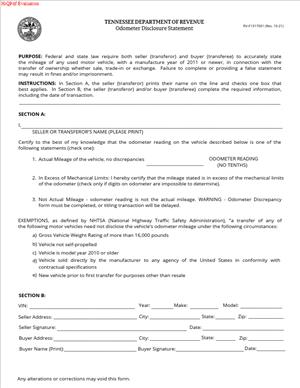
The RV-F1317001 – Odometer Disclosure Statement is a Tennessee Department of Revenue form used to document a vehicle’s mileage when ownership changes. It serves as a written statement from the seller (or transferor) about the number of miles shown on the odometer.
The form identifies the vehicle by year, make, model, and vehicle identification number (VIN). It also identifies the seller and buyer. Most importantly, it captures the odometer reading and requires a certification about whether that reading reflects the actual mileage.
This document is part of the broader title transfer process. It does not replace the vehicle title. Instead, it supports the title transfer by providing a formal mileage disclosure.
In many transactions, federal law requires mileage disclosure when ownership changes for certain vehicles. Tennessee uses this form to meet that requirement in situations where a separate odometer statement is needed.
Who typically uses this form?
Private sellers commonly use this form when selling a vehicle to another individual. If you are not a licensed dealer and you are transferring a vehicle, you may be required to complete this statement.
Buyers may review and sign the form as part of the transaction. While the seller usually provides the mileage disclosure, both parties are often involved in the signing process.
Licensed dealers may also use odometer disclosure forms, though the process can vary depending on how the title is assigned. In some cases, the disclosure may be integrated into the title itself. In others, a separate form such as this one is required.
Family members transferring vehicles as gifts may also use this form. Even if no money changes hands, the mileage disclosure can still be required as part of the ownership transfer.
Why might you need this form?
You may need this form when the vehicle title does not have space for an odometer disclosure, or when a separate statement is required for the transaction. It ensures that the mileage is clearly documented at the time of transfer.
If you are submitting paperwork to apply for a new title in your name, the county clerk’s office may require a completed odometer disclosure as part of the submission. Without it, the title transfer could be delayed.
This form can also help reduce disputes. If a buyer later questions the mileage, the signed disclosure provides a written record of what was represented at the time of sale.
In some cases, lenders, insurers, or other parties may rely on the recorded mileage when evaluating the vehicle’s value. Accurate disclosure protects all sides of the transaction.
Typical real-life scenarios
- You sell your used car to a neighbor. You meet to sign the title and exchange payment. As part of the paperwork, you complete the odometer disclosure form, writing down the exact mileage shown on the dashboard. Both of you sign before the buyer takes the vehicle.
- You are buying a vehicle from a private seller you found through a listing. When you review the paperwork, the seller provides the mileage disclosure. You check the odometer yourself and compare it to the number written on the form before signing.
- You are transferring a vehicle to your adult child. Even though it is a gift, the title must be updated. The mileage is recorded on the disclosure form to document the vehicle’s condition at the time of transfer.
- You recently paid off a vehicle and are helping a relative sell it. During the title transfer process, the clerk requires a completed odometer disclosure statement. You fill it out to ensure the transfer can be processed without delay.
- You purchase a vehicle that is relatively new and has low mileage. Because of its age, the mileage disclosure requirement applies. The seller completes the statement to comply with the transfer rules and to create a record of the vehicle’s current mileage.
When would you use RV-F1317001 – Odometer Disclosure Statement?
You would typically use this form when ownership of a motor vehicle is changing, and a mileage disclosure is required as part of that change. The most common situation is a private sale between individuals.
If you are the seller, you may complete this form at the same time you sign over the title. The disclosure is usually dated on the day of transfer, reflecting the mileage at that specific moment.
If you are the buyer, you may receive this form from the seller and submit it with your title application. In many cases, you provide the completed paperwork to the county clerk when applying for a new title in your name.
This form may also be used when transferring ownership after a vehicle has been inherited, gifted, or otherwise reassigned. Even when the transaction is not a typical sale, the mileage disclosure can still be part of the documentation.
Certain vehicles, often based on age or type, may be exempt from mileage disclosure requirements. However, when disclosure is required, a properly completed statement becomes part of the title record.
The timing matters. The mileage entered should reflect the reading at the time ownership changes. It is not a past estimate or a future projection. It is a snapshot of the odometer on the date of transfer.
If paperwork is being mailed or submitted later, the mileage still reflects the actual transfer date, not the submission date. Keeping the dates consistent helps avoid confusion during processing.
Legal characteristics of RV-F1317001 – Odometer Disclosure Statement
The RV-F1317001 – Odometer Disclosure Statement is a formal written certification. It includes identifying information for the vehicle and requires the person making the disclosure to certify the mileage. Accuracy is central to its purpose.
For the form to be effective, it generally must be complete, legible, and signed. Missing signatures, incomplete VINs, or altered mileage entries can cause processing issues. Clerks may reject submissions that contain obvious errors or corrections that are not properly handled.
The mileage statement often includes options to indicate whether the reading reflects the actual mileage, exceeds mechanical limits, or is not the actual mileage. Selecting the correct certification is important because it communicates the reliability of the reading.
Providing false mileage information can lead to serious consequences. Odometer tampering and false disclosure are commonly treated as fraud under federal and state laws. The form’s certification language reinforces that the signer is making a formal statement.
There can be differences in how mileage disclosure requirements apply based on vehicle age or classification. For example, older vehicles may be exempt from federal disclosure requirements. However, the form itself serves as the state’s method of documenting mileage when disclosure is required.
This document does not transfer ownership by itself. The title remains the primary ownership document. The odometer disclosure supports the title transfer but does not replace it.
It also does not guarantee the condition of the vehicle. The mileage reading is only one factor in assessing a vehicle’s value or wear. The form does not create warranties about mechanical performance or future reliability.
Is it legally binding?
Yes, in the sense that it is a signed certification of fact. When you sign the form, you are formally stating that the mileage information provided is accurate to the best of your knowledge.
Because it is a required part of the title transfer process in many transactions, the disclosure becomes part of the official record. If a dispute arises later about the mileage, the signed document can be used as evidence of what was represented at the time of transfer.
Its binding effect comes from the certification and signature. By signing, the transferor confirms that the information is true. Knowingly providing false information can expose the signer to legal penalties.
However, the form does not create a contract by itself. It works alongside the bill of sale and title transfer documents. It confirms mileage, but it does not set the purchase price or other sale terms.
How to fill out RV-F1317001 – Odometer Disclosure Statement
Step 1 – Enter the vehicle information
Begin by carefully entering the vehicle’s identifying details. This usually includes the year, make, model, body type, and the full vehicle identification number. Copy the VIN directly from the vehicle or title to avoid errors. Even a single incorrect character can delay processing.
Step 2 – Record the current odometer reading
Locate the vehicle’s odometer and write down the exact mileage shown. Do not round up or down. Enter the number as it appears at the time of transfer. If the odometer displays tenths of a mile, follow the form’s instructions on whether to include them.
Step 3 – Select the appropriate mileage certification
Review the certification options on the form. You will typically indicate whether the mileage reflects the actual mileage, exceeds mechanical limits, or is not the actual mileage. Choose the statement that accurately describes the vehicle’s condition. This selection communicates the reliability of the reading.
Step 4 – Enter the transferor’s information
Provide the full legal name and address of the person transferring ownership. This information should match the name listed on the vehicle title. If there is more than one owner, follow the title’s ownership format when completing this section.
Step 5 – Enter the transferee’s information
Fill in the name and address of the person receiving ownership. Use the full legal name as it will appear on the new title. Double-check spelling to ensure consistency across all documents submitted with the title application.
Step 6 – Review the form for accuracy
Before signing, read through every entry. Confirm that the VIN matches the vehicle, the mileage is correct, and all names are spelled properly. Make sure there are no blank required fields. Corrections or cross-outs can create problems during submission.
Step 7 – Sign and date the form
The transferor signs and dates the statement, certifying the mileage disclosure. Use the date of the ownership transfer. If the form includes a space for the transferee’s signature, complete that section as well. Signatures make the document effective as a formal certification.
Legal terms you might encounter in RV-F1317001 – Odometer Disclosure Statement
- Transferor: This is the person or entity selling or transferring the vehicle. On this form, the transferor must provide their legal name, address, and signature. The transferor certifies that the odometer reading is accurate to the best of their knowledge at the time of transfer.
- Transferee: This is the buyer or person receiving the vehicle. The transferee’s full legal name and address are recorded on the document. This information connects the mileage disclosure to the new owner in the vehicle’s ownership history.
- Odometer Reading: This is the numerical mileage shown on the vehicle’s odometer at the time of sale. You must write the exact number displayed, without rounding. The reading must reflect the actual mileage unless you are selecting a specific exception on the form.
- Actual Mileage: This term means the odometer reading reflects the true miles the vehicle has traveled. When you select this option, you are certifying that, to the best of your knowledge, the mileage has not been altered and is accurate.
- Mileage in Excess of Mechanical Limits: This applies to older vehicles with five-digit odometers that roll over after reaching their maximum display (for example, after 99,999 miles). If the vehicle has exceeded that limit, you must indicate that the listed reading does not represent the total actual mileage.
- Not the Actual Mileage (Warning – Odometer Discrepancy): You select this option if you know the odometer reading is incorrect. This could happen if the odometer was replaced, altered, or is broken. Checking this box alerts the buyer and becomes part of the official vehicle record.
- Vehicle Identification Number (VIN): The VIN is the unique 17-character code assigned to the vehicle. You must enter it exactly as it appears on the vehicle or title. An incorrect VIN can cause the disclosure to be rejected or misapplied to the wrong vehicle.
- Date of Transfer: This is the date the ownership changes hands. It may be the same as the bill of sale date. The mileage disclosure must reflect the odometer reading as of this specific date.
- Certification: The certification is the statement you sign confirming that the information provided is true and correct. By signing, you acknowledge that giving false information can lead to legal penalties.
- Federal Odometer Disclosure Requirement: This refers to the legal requirement that mileage must be disclosed during most vehicle transfers. The form satisfies this requirement by documenting the reading and the seller’s certification at the time of sale.
FAQs
Do I need to complete RV-F1317001 – Odometer Disclosure Statement if the mileage is already listed on the title?
You must check whether the title already includes a properly completed odometer disclosure section. If the title has a designated area for mileage and it is fully and correctly filled out at the time of transfer, a separate document may not be required. If that section is blank, incomplete, or cannot be used, this form is used to record the mileage. Make sure the mileage and date on both documents match exactly.
What if I realize I wrote the wrong mileage after signing this form?
Do not erase, scratch out, or alter the number. Changes can make the document invalid. Instead, complete a new form with the correct mileage. Both parties should sign the corrected version. Keep the incorrect copy with your records to show why a new one was prepared.
Can someone sign on behalf of the seller or buyer?
Yes, but the person signing must have legal authority. For example, a power of attorney may allow someone to sign for the transferor. The signer should indicate their representative capacity and ensure their name is clearly printed. The signature must match the authority document on file.
What date should I enter as the date of transfer?
Use the actual date when ownership changes hands. This is usually the date you sign over the title and deliver the vehicle. The odometer reading must reflect the mileage on that same date. Do not backdate or postdate the document.
What happens if the VIN on this document does not match the VIN on the title?
A mismatch can delay processing or cause rejection. Before signing, compare the VIN on the vehicle, the title, and this document character by character. If you discover an error after signing, prepare a new form with the correct VIN and have both parties sign again.
Is this form required for older vehicles?
Certain older vehicles may be exempt from mileage disclosure requirements, depending on their age. Even if exempt, some parties choose to record mileage for their own records. Check whether the vehicle qualifies for exemption before deciding not to complete the form. When in doubt, completing a clear and accurate disclosure helps avoid disputes.
What if the odometer was replaced before the sale?
If the odometer was replaced and does not show the true total mileage, you cannot certify it as actual mileage. You must select the option indicating that the reading is not the actual mileage. You should also keep service records that show when and why the replacement occurred.
Where is the RV-F1317001 – Odometer Disclosure Statement submitted?
This document is typically submitted along with the title and other transfer paperwork when ownership is recorded. It becomes part of the vehicle’s official transfer record. Confirm that all required fields are completed before submission to avoid delays.
Checklist: Before, During, and After RV-F1317001 – Odometer Disclosure Statement
Before
- Confirm the vehicle requires a mileage disclosure based on its age and type.
- Locate the current title to verify whether a separate disclosure is needed.
- Inspect the odometer and note the exact mileage shown.
- Compare the VIN on the vehicle with the VIN on the title.
- Gather legal names and addresses for both transferor and transferee.
- Check whether any power of attorney documents are required.
- Review service records if the odometer was repaired or replaced.
- Make sure you have a clean, unmarked copy of the form.
During
- Enter the full VIN without skipping or transposing characters.
- Write the odometer reading exactly as shown, without rounding.
- Select the correct mileage certification box.
- Print names clearly to match the title and identification.
- Enter the correct date of transfer.
- Review each field before signing.
- Ensure both parties sign in the correct spaces.
- Avoid making handwritten corrections after signing.
After
- Make a copy of the signed document for each party.
- Attach the form to the title transfer paperwork if required.
- Submit all ownership documents together.
- Confirm receipt or acceptance if submitting in person.
- Store your copy in a safe place with the bill of sale.
- Update your personal records to reflect the sale or purchase.
- Monitor the title transfer status if applicable.
- Keep related maintenance and mileage records.
Common mistakes to avoid with RV-F1317001 – Odometer Disclosure Statement
- Mistake: Writing a rounded or estimated mileage because you did not check the dashboard carefully, which happens when people rely on memory, and it can create legal issues if the number is inaccurate, so do not forget to record the exact digits shown.
- Mistake: Selecting the wrong mileage certification box due to confusion about prior repairs, which can misrepresent the vehicle’s history and affect the buyer’s rights, so do not forget to confirm whether the odometer reflects actual mileage.
- Mistake: Entering an incorrect VIN because of a transcription error, which may cause rejection or misfiled records, so do not forget to verify the VIN character by character before signing.
- Mistake: Forgetting to include the date of transfer, which can delay processing and create disputes about when ownership changed, so do not forget to use the actual handover date.
- Mistake: Allowing only one party to sign when both signatures are required, which makes the document incomplete and possibly invalid, so do not forget to confirm that all required signatures are present.
- Mistake: Making handwritten corrections after signing because you noticed a small error, which can void the form or cause rejection, so do not forget to complete a new, clean copy instead of altering the signed one.
- Mistake: Using nicknames or abbreviations instead of full legal names, which can cause mismatches with the title and identification records, so do not forget to match the names exactly as shown on official documents.
- Mistake: Failing to keep a copy for your records because you assume the other party will store it, which can leave you without proof of disclosure later, so do not forget to make and retain a clear copy.
What to do after filling out RV-F1317001 – Odometer Disclosure Statement
Once the form is complete and signed, your next steps focus on proper submission and recordkeeping. The document supports the official transfer of ownership, so you want it handled carefully and kept accessible.
- Step 1: Review the completed form one final time to confirm the VIN, mileage, names, and date are accurate and legible.
- Step 2: Make at least one clear copy for yourself and one for the other party before submitting the original.
- Step 3: Attach the completed form to the vehicle title and any required transfer documents.
- Step 4: Submit the paperwork through the appropriate filing method, such as in person or by mail, following the standard vehicle title transfer process.
- Step 5: If you submit in person, ask for confirmation that your paperwork was received and appears complete.
- Step 6: If you submit by mail, consider using a method that provides delivery confirmation, and keep the receipt with your copy.
- Step 7: Store your copy of the signed disclosure with the bill of sale and any related transfer documents.
- Step 8: Update your personal records to reflect the sale date, buyer or seller information, and the disclosed mileage.
- Step 9: Monitor the progress of the title transfer and follow up if you do not receive confirmation within the expected timeframe.
- Step 10: Keep the document for several years as part of your permanent vehicle transaction records in case questions arise about mileage or ownership history.
Keeping organized records protects you. A clear paper trail shows that you properly disclosed the mileage at the time of transfer. That simple step can prevent disputes and provide peace of mind long after the vehicle changes hands.
Disclaimer: This guide is provided for informational purposes only and is not intended as legal advice. You should consult a legal professional.