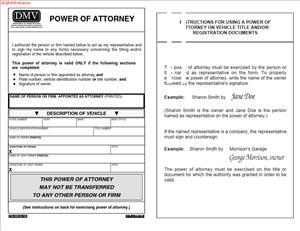
DMW 735-500 – Power of Attorney
Request DocumentJurisdiction: Country: United States | Province or State: Oregon
The DMW 735-500 – Power of Attorney is a written form that allows you to authorize another person to handle certain vehicle-related matters on your behalf in Oregon. It is commonly used when you cannot appear in person to complete a transaction involving a vehicle, title, or registration.
This document creates a limited authority. You, as the vehicle owner or party with legal rights, give someone else the power to act for you in specific dealings with the state motor vehicle agency. That person is often called your “attorney-in-fact” or authorized representative.
If you are about to fill out the DMW 735-500 – Power of Attorney, you are likely preparing for a title transfer, vehicle sale, registration action, or related filing. The form helps ensure the state agency recognizes the other person’s authority to sign and submit documents in your name.
This matters because motor vehicle transactions often require signatures from the legal owner. Without proper authorization, paperwork may be rejected. A correctly completed form can prevent delays, repeated visits, and additional fees.
You do not need to be a lawyer to complete this document. However, you do need to understand what authority you are granting and how it affects your rights over the vehicle involved.
What is DMW 735-500 – Power of Attorney?
Clear definition
The DMW 735-500 – Power of Attorney is a state-issued motor vehicle form used to appoint another person to act on your behalf for specific vehicle-related transactions. It is not a general power of attorney for all legal or financial matters. It is limited to certain actions involving a vehicle record.
By signing this form, you authorize a named individual or entity to complete tasks such as signing title documents, submitting applications, or handling related paperwork. The authority is defined by the form itself and the vehicle information included in it.
This document usually identifies the vehicle by details such as make, model, year, and vehicle identification number. That ensures the authorization applies only to the listed vehicle and not to other property you own.
The form becomes part of the official filing when it is submitted with the related motor vehicle paperwork. It supports the validity of signatures made by your authorized representative.
Who typically uses this form?
Vehicle owners commonly use this form when they cannot be physically present to sign documents. This includes individuals who are out of state, deployed, traveling, hospitalized, or otherwise unavailable.
Dealerships may also use the form when processing title or registration paperwork on behalf of a customer. In those situations, the buyer authorizes a dealership employee or representative to complete filings.
Family members sometimes rely on this form when helping an elderly relative manage vehicle matters. The vehicle owner names the family member as the authorized agent for a specific transaction.
Businesses that own vehicles may use the form to designate an employee or manager to handle title transfers or related filings. This can streamline administrative tasks without requiring a company officer to appear each time.
Lenders or financial institutions involved in vehicle financing may also be named in certain situations, depending on the transaction and the structure of the deal.
Why might you need this form?
You may need this form if a vehicle sale or transfer must move forward, and you cannot attend in person. Without your signature, the transfer may not be processed. This document allows someone else to sign in your place.
It is also used when correcting title errors. If paperwork needs to be amended and you are not available, an authorized person can complete the necessary forms on your behalf.
If you are purchasing a vehicle and want a dealership to complete the title and registration process for you, you may sign this form to authorize them to act as your representative.
You might also use it when transferring ownership to a family member, selling a vehicle privately, or handling estate-related vehicle matters. In each case, the form clarifies who has the authority to sign and submit documents.
Using the proper form can help avoid rejected applications. Motor vehicle agencies typically require written authorization before accepting a signature from someone other than the registered owner.
Typical real-life scenarios
- You are moving to another state but need to sell your vehicle before you leave. A trusted friend agrees to handle the sale and paperwork after you depart. You complete this form to authorize that person to sign title documents and submit them to the appropriate office.
- You are purchasing a vehicle from a dealership. The dealership offers to process your registration and title transfer. To allow them to sign certain documents for you, you complete the form naming a dealership representative as your agent.
- A family member is assisting an elderly parent who no longer drives. The parent wants to transfer the vehicle to a grandchild. The parent signs the form so the assisting family member can manage the transfer paperwork.
- You discover an error on your vehicle title, such as a misspelled name. Correcting it requires a new application and signature. Because you are temporarily out of the country, you appoint someone to correct the issue using this form.
- A business owns several fleet vehicles. The company wants a single employee to handle routine title updates and filings. The company completes the form to give that employee limited authority for those vehicle transactions.
- An individual is hospitalized and cannot attend to a time-sensitive title matter. To avoid penalties or delays, they sign the form authorizing a relative to act quickly on their behalf.
When would you use DMW 735-500 – Power of Attorney?
You would use DMW 735-500 – Power of Attorney when a motor vehicle transaction requires the legal owner’s signature, but the owner cannot or prefers not to appear in person. The form bridges that gap by formally assigning signing authority.
It is commonly used during vehicle sales, title transfers, registration changes, and similar filings. If the state agency needs proof that someone else has permission to sign for you, this document provides that proof.
You may also use it when multiple owners are involved. If one owner is unavailable, that owner can authorize another person to act on their behalf for the specific transaction.
The form is useful in situations involving timing pressures. For example, a buyer may be waiting to complete registration, or a lender may require prompt submission of documents. Instead of delaying the process, you can authorize a representative.
In business settings, it supports internal delegation. Rather than requiring a corporate officer to sign every title document, the company may assign authority to a designated employee for efficiency.
You might also use it when you want a professional, such as a dealer or agent, to handle detailed paperwork. Vehicle transactions often involve multiple forms. The power of attorney ensures that signatures made by your representative are recognized.
The key point is that this form is tied to specific vehicle-related tasks. It is not designed for broad financial or personal decisions. It is used in the context of motor vehicle administration.
Legal characteristics of DMW 735-500 – Power of Attorney
This document is a limited power of attorney. That means it grants authority only for the actions described in the form and only for the vehicle identified in it. It does not extend beyond those defined boundaries.
For the form to be effective, it must clearly identify the principal, which is you, and the agent, which is the person you are appointing. It must also describe the vehicle accurately. Missing or incorrect vehicle identification numbers can cause delays or rejection.
Your signature is a central element. If the signature does not match the name on the title or official records, the filing may be questioned. Legibility and consistency matter.
Some power of attorney forms require notarization, depending on the jurisdiction and the type of transaction. If a notary section is included on the form, it typically needs to be completed properly before submission.
The document generally becomes effective upon signing, unless it states otherwise. Once signed, the named agent may act within the scope of authority granted.
Common problems include incomplete fields, crossed-out information without proper acknowledgment, incorrect vehicle details, or naming an agent without full identifying information. These issues can slow processing.
It is also important to understand what this document does not do. It does not transfer ownership by itself. It only authorizes someone else to sign and submit the required documents. Ownership changes occur through properly executed title and registration paperwork.
This form does not create a general right to manage your finances or other property. It is not a substitute for a broader estate planning document. Its function is tied to motor vehicle transactions.
If multiple owners are listed on a title, the requirements for signatures can vary depending on how ownership is structured. The form allows an owner to delegate their signature authority, but it does not override the underlying ownership arrangement.
Is it legally binding?
When properly completed and signed, this form is generally legally binding within its defined scope. By signing it, you are formally granting authority to another person to act in your name for the specified vehicle transaction.
The binding nature comes from your written authorization. Once you sign, actions taken by your agent within the granted authority are typically treated as if you performed them yourself.
However, the document must meet basic validity standards. It must clearly identify the parties, the vehicle, and the scope of authority. If the required formalities, such as notarization, are not completed, the form may not be accepted.
The authority granted is limited. If the agent acts outside the defined scope, those actions may not be covered by the document. For example, if the form authorizes signing title documents, it does not automatically authorize unrelated financial decisions.
The form generally remains effective until the specified transaction is complete or until it is revoked, depending on how it is structured. Revocation usually requires clear communication and, in some cases, written notice.
Because this document allows someone else to sign your name on official paperwork, it carries real legal effect. That is why accuracy, clarity, and careful completion are important.
How to fill out DMW 735-500 – Power of Attorney
Step 1 – Review the entire form before writing
Start by reading the full document from top to bottom. Take note of each section and the information requested. Identify where your details are required and where your agent’s details must be entered.
Look for any instructions printed on the form itself. These often clarify whether signatures must match the vehicle title exactly and whether notarization is required. Understanding the layout first reduces mistakes later.
Step 2 – Enter your name as the vehicle owner
In the section identifying the principal, write your full legal name exactly as it appears on the vehicle title or official motor vehicle records. Avoid nicknames or shortened versions.
If there are multiple owners, ensure that each owner’s name is entered as required. The names should match the title document to prevent processing issues.
If the form requests your address, provide your current mailing address clearly and completely. This helps confirm your identity in the record.
Step 3 – Identify the authorized agent
In the section naming the attorney-in-fact or authorized representative, write the full legal name of the person or entity you are appointing. Be precise. Include middle initials if commonly used in official documents.
Some forms also request the agent’s address. If so, provide it clearly. This information helps the agency identify the correct individual acting on your behalf.
Double-check spelling. An incorrectly spelled name can create confusion or delays, especially if identification must be verified.
Step 4 – Provide complete vehicle information
Locate the section that asks for vehicle details. Enter the year, make, model, and vehicle identification number exactly as shown on the title or registration.
Take extra care when writing the vehicle identification number. It is long and includes both letters and numbers. One incorrect character can cause the filing to be rejected.
If the form applies to more than one vehicle, ensure each vehicle is clearly listed as required. If the form is designed for a single vehicle, confirm that only the correct vehicle is identified.
Step 5 – Confirm the scope of authority
Read the language that describes what the agent is allowed to do. Make sure it reflects the purpose for which you are granting authority, such as signing title documents or submitting applications.
If the form includes options or checkboxes, mark them carefully and clearly. Avoid stray marks outside the designated areas.
If there are blank spaces for describing authority, keep the wording clear and limited to the intended transaction. Avoid adding unrelated instructions unless the form specifically allows it.
Step 6 – Review for accuracy and completeness
Before signing, review every line you completed. Check names, numbers, and addresses for accuracy. Confirm that the vehicle information matches your records exactly.
Look for any missing signatures or required dates. Ensure no required field is left blank.
If corrections are necessary, follow the form’s instructions for making them. Excessive cross-outs or unclear changes may lead to rejection.
Step 7 – Sign and date the form
Sign your name in the designated signature area. Use the same form of your name that appears on the title or official records.
Enter the date of signing in the space provided. The date helps establish when the authority became effective.
If more than one owner must sign, ensure each required owner signs in the appropriate place.
Step 8 – Complete notarization if required
If the form includes a notary section, wait to sign until you are in the presence of the notary, if required. The notary will verify your identity and witness your signature.
Ensure the notary completes all required fields, including signature, seal, and date. An incomplete notary section can invalidate the document for filing purposes.
After notarization, review the form once more to confirm all sections are fully completed.
Step 9 – Provide the form to your authorized agent for submission
Once the document is fully completed and signed, give the original form to your authorized agent or include it with the related vehicle paperwork.
The form is typically submitted along with the title or registration documents as part of the overall transaction. Keep a copy for your records so you have proof of the authority granted.
At this point, your role in completing the DMW 735-500 – Power of Attorney is finished, and your authorized representative can use it to act on your behalf within the limits described in the form.
Legal terms you might encounter in DMW 735-500 – Power of Attorney
- Principal: The principal is the vehicle owner who grants authority to someone else. On this form, you are the principal if you own the vehicle and are giving permission for another person to act for you. Your name must match the name on the vehicle title or registration record.
- Attorney-in-Fact: This is the person you authorize to act on your behalf. They do not need to be a lawyer. In this document, the attorney-in-fact can sign paperwork, transfer title, or complete vehicle-related transactions as you allow.
- Grant of Authority: This refers to the specific powers you are giving. The form outlines what the agent can and cannot do. You should read this section carefully to understand the limits of the authority you are granting.
- Vehicle Identification Number (VIN): The VIN is a unique 17-character number assigned to your vehicle. You must enter it exactly as it appears on the vehicle or current title. One incorrect digit can cause the transaction to be rejected.
- Odometer Disclosure: This is a statement about the vehicle’s mileage at the time of transfer. If the transaction involves a sale, the mileage must be accurate. False or missing odometer information can delay or invalidate the title transfer.
- Notarization: Some transactions require your signature to be notarized. A notary verifies your identity and witnesses your signature. If notarization is required and missing, the document may not be accepted.
- Title Transfer: This is the legal process of changing ownership of a vehicle. Your authorized agent may use this form to sign the title and complete the transfer on your behalf.
- Revocation: Revocation means canceling the authority you granted. If you change your mind, you may need to complete a separate revocation document and notify the agent and the motor vehicle agency.
- Signature Certification: This confirms that the signature on the form is genuine and made by the vehicle owner. Your signature must be consistent with the name printed on the document and any identification used for verification.
FAQs
Do I have to be present when my agent submits DMW 735-500 – Power of Attorney?
No. The purpose of this document is to allow your agent to act without you being physically present. Once you properly complete and sign it, your agent can take it to the motor vehicle office and sign related documents within the authority you granted. You do not need to attend unless the agency specifically requests your presence for identity verification.
What name should I use when filling out this form?
Use your full legal name exactly as it appears on the vehicle’s current title or registration record. Do not use nicknames or shortened versions. If your name has changed, make sure the title record has been updated, or be prepared to provide supporting documents that explain the difference.
Can I limit what my agent is allowed to do?
Yes. Read the section describing the powers being granted. If the document allows space for limitations, clearly describe any restrictions. If it grants broad authority and does not provide room for changes, understand that your agent may be able to complete all listed vehicle transactions.
Does this document expire?
The form itself may not list an automatic expiration date. It typically remains valid until the specific transaction is completed or until you revoke it. If you want it to apply only to one vehicle or one transaction, make sure the vehicle information is specific and complete.
Do I need to notarize my signature?
Some vehicle transactions require notarization, while others may not. Check whether the signature line includes a notary section. If it does, you must sign in front of a notary and ensure the notary completes their portion fully. An incomplete notary block can cause rejection.
What happens if I enter the wrong VIN or license plate number?
The motor vehicle office compares the information on this form with its records. If the VIN or plate number does not match exactly, the agency may refuse to process the transaction. You would need to correct the error and possibly complete a new DMW 735-500 – Power of Attorney.
Can my agent sign the vehicle title in my place?
Yes, if you properly authorize them. Your agent will typically sign your name, followed by their own name, and indicate they are signing as attorney-in-fact. The signature must match the authority granted in this document to be accepted.
What should my agent bring when submitting this document?
Your agent should bring the completed form, the vehicle title (if transferring ownership), valid identification, and any additional required applications or fees. Missing attachments or identification can delay processing of the transaction.
Checklist: Before, During, and After DMW 735-500 – Power of Attorney
Before
- Confirm you are the legal owner listed on the vehicle title.
- Verify your full legal name matches the title record exactly.
- Gather the vehicle title and registration documents.
- Locate the correct VIN directly from the vehicle or title.
- Decide exactly what authority you want to grant.
- Confirm whether notarization will be required.
- Choose a trusted person to act as your agent.
- Review the form for any transaction-specific instructions.
During
- Write clearly and use black or blue ink.
- Enter your full legal name without abbreviations.
- Enter your agent’s full legal name accurately.
- Record the complete VIN without skipping characters.
- Provide license plate number if requested.
- Read the authority section carefully before signing.
- Sign your name exactly as it appears on the title.
- Complete notarization in person if required.
After
- Make a copy of the completed form for your records.
- Give the original form to your agent.
- Confirm your agent understands the limits of their authority.
- Ask your agent to confirm submission once completed.
- Keep proof of the completed transaction.
- Monitor your records to ensure the title transfer is processed.
- Store your copy in a safe place with other vehicle documents.
Common mistakes to avoid with DMW 735-500 – Power of Attorney
- Mistake: Entering a nickname or shortened name, which happens when you rush, leading to rejection because the name does not match the title record, so do not forget to use your exact legal name as shown on the title.
- Mistake: Writing an incorrect VIN due to copying it from memory, causing delays or refusal of the transaction, so do not forget to verify all 17 characters directly from the vehicle or title.
- Mistake: Forgetting to complete notarization when required, often because you signed before checking the instructions, resulting in an invalid submission. Do not forget to sign in front of a notary if a notary block is included.
- Mistake: Leaving sections blank, which can happen if you assume they are optional, leading to processing delays, so do not forget to review every line and fill in all required fields.
- Mistake: Granting broader authority than intended because you did not read the full authorization language, which can allow the agent to complete additional transactions, so do not forget to understand the full scope before signing.
- Mistake: Failing to keep a copy, often due to handing over the only signed original, making it hard to prove what authority was granted, so do not forget to make and store a complete copy.
- Mistake: Choosing an unreliable agent out of convenience, which can result in errors or misuse of authority, so do not forget to select someone you trust and who understands vehicle paperwork.
- Mistake: Not confirming the transaction was completed, which happens when you assume it was handled, potentially leaving the vehicle in your name, so do not forget to verify that records were updated.
What to do after filling out DMW 735-500 – Power of Attorney
Once you complete the form, pause before handing it over. Review it one more time. Check names, VIN, and signatures carefully. Small errors can cause delays.
- Step 1: Make at least one clear copy of the signed and notarized document for your records.
- Step 2: Attach the form to any required title or registration paperwork related to the transaction.
- Step 3: Give the original signed document to your authorized agent.
- Step 4: Confirm your agent understands exactly what they are authorized to do.
- Step 5: Ensure your agent has valid identification and any required fees before visiting the motor vehicle office.
- Step 6: Ask your agent to notify you once the paperwork has been submitted.
- Step 7: Request confirmation that the transaction was accepted and processed.
- Step 8: If ownership was transferred, verify that your name is no longer listed as the registered owner.
- Step 9: Store your copy of the document with your vehicle records and other important papers.
- Step 10: If you later decide to cancel the authority, complete a formal revocation and notify both the agent and the motor vehicle agency.
Keep your records organized. If questions arise later about a sale, title transfer, or registration change, your copy of the document will help you show what authority you granted and when.
Disclaimer: This guide is provided for informational purposes only and is not intended as legal advice. You should consult a legal professional.