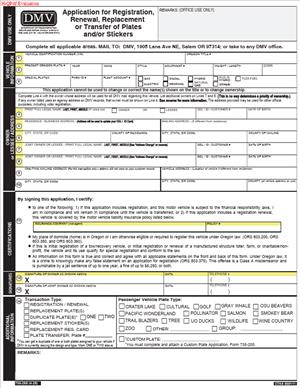
DMV 735-268 – Application for Registration, Renewal, Replacement or Transfer of Plates and or Stickers
Fill out nowJurisdiction: Country: United States | Province or State: Oregon
The DMV 735-268 – Application for Registration, Renewal, Replacement, or Transfer of Plates and or Stickers is the main form you use in Oregon to handle common vehicle registration tasks. It allows you to apply for new registration, renew existing registration, replace plates or stickers, or transfer plates to another vehicle.
If you are about to fill it out, you are likely dealing with a change related to your vehicle’s legal registration. That could mean you bought a car, lost a plate, or need to update an expired registration.
This form connects you directly with the state’s motor vehicle records. The information you provide becomes part of the official registration record for your vehicle.
Because this filing affects your ability to legally operate a vehicle on public roads, accuracy matters. Small mistakes can delay processing or require corrections.
What is DMV 735-268 – Application for Registration, Renewal, Replacement, or Transfer of Plates and or Stickers?
Clear definition
DMV 735-268 – Application for Registration, Renewal, Replacement, or Transfer of Plates and or Stickers is a state-issued document used to manage vehicle registration and plate-related changes in Oregon.
It serves multiple purposes in one form. Instead of separate applications for renewal, replacement, or transfer, this single document collects the necessary details for each of those actions.
When you complete and submit it, you are formally requesting the state to update, issue, or modify your vehicle registration and associated plates or stickers.
Who typically uses this form?
Vehicle owners use this form most often. That includes individuals who own cars, trucks, motorcycles, or other registered vehicles.
You may also see it used by co-owners listed on a title. In some situations, businesses that own fleet vehicles complete the form through an authorized representative.
People who recently moved to Oregon and need to register a vehicle may interact with this form as part of their registration process.
If your plates were damaged, lost, or stolen, you would also use this document to request replacements.
Why might you need this form?
You need this form when your vehicle’s registration status changes. That can include expiration, plate damage, loss, or a vehicle purchase.
If your registration is about to expire, this form allows you to apply for renewal. It updates the state’s records and keeps your vehicle legally registered.
If you buy a vehicle and want to transfer existing plates to it, this document allows you to request that transfer.
If your plates or stickers are no longer usable, you use this filing to request new ones tied to the same registration record.
Typical real-life scenarios
- You bought a used car from a private seller. You now need to register it in your name and may want to transfer your old plates. This form helps process that change.
- Your registration sticker expired last month. You need to renew your registration to avoid penalties and to continue driving legally. This form covers the renewal request.
- Your rear plate was stolen from your vehicle. You must request a replacement to keep your vehicle properly identified. This document allows you to report and replace it.
- You moved within Oregon and realized your registration details need updating, along with a renewal. While address changes may involve other records, this form supports updating registration information during certain transactions.
- You are replacing damaged plates that are bent or unreadable. This filing allows you to request new plates while keeping your vehicle registered.
When would you use DMV 735-268 – Application for Registration, Renewal, Replacement, or Transfer of Plates and or Stickers?
You use this form when you need to start or maintain a valid vehicle registration in Oregon. That includes initial registration after purchasing a vehicle, renewing expired registration, or updating plate information.
It is commonly used during ownership changes. If you acquire a vehicle and need registration issued in your name, this document becomes part of that process.
You would also use it when plates need to be moved from one vehicle to another. Plate transfers often occur when someone sells a vehicle but keeps their plates for a new one.
Another common situation is replacing lost, stolen, or damaged plates or stickers. The form allows you to formally request replacements linked to your existing registration.
Businesses that manage multiple vehicles may use it regularly as part of their routine fleet updates. Individual drivers usually complete it less often, typically when a specific event triggers the need.
Legal characteristics of DMV 735-268 – Application for Registration, Renewal, Replacement, or Transfer of Plates and or Stickers
This document becomes effective when it is properly completed, signed, and accepted by the appropriate state office. Acceptance generally depends on accurate information, required signatures, and payment of applicable fees.
The form collects identifying details such as vehicle identification number, plate number, and owner information. These details must match existing records or supporting documents. Mismatches often cause delays.
Common reasons for rejection include missing signatures, incomplete vehicle information, incorrect fees, or unclear ownership details. Illegible writing can also slow processing.
In some cases, additional documents may be required. For example, a title transfer, proof of insurance, or identification may be part of the overall transaction, depending on the situation.
This form updates registration and plate records. It does not transfer ownership by itself unless combined with proper title documentation. It also does not serve as proof of insurance or as a driver’s license application.
Requirements can vary depending on vehicle type. Passenger vehicles, motorcycles, trailers, and specialty plates may involve slightly different processes or fees. The form captures your request, but the final outcome depends on meeting all state conditions.
Is it legally binding?
Yes, in the sense that you are making official statements to a government agency. When you sign the form, you confirm that the information you provided is true and correct to the best of your knowledge.
Your signature typically appears under a certification statement. By signing, you acknowledge responsibility for the accuracy of the details. Providing false information can carry legal consequences.
Once accepted, the information becomes part of the official registration record. That record determines whether your vehicle is legally registered and properly plated.
However, the form itself is not a contract between private parties. It is an administrative filing. Its legal effect comes from state approval and record updates, not from agreement between individuals.
How to fill out DMV 735-268 – Application for Registration, Renewal, Replacement, or Transfer of Plates and or Stickers
Step 1 – Identify the purpose of your application
Start by selecting or marking the reason you are submitting the form. This may include registration, renewal, replacement of plates or stickers, or transfer of plates.
Read each option carefully. Choose the one that matches your situation. If your request involves more than one action, make sure the form allows multiple selections and complete all relevant sections.
Step 2 – Enter vehicle information
Provide the full vehicle details exactly as shown on the title or current registration. This usually includes the vehicle identification number, year, make, and plate number if already assigned.
Check each number and letter carefully. Even one incorrect digit in the vehicle identification number can delay processing.
Step 3 – Provide owner information
Enter the legal name of the registered owner or owners. Use the same name format shown on the title or previous registration.
Include your current address. If there are multiple owners, ensure all required names appear as instructed on the form.
If the vehicle is owned by a business, enter the business name as registered and provide any required identifying information.
Step 4 – Complete plate or sticker details
If you are requesting replacement plates or stickers, indicate the reason. Common reasons include lost, stolen, damaged, or unreadable plates.
If plates were stolen, the form may ask for additional details about the incident. Provide accurate and complete information.
For plate transfers, list the plate number and the vehicle to which the plates will be assigned.
Step 5 – Review fee information
Check the section that relates to fees. The amount may depend on the type of transaction, vehicle class, or plate type.
Ensure that any payment you include matches the requested service. Incorrect payment amounts can result in returned or delayed filings.
Step 6 – Read the certification statement
Before signing, read the certification language carefully. This section explains what you are confirming by signing the form.
Make sure all information provided is accurate and complete. Confirm that names, numbers, and selections match your documents.
Step 7 – Sign and date the form
Sign your full legal name in the space provided. If there are co-owners and signatures are required from each, ensure all required parties sign.
Add the date of signing. Use the correct format requested on the document.
Unsigned forms are commonly rejected. Double-check that every required signature line is completed.
Step 8 – Prepare for submission
Review the entire document once more. Confirm that all required sections are filled in and that supporting documents and payment are ready, if applicable.
Keep a copy of the completed form for your records before submitting it. This helps you track what information you provided and when.
After submission, the state reviews the application and updates your registration or plate records if everything is in order.
Legal terms you might encounter in DMV 735-268 – Application for Registration, Renewal, Replacement, or Transfer of Plates and or Stickers
- Registered Owner: This is the person or business listed in the DMV record as legally responsible for the vehicle. The name you enter must match the name on the current title or registration record. If it does not match exactly, your request can be delayed or rejected.
- Lessee: If the vehicle is leased, the lessee is the person or business that operates the vehicle under a lease agreement. The leasing company may be listed as the owner, while you are listed as the lessee. The form may require information for both parties.
- Plate Transfer: This refers to moving existing license plates from one vehicle to another. The plates must be eligible for transfer, and the vehicle receiving them must meet registration requirements. You must clearly identify both the old and new vehicle details.
- Replacement Plates: These are new plates issued because the original plates were lost, stolen, damaged, or destroyed. You will need to explain the reason for the replacement. Some situations may require you to surrender any remaining plate.
- Registration Renewal: This extends the legal registration period of your vehicle. You must confirm that the vehicle information and ownership details are still accurate. Renewal often requires payment of updated fees.
- Validation Stickers: These are small decals placed on license plates to show current registration. If a sticker is lost or damaged, you can request a replacement. You must provide the plate number and vehicle details to ensure the correct sticker is issued.
- Certification Statement: This is the section where you confirm that the information you provided is true and correct. By signing, you are making a legal declaration. False information can lead to penalties or cancellation of your registration.
- VIN (Vehicle Identification Number): This is a unique 17-character code assigned to your vehicle. You must enter it exactly as it appears on your title or vehicle records. Even one incorrect digit can cause your application to be rejected.
- Surrender of Plates: In some cases, you must return old or damaged plates to the DMV. This is called surrendering the plates. Failing to do so when required can affect your ability to complete a transfer or replacement.
FAQs
Do I need to use DMV 735-268 – Application for Registration, Renewal, Replacement or Transfer of Plates and or Stickers for every plate or sticker change?
You use this form when you are applying to register a vehicle, renew registration, replace plates or stickers, or transfer plates between vehicles. If you are only updating your address or correcting minor record details, a different document may be required. Check that your request fits one of the purposes listed at the top of this form before you complete it.
What information must match the DMV record exactly?
The owner’s full legal name, the vehicle identification number (VIN), and the plate number must match the current record. If your name has changed, you may need to update the ownership record before or at the same time. Double-check spelling, spacing, and numbers to avoid delays.
Can I transfer plates from a vehicle I just sold?
You may transfer plates only if you are still eligible to use them and the transfer is allowed under current rules. You must provide details for both the vehicle you sold and the vehicle receiving the plates. Make sure the sale has been properly recorded so the plates are no longer tied to the old vehicle.
What should I do if my plates were stolen?
You should report the theft as soon as possible and indicate on this document that the plates were stolen. Provide the plate number and vehicle details exactly as listed on your registration. You may be asked for additional information before replacement plates are issued.
Who must sign this form?
The registered owner listed on the vehicle record must sign. If the vehicle is jointly owned, all required owners may need to sign, depending on how ownership is recorded. If a business owns the vehicle, an authorized representative must sign and indicate their title or authority.
What happens if I make a mistake after submitting the form?
If you notice an error after submission, contact the processing office immediately with your name, vehicle details, and the date you filed. Minor clerical errors may be corrected, but significant mistakes could require you to complete a new DMV 735-268 – Application for Registration, Renewal, Replacement, or Transfer of Plates and or Stickers. Acting quickly reduces the chance of processing delays.
Do I need to return old plates when requesting replacements?
In many cases, yes. If your plates are damaged but still in your possession, you may need to surrender them before new ones are issued. This document will ask you to confirm the status of the old plates so the record can be updated correctly.
How do I know my registration has been successfully renewed?
After processing, you should receive confirmation, updated registration documents, or new validation stickers. Review the effective dates on the new registration to ensure they reflect the correct renewal period. Keep the confirmation with your vehicle records in case you need proof of current registration.
Checklist: Before, During, and After DMV 735-268 – Application for Registration, Renewal, Replacement or Transfer of Plates and or Stickers
Before
- Confirm the exact reason you are filing (registration, renewal, replacement, or transfer).
- Locate your current registration card and title.
- Verify the correct VIN directly from the vehicle or official documents.
- Confirm the exact spelling of all registered owner names.
- Check whether you must surrender old plates or stickers.
- Gather payment information for applicable fees.
- Ensure your address on record is current.
During
- Select the correct application purpose at the top of the form.
- Enter the full VIN without skipping characters.
- Provide complete owner information as shown on official records.
- Accurately list current plate numbers.
- Indicate clearly whether plates are lost, stolen, damaged, or being transferred.
- Review all fee sections before finalizing.
- Read the certification statement carefully before signing.
- Sign and date the form in the required signature area.
After
- Make a copy of the completed form for your records.
- Attach any required supporting documents.
- Submit the form using the accepted method.
- Keep proof of payment.
- Track expected processing times.
- Store new registration documents in your vehicle.
- Safely destroy any invalidated stickers.
- Update your personal vehicle records.
Common mistakes to avoid with DMV 735-268 – Application for Registration, Renewal, Replacement, or Transfer of Plates and or Stickers
- Mistake: Entering an incorrect VIN because you copied it from memory; this causes processing rejection and delays, so do not forget to verify all 17 characters directly from the vehicle or official paperwork.
- Mistake: Using a nickname or shortened business name; this happens when people rush, but mismatched names can stop approval, so do not forget to use the exact legal name on record.
- Mistake: Failing to indicate why plates are being replaced; this can lead to incomplete processing, so do not forget to clearly mark whether plates are lost, stolen, or damaged.
- Mistake: Forgetting a required signature; unsigned forms cannot be processed, so do not forget to review the certification section and sign in the correct space.
- Mistake: Sending payment without confirming the correct fee; incorrect payment amounts can delay issuance, so do not forget to verify the current fee schedule before submitting.
- Mistake: Keeping old plates when surrender is required; this can create record conflicts, so do not forget to return plates if the instructions require surrender.
- Mistake: Transferring plates before completing ownership updates; this happens during vehicle sales, but it can tie plates to the wrong vehicle, so do not forget to ensure records reflect the current owner first.
- Mistake: Ignoring confirmation after submission; without checking the status, you may miss correction requests, so do not forget to monitor your application until you receive official confirmation.
What to do after filling out DMV 735-268 – Application for Registration, Renewal, Replacement or Transfer of Plates and or Stickers
Once you complete the form, pause and review it line by line. Small errors can lead to rejection. Confirm that all names, numbers, and selections are accurate.
- Step 1: Make a complete copy of the signed form for your records.
- Step 2: Gather all required attachments, such as registration documents or surrendered plates, if applicable.
- Step 3: Confirm the correct payment amount and prepare an acceptable payment.
- Step 4: Submit the application using an approved submission method.
- Step 5: Obtain proof that you submitted the form, such as a receipt or confirmation number.
- Step 6: Monitor processing timelines and check for any notices requesting corrections.
- Step 7: Once approved, review your new registration card or stickers immediately.
- Step 8: Place new validation stickers on your plates as instructed.
- Step 9: Store the updated registration in your vehicle.
- Step 10: Keep copies of all paperwork in a safe place for future reference.
After approval, make sure your vehicle records are consistent. If you transferred plates, confirm they are properly associated with the correct vehicle. If you replaced plates, safely dispose of or return old plates as required.
Keep all confirmation documents. You may need them if questions arise about your vehicle’s registration status. Staying organized now helps you avoid problems later.
Disclaimer: This guide is provided for informational purposes only and is not intended as legal advice. You should consult a legal professional.