MW-103 – Odometer and Damage Disclosure Statement
Fill out nowJurisdiction: Country: United States | Province or State: New York
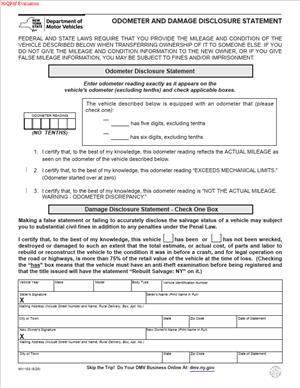
The MW-103 – Odometer and Damage Disclosure Statement is a vehicle transfer document used in New York. It records the vehicle’s mileage and any known damage at the time of sale or transfer. If you are about to complete this form, you are likely selling, buying, or transferring a motor vehicle.
This document helps create a clear written record of the vehicle’s condition. It focuses on two key issues: the accuracy of the odometer reading and whether the vehicle has sustained significant damage. Both details can affect the vehicle’s value and future ownership rights.
You may encounter this form when transferring a title through the New York motor vehicle authority. It is often completed at the same time as other title or registration paperwork. The information you provide becomes part of the official transfer record.
Understanding what this form does will help you complete it correctly. Small errors can delay a title transfer. Clear and accurate entries help avoid disputes later.
What is MW-103 – Odometer and Damage Disclosure Statement?
Clear definition
The MW-103 – Odometer and Damage Disclosure Statement is a written disclosure form used during the transfer of a motor vehicle in New York. It documents the vehicle’s current odometer reading and whether the vehicle has sustained certain types of damage.
The form captures information from the seller and confirms that the mileage shown reflects the vehicle’s actual distance traveled, or explains why it may not. It also records statements about structural or other significant damage, if applicable.
This disclosure is separate from the vehicle title itself. However, it supports the title transfer by adding details about the vehicle’s history at the time ownership changes.
Who typically uses this form?
You typically use this form if you are the current owner transferring a vehicle to another person. Private sellers often complete it during a private sale.
Buyers may review and sign the form as part of the transfer process. It helps them confirm the mileage and damage status before completing the purchase.
Dealers may also use the form when transferring vehicles to customers. In those cases, a dealership representative may complete the seller portion on behalf of the business.
In some situations, an authorized representative may complete the form for an owner, such as when handling an estate or acting under a valid power of attorney. The signer must have authority to make the disclosure.
Why might you need this form?
You may need this form because mileage disclosures are commonly required when transferring ownership of a motor vehicle. The odometer reading affects the vehicle’s value and condition assessment.
Damage disclosure is also important. Certain types of damage, especially structural damage, can significantly change a vehicle’s safety and resale value.
Without this document, the motor vehicle authority may not process the title transfer. The filing helps ensure that the transfer record includes accurate information about the vehicle’s condition at the time of sale.
It also creates a written record. If a dispute later arises about mileage or prior damage, the completed document shows what was disclosed when the vehicle changed hands.
Typical real-life scenarios
- You are selling your car privately to someone you met through a listing. At the time of sale, you provide the odometer reading and confirm whether the vehicle has had structural damage. You complete the form as part of the transfer package.
- You are buying a used vehicle from a neighbor. Before you exchange payment, you review the disclosure statement. The mileage and damage declarations help you understand the vehicle’s history.
- You inherited a vehicle from a family member. When transferring the title into your name or selling the vehicle to another person, you complete the form to disclose mileage and any known damage.
- A dealership sells you a used vehicle. As part of the paperwork, the dealership provides the completed disclosure statement reflecting the odometer reading and any damage status at the time of sale.
When would you use MW-103 – Odometer and Damage Disclosure Statement?
You use this document at the time of ownership transfer. It is typically completed when a vehicle title is being reassigned from one owner to another.
This often happens during a private sale between individuals. It may also occur when a dealership sells a used vehicle to a retail buyer.
You might also use the form when transferring a vehicle as a gift. Even if no money changes hands, the mileage and damage disclosure may still be part of the title transfer process.
In estate situations, a personal representative transferring the vehicle to a beneficiary or buyer may complete the disclosure. The form records the mileage and known damage at the time of transfer.
If a vehicle has been rebuilt or repaired after significant damage, the disclosure portion related to damage becomes especially relevant. The form captures whether structural damage has occurred, based on the seller’s knowledge.
The key moment is the change in legal ownership. When the name on the title changes, this form is commonly used to document mileage and damage at that specific point in time.
Legal characteristics of MW-103 – Odometer and Damage Disclosure Statement
This document functions as a formal written disclosure. It becomes part of the vehicle transfer record once submitted with the title paperwork. Accuracy and completeness are central to its effectiveness.
For the form to be valid, it generally must include the required vehicle details, such as make, model, year, and vehicle identification number. The odometer reading must be entered clearly, without alterations that create confusion.
Signatures are critical. The seller’s signature confirms the truth of the mileage and damage statements to the best of their knowledge. Missing or inconsistent signatures can cause delays or rejection of the filing.
Common issues include incorrect mileage entries, unreadable numbers, mismatched vehicle identification numbers, or incomplete damage disclosures. Corrections made improperly can also create problems. Clear, legible entries reduce the risk of processing delays.
Different states may use different forms or have slightly different mileage disclosure rules. In New York, this specific form is designed to meet the state’s motor vehicle requirements. The structure and wording reflect those requirements.
This document does not transfer ownership by itself. The vehicle title and other required paperwork handle the legal transfer. The disclosure form supports that process by documenting specific facts about the vehicle.
It also does not guarantee the vehicle’s condition. The seller provides statements based on their knowledge. The form records those statements but does not independently verify them.
Is it legally binding?
The statements made on this form are generally considered legally significant. When you sign the document, you are confirming that the information you provide is accurate to the best of your knowledge.
Because the form is submitted as part of an official vehicle transfer, false statements can have serious consequences. The signed disclosure creates a record that can be referenced if disputes arise about mileage or prior damage.
The document itself does not create a sales contract. Instead, it serves as a disclosure attached to the transfer process. Its binding effect relates to the truthfulness of the information provided, not to the broader terms of the sale.
If both parties sign where required and the form is accepted as part of the title transfer, the disclosures become part of the official transaction record. That record can carry weight in administrative or legal proceedings if questions later arise.
How to fill out MW-103 – Odometer and Damage Disclosure Statement
Step 1 – Enter the vehicle information
Start by filling in the vehicle’s basic details. This typically includes the year, make, model, and vehicle identification number. Copy the information directly from the title or registration to avoid errors.
Check each character of the vehicle identification number carefully. Even a single incorrect digit can delay the title transfer.
Step 2 – Record the odometer reading
Locate the vehicle’s current odometer reading at the time of transfer. Enter the exact mileage shown on the dashboard. Do not round up or down.
If the form provides options regarding whether the mileage reflects actual mileage, exceeds mechanical limits, or is not the actual mileage, select the statement that matches the situation. Read each option carefully before marking your choice.
Step 3 – Complete the damage disclosure section
Review the section that addresses vehicle damage. The form may ask whether the vehicle has sustained structural or other significant damage.
Answer based on your knowledge of the vehicle’s history. If the vehicle has experienced such damage, indicate that clearly in the space provided. If not, mark the appropriate statement reflecting that status.
Step 4 – Provide seller information
Enter the seller’s full legal name as it appears on the title. Include any additional information requested, such as address or contact details, if the form requires it.
Make sure the name matches the name shown on the title document. Inconsistencies can lead to processing issues.
Step 5 – Sign and date the form
The seller signs the form to confirm the accuracy of the odometer and damage disclosures. Sign using your usual legal signature.
Enter the date of signing in the space provided. The date should reflect when the disclosure is actually made, typically at the time of transfer.
If the form requires the buyer’s signature acknowledging the disclosure, ensure the buyer signs in the designated area. Review the completed document once more before submitting it with the rest of the title transfer paperwork.
Legal terms you might encounter in MW-103 – Odometer and Damage Disclosure Statement
- Actual Mileage: This means the number shown on the odometer reflects the true distance the vehicle has traveled. When you check this box or statement on the form, you are confirming that the reading has not been altered or misrepresented to the best of your knowledge. It is a factual declaration tied directly to the number you enter.
- Not Actual Mileage: This term applies when the odometer reading does not reflect the vehicle’s true mileage. You would select this if the odometer has been replaced, tampered with, or is known to be inaccurate. Choosing this option alerts the buyer and the record-keeping agency that the displayed number cannot be relied on as the real mileage.
- Mileage Exceeds Mechanical Limits: Older vehicles sometimes have odometers that “roll over” after reaching a maximum number. If that has happened, you indicate this on the form. It tells the buyer that the actual mileage is higher than the number currently shown.
- Odometer Reading: This is the specific number displayed on the vehicle’s odometer at the time of transfer. You must record it exactly as it appears, without rounding or estimating. The reading becomes part of the official vehicle history once the form is processed.
- Transferor (Seller): This is the person or entity transferring ownership of the vehicle. On this document, the transferor is responsible for completing the mileage and damage disclosures and signing to confirm the information is accurate.
- Transferee (Buyer): This is the person receiving ownership of the vehicle. The transferee relies on the disclosures made in this form when deciding to complete the purchase and when registering the vehicle in their name.
- Disclosure Statement: This refers to the written declaration you make about mileage and damage. It is not a casual note. It is a formal statement that becomes part of the vehicle’s ownership record and may be reviewed later if questions arise.
- Material Damage: This term generally refers to significant physical damage that affects the structure or safety of the vehicle, such as frame damage or major collision repairs. When you complete the damage section, you are stating whether such damage exists or has existed.
- Certification: This is your signed confirmation that the information provided is true and complete. By signing, you acknowledge that false statements can lead to serious consequences, including penalties or legal claims.
- Date of Transfer: This is the actual date ownership changes hands. It should match the date used in the bill of sale and title transfer. Consistency helps prevent delays or questions when the vehicle is registered.
FAQs
Do I need to complete MW-103 – Odometer and Damage Disclosure Statement for every vehicle sale?
You generally complete this document when transferring ownership of a vehicle that requires mileage and damage disclosure. Check the vehicle’s age and type, because some older vehicles or certain categories may be exempt. If the title or transfer paperwork requires a mileage statement, you should complete this form to avoid processing delays.
What if I realize I wrote the wrong odometer reading after signing this form?
Do not erase or alter the original entry once it has been signed. Corrections made improperly can cause the document to be rejected. Instead, you may need to complete a new form with the correct reading and ensure both parties sign it again so the record clearly reflects accurate information.
Who must sign this document?
The seller must sign to certify the mileage and damage information. If there are multiple owners listed on the title, each required owner should sign according to how ownership is recorded. Make sure the signature matches the printed name and matches the identification used in the transfer.
Does the buyer also need to sign?
In many cases, the buyer acknowledges receipt of the disclosure by signing. This confirms that the information was provided before the transfer is finalized. If a signature line is included for the buyer, do not leave it blank.
What if the odometer is broken or has been replaced?
You must disclose that the reading is not the actual mileage. This form provides options to indicate that the number shown is inaccurate or exceeds mechanical limits. Be clear and truthful so the public record reflects the true condition of the vehicle’s mileage history.
Can I attach additional documents about prior damage?
If there is not enough space on the form to explain significant damage, you may attach a written explanation. Make sure any attachment clearly references this form, includes the vehicle identification details, and is signed and dated so it becomes part of the same disclosure record.
What date should I enter as the transfer date?
Enter the actual date ownership changes hands, not the date you are filling out the paperwork if those are different. This date should match the bill of sale and the title assignment to prevent inconsistencies in the registration record.
What happens if the information on this document does not match the title?
Inconsistent information can cause the transaction to be delayed or rejected. Before submitting MW-103 – Odometer and Damage Disclosure Statement, compare the vehicle identification number, names, and dates with the title to ensure they match exactly and avoid additional paperwork.
Checklist: Before, During, and After MW-103 – Odometer and Damage Disclosure Statement
Before
- Confirm the vehicle identification number matches the title and registration.
- Check whether the vehicle is subject to mileage disclosure requirements.
- Locate the current odometer reading directly from the vehicle dashboard.
- Review the vehicle’s damage history and repair records.
- Verify the legal names of all owners listed on the title.
- Gather identification documents for both seller and buyer.
- Ensure you have the correct, most current version of the form.
During
- Write the odometer reading exactly as displayed, without rounding.
- Select the correct mileage status (actual, not actual, exceeds limits).
- Complete the damage disclosure section fully and honestly.
- Print names clearly where required.
- Double-check the vehicle identification number for accuracy.
- Enter the correct date of transfer.
- Have all required parties sign in the designated spaces.
- Review the entire document for blanks before finalizing.
After
- Make a copy of the completed form for your records.
- Provide the original to the appropriate processing office if required.
- Give a copy to the buyer for their records.
- Confirm the title transfer documents reflect the same mileage.
- Store your copy with the bill of sale and related paperwork.
- Monitor the transfer status if submission tracking is available.
- Respond promptly to any notice requesting clarification or correction.
Common mistakes to avoid with MW-103 – Odometer and Damage Disclosure Statement
- Mistake: Rounding the odometer reading because it seems easier, which happens when you estimate instead of checking the dashboard, leading to inaccurate records and possible rejection; do not forget to copy the exact number shown.
- Mistake: Leaving the mileage status box blank because you assume the number alone is enough, which can delay processing and create confusion; do not forget to select the correct statement about actual or not actual mileage.
- Mistake: Using nicknames or shortened names that do not match the title, which often occurs out of habit and can cause record mismatches; do not forget to use full legal names exactly as printed on the title.
- Mistake: Forgetting a co-owner’s signature because only one person handled the sale, which can invalidate the disclosure; do not forget to check how ownership is listed and obtain all required signatures.
- Mistake: Altering the form with white-out or cross-outs after signing, which may cause the document to be rejected; do not forget to complete a new form if a major correction is needed.
- Mistake: Failing to disclose known structural damage because you think repairs fixed the issue, which can lead to disputes or claims later; do not forget that prior significant damage must still be disclosed.
- Mistake: Entering a transfer date that does not match the title assignment, which often happens when paperwork is completed on different days and can delay registration; do not forget to keep dates consistent across all documents.
- Mistake: Submitting the form without reviewing the vehicle identification number, which is easy to mistype and can cause rejection; do not forget to compare the VIN carefully against the title.
What to do after filling out MW-103 – Odometer and Damage Disclosure Statement
Once you complete the form, your next steps focus on proper submission and recordkeeping. This helps protect you if questions arise later about mileage or damage.
- Step 1: Review the entire form one final time for completeness and accuracy.
- Step 2: Confirm all required signatures are present and dated.
- Step 3: Make clear, legible copies for both seller and buyer.
- Step 4: Attach the form to the title transfer documents if they are being submitted together.
- Step 5: Submit the original document according to the required method, whether in person or with other transfer paperwork.
- Step 6: Ensure the odometer reading on the title assignment matches the reading on this form.
- Step 7: Provide the buyer with their copy immediately so they can complete registration.
- Step 8: Store your copy with the bill of sale and any damage repair records.
- Step 9: Monitor for confirmation that the transfer has been processed, if applicable.
- Step 10: Update your personal records to reflect that you no longer own the vehicle.
Keep your copy in a safe place for several years. If a future dispute arises about the vehicle’s mileage or condition at the time of sale, this document will be one of your primary records. Being organized now can save you time and stress later.
Disclaimer: This guide is provided for informational purposes only and is not intended as legal advice. You should consult a legal professional.