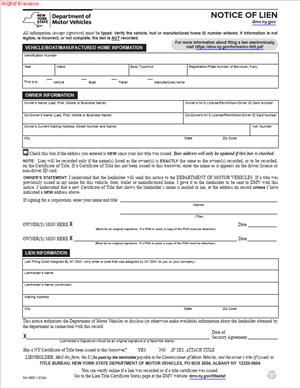
MV-900 – Notice of Lien
Fill out nowJurisdiction: Country: United States | Province or State: New York
The MV-900 – Notice of Lien is a form used in New York to record a lender’s legal interest in a motor vehicle. If money is owed on a vehicle, this document helps place that interest on record with the state.
You may encounter this form when financing a car, truck, or other titled vehicle. It is part of the paperwork that connects a loan to the vehicle’s title.
For self-represented individuals, this form often comes up during vehicle purchases involving financing. It may also appear when correcting or updating title records.
Understanding what this document does can help you complete it accurately and avoid delays. A small error on a lien filing can slow down title processing.
What is MV-900 – Notice of Lien?
Clear definition
The MV-900 – Notice of Lien is a New York Department of Motor Vehicles document used to notify the state that a lien exists on a specific vehicle. A lien is a legal claim against property used as security for a debt.
When this form is filed, the lienholder’s interest is added to the vehicle’s official title record. This means the vehicle cannot usually be sold or transferred free of that lien until the debt is satisfied.
The form links three key elements: the vehicle, the owner, and the lienholder. It tells the DMV who holds the financial interest and how to identify the vehicle tied to that debt.
Who typically uses this form?
Lenders commonly use this form when they finance a vehicle purchase. This includes banks, credit unions, and other financing entities.
Vehicle dealers may also handle the submission as part of a financed sale. In many transactions, the dealer prepares title and lien paperwork on behalf of the buyer and lender.
Individual lenders can use it as well. For example, if a private party lends money for a vehicle purchase and wants to secure that loan with the vehicle, this form may be part of the process.
Vehicle owners may encounter the form when reviewing or confirming that a lien was properly recorded.
Why might you need this form?
You may need this form if a vehicle is being used as collateral for a loan and the lien must be recorded with the state. Recording the lien helps protect the lender’s interest.
If a lien is not properly noted on the title, the lender’s claim may not appear in official records. That can create confusion if the vehicle is sold or transferred.
You might also need this document if a lien was missed during the original title application and needs to be added later. In some cases, it may be used to correct lien information that was entered incorrectly.
Accurate completion helps ensure the title reflects the correct lienholder name and address. This reduces the chance of future disputes about who holds the security interest.
Typical real-life scenarios
- You finance a new car through a bank. As part of the purchase process, the lien is recorded so the bank’s interest appears on the title. The MV-900 – Notice of Lien may be included in that title paperwork.
- You buy a used vehicle from a dealer and take out a loan through a credit union. The dealer prepares the title application and submits a lien notice to show that the credit union has a claim.
- A family member lends you money to buy a vehicle. To secure repayment, you agree that the vehicle will serve as collateral. A lien notice may be filed to reflect that agreement.
- A vehicle title is issued without the lender’s name due to a clerical error. The lien must then be added to the DMV record to accurately reflect the financing arrangement.
When would you use MV-900 – Notice of Lien?
This form is generally used when a lien needs to be recorded on a New York vehicle title. That usually happens at the time of purchase when financing is involved.
It may also be used after a title has already been issued, if the lien was not recorded at the time of application. In that case, the filing updates the official record.
Lenders use the form when they want to ensure their interest is publicly documented. Dealers may use it during vehicle registration and title processing.
In some situations, it may be used when transferring a vehicle with an existing loan. The lien must continue to be reflected in the state’s records until it is released.
The timing of the submission can affect how quickly the title is issued or updated. Delays or errors in the lien notice can lead to follow-up requests from the DMV.
Legal characteristics of MV-900 – Notice of Lien
This document functions as a formal notice to the state that a lien exists. Its effectiveness depends on accurate identification of the vehicle and the parties involved.
Key details typically include the vehicle identification number (VIN), the owner’s name, and the lienholder’s name and address. If any of this information is incomplete or incorrect, the filing may be rejected or require correction.
A common issue is a mismatch between the VIN on the lien notice and the VIN on the title application. Even a small error can cause processing delays.
Another frequent problem is inconsistent naming. The lienholder’s name must match the legal name used in its records. Variations can create confusion in the title record.
Requirements can vary slightly depending on how and when the lien is submitted. For example, procedures may differ if the lien is filed with an initial title application versus added later.
This form records a lien, but it does not create the loan agreement itself. The loan terms are set out in a separate contract between the borrower and lender.
It also does not release a lien. A different document or process is typically required to remove a lien once the debt is paid.
Is it legally binding?
The MV-900 – Notice of Lien supports a legally binding security interest when it reflects a valid loan agreement. The binding obligation arises from the underlying loan contract, not from the form alone.
Once properly filed and accepted, the lien is generally reflected on the vehicle’s title record. This public record gives notice of the lienholder’s claim.
If the underlying agreement is invalid or if the form contains major errors, the lien may not be properly recognized. Accuracy and proper submission are essential for the lien to have its intended effect.
The document itself does not set repayment terms or create new obligations. It formalizes the recording of an existing financial arrangement.
How to fill out MV-900 – Notice of Lien
Step 1 – Identify the vehicle
Enter the vehicle identification number exactly as it appears on the vehicle and title documents. Include the year, make, and other requested identifying details. Double-check every character of the VIN to avoid delays.
Step 2 – Provide the owner’s information
Fill in the full legal name and address of the vehicle owner. The information should match the name used on the title or title application. Consistency helps ensure the lien is correctly tied to the right record.
Step 3 – Enter the lienholder’s details
List the full legal name and mailing address of the lienholder. Use the exact name the lender uses in official filings. This is the name that will appear on the title record.
Step 4 – State the date of the lien
Include the date the lien was created, which often matches the date of the loan agreement. Make sure this date is accurate and clearly written.
Step 5 – Review all information for accuracy
Before signing or submitting, read through each entry carefully. Confirm that names, numbers, and addresses are complete and legible. Small errors can result in rejection or requests for correction.
Step 6 – Sign where required
If the form requires a signature, ensure the appropriate party signs in the designated area. The signature confirms that the information provided is accurate to the best of the signer’s knowledge.
Step 7 – Submit with related title paperwork
Provide the completed document along with any required title or registration forms. Submission is typically part of the overall title process, especially when the lien is being recorded at the time of purchase.
Legal terms you might encounter in MV-900 – Notice of Lien
- Lien: A lien is a legal claim against a vehicle to secure payment of a debt. On this document, the lien is the interest a lender or creditor records to protect its right to be paid. Until the lien is satisfied, the vehicle title reflects that claim.
- Lienholder: The lienholder is the person or organization that holds the security interest in the vehicle. This is usually a lender, but it can also be a repair shop or another creditor. You must enter the lienholder’s exact legal name and mailing address as it should appear in the official record.
- Debtor: The debtor is the vehicle owner who owes the underlying debt. On this document, the debtor’s name must match the name shown on the vehicle title or title application. Any mismatch can delay processing or cause rejection.
- Vehicle Identification Number (VIN): The VIN is the unique 17-character identifier assigned to a specific vehicle. It is one of the most important entries on this document. Even one incorrect digit can link the lien to the wrong vehicle or prevent the lien from being recorded.
- Certificate of Title: The certificate of title is the official document that proves ownership of the vehicle. When a lien is recorded, the title record is updated to show the lienholder’s interest. The physical title may be issued in a way that reflects the lien.
- Security Interest: A security interest is the legal right a creditor has in the vehicle as collateral for a debt. This document is used to publicly record that security interest. Recording it helps establish priority against other creditors.
- Date of Lien: This is the date the security agreement was created or became effective. It is not simply the date you fill out the form. The date of lien can affect priority if more than one lien exists on the same vehicle.
- Priority: Priority determines which lienholder gets paid first if the vehicle is sold or repossessed. The order often depends on when each lien was properly recorded. Accurate dates and timely filing matter because they can affect this order.
- Assignment of Lien: An assignment occurs when a lienholder transfers its interest to another party. While this document is used to record a lien, you may also encounter assignments in related paperwork. The new lienholder’s information must be clearly recorded to update the title record.
FAQs
What exact vehicle details must I enter on this form?
You need the full VIN, the vehicle year, make, and any other identifying details requested. Use the information exactly as it appears on the current title or title application. Do not guess or rely on memory. Double-check the VIN from the vehicle or official paperwork because one incorrect character can cause the filing to be rejected or recorded against the wrong vehicle.
Does the lien date mean the day I sign the MV-900 – Notice of Lien?
Not necessarily. The lien date usually reflects when the security agreement was signed or when the debt was created, not just when you complete this form. Look at the loan or financing agreement to confirm the correct date. Entering the wrong date can affect how the lien is prioritized in the public record.
Whose name should I list as the owner if there are multiple owners?
List the owners exactly as they appear on the current title or title application. If two names are joined by “and” or “or,” keep that wording consistent. Do not shorten names or leave out middle initials if they appear on the official record. Matching the title record helps ensure the lien is properly attached to the correct ownership record.
What if the lienholder’s business name has changed?
Use the lienholder’s current legal name as it should appear in official records. If the loan documents show an older name, confirm the correct legal name before completing this document. Inconsistent naming can cause confusion or delay the recording of the lien in the state’s system.
Do I need to attach the loan agreement when submitting this form?
Typically, this form records basic lien information and does not require you to attach the full loan contract. However, you should review the submission instructions that apply to your situation to see if any supporting documents are required. Keep a copy of the security agreement in your records in case questions arise later.
Who is allowed to sign this document?
An authorized representative of the lienholder must sign if a signature is required. This means someone with authority to act for the lender or creditor. Make sure the signer’s name and title, if requested, are clear and legible so the filing office can confirm proper authority.
How do I know if the filing office accepted the lien recording?
After submission, you should receive confirmation or see the lien reflected in the updated title record. Check the updated title document or official confirmation notice. If you do not see the lien listed, follow up promptly to avoid gaps in the public record.
What changes in the public record after this form is processed?
Once processed, the vehicle’s title record will show the lienholder’s name and the date of the lien. This signals to anyone reviewing the record that the vehicle is subject to a security interest. It can limit the owner’s ability to transfer clear title until the lien is satisfied and properly released.
Checklist: Before, During, and After MV-900 – Notice of Lien
Before
- Confirm the full and correct VIN from the vehicle or title document.
- Verify the exact legal names of all vehicle owners as shown on the title.
- Confirm the lienholder’s complete legal name and mailing address.
- Review the loan or security agreement to confirm the correct lien date.
- Check whether there are existing liens already recorded on the vehicle.
- Gather any related title or registration paperwork required for submission.
- Make sure you understand who is authorized to sign on behalf of the lienholder.
During
- Enter the VIN carefully, checking each character as you write it.
- Write all names exactly as they appear on official documents.
- Provide the full mailing address for the lienholder without abbreviations that could cause confusion.
- Insert the correct lien date based on the security agreement.
- Review every field for completeness before signing.
- Ensure the authorized signer prints and signs their name clearly.
- Confirm that all required sections are filled in and none are left blank unintentionally.
After
- Make a complete copy of the signed form for your records.
- Submit the form together with any required title documents.
- Keep proof of submission, such as a receipt or confirmation.
- Monitor for confirmation that the lien has been recorded.
- Review the updated title record to confirm accuracy.
- Store copies of the security agreement with the recorded lien documentation.
- Calendar a reminder to address lien release when the debt is satisfied.
Common mistakes to avoid with MV-900 – Notice of Lien
- Mistake: Entering an incorrect VIN because you copied it from memory instead of the title, which happens easily with long numbers, and this can cause rejection or misfiling, so do not forget to verify every character directly from official documents.
- Mistake: Using a shortened or informal version of the lienholder’s name, which often happens when people rely on branding instead of the legal name, and this can delay processing or create record mismatches, so do not forget to confirm the exact legal entity name.
- Mistake: Listing an incorrect lien date because you assumed it was the signing date of the form, which can affect priority against other creditors, so do not forget to check the original security agreement for the true effective date.
- Mistake: Leaving required sections blank because you think they do not apply, which can result in rejection or returned paperwork, so do not forget to review each field and mark it appropriately if instructions allow.
- Mistake: Allowing someone without proper authority to sign, which may invalidate the submission or delay recording, so do not forget to confirm the signer’s authority within the lienholder organization.
- Mistake: Failing to keep copies of the completed document, which happens when you rush to submit, and this can create problems if there is a dispute or processing error, so do not forget to store a complete copy in your records.
- Mistake: Submitting the form without required accompanying title paperwork, which can lead to processing delays, so do not forget to check submission requirements and include all necessary documents together.
- Mistake: Not confirming that the lien appears on the updated title record, which can leave the security interest unprotected if there was a filing issue, so do not forget to verify the recorded information after processing.
What to do after filling out MV-900 – Notice of Lien
Once you complete the form, your job is not finished. You need to make sure the lien is properly recorded and reflected in the vehicle’s title record.
Start by organizing your paperwork. Place the completed form together with any related title or registration documents. This helps prevent missing items at the time of submission.
- Step 1: Make at least one clear copy of the signed form for your internal records.
- Step 2: Attach any required title application or existing title documents, if applicable to your situation.
- Step 3: Submit the paperwork through the appropriate filing channel based on your transaction type.
- Step 4: Obtain proof of submission, such as a dated receipt or confirmation notice.
- Step 5: Track the processing timeline so you know when to expect an updated record.
- Step 6: Review the updated title or official confirmation once issued.
- Step 7: Verify that the lienholder’s name, lien date, and vehicle details appear correctly.
- Step 8: Store the recorded confirmation with the original security agreement.
- Step 9: Update any internal tracking systems to reflect that the lien has been recorded.
- Step 10: Set a reminder to prepare and file a lien release once the debt is fully paid.
After you receive confirmation, carefully compare the recorded information with your copy of the submitted form. Look at spelling, dates, and the VIN. If you notice any errors, act quickly to correct them so the public record accurately reflects the lien.
Keep all documents in a secure but accessible location. If the vehicle is later sold, refinanced, or paid off, you will need these records to prepare the appropriate release documents and update the title record again. Staying organized now will save you time and reduce risk later.
Disclaimer: This guide is provided for informational purposes only and is not intended as legal advice. You should consult a legal professional.