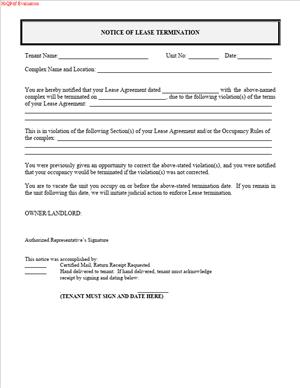
MO-Notice of Lease Termination
Fill out nowJurisdiction: Country: United States | Province or State: Missouri
The MO-Notice of Lease Termination is a written document used to formally end a rental agreement in Missouri. It creates a clear record that one party intends to end the lease. If you are about to complete this form, you likely want to make sure your notice is clear, complete, and properly documented.
This document is commonly used in housing connected to specific programs, including properties supported by rural housing initiatives. In those settings, written notice is often required before a lease can end. Verbal conversations are not enough.
The MO-Notice of Lease Termination helps define key details. It states who is involved, which property is affected, and when the tenancy will end. It also provides space to explain the reason for termination when required.
Filling it out correctly matters. An incomplete or unclear notice can delay the move-out process, create confusion about dates, or lead to disputes over rent and possession. Understanding each section before you begin will make the completion process smoother.
What is MO-Notice of Lease Termination?
Clear definition
The MO-Notice of Lease Termination is a formal written notice used to end a residential lease agreement in Missouri. It communicates that the landlord or the tenant intends to terminate the rental arrangement as of a specific date.
This document does not replace the lease. Instead, it refers to the existing lease and signals that the agreement will end according to its terms or applicable rules. It typically includes identifying details about the property, the parties, and the termination date.
The form serves as documentation. It creates a written record that notice was given, which can be important if questions later arise about timing or compliance with lease terms.
Who typically uses this form?
Landlords use this form when they intend to end a tenancy. This may happen at the end of a lease term, after a lease violation, or due to program requirements tied to the property.
Tenants may also use a notice form when they plan to move out and want to formally notify the landlord. In some housing programs, written notice in a specific format is expected.
Property managers acting on behalf of an owner often complete and deliver this document. In managed properties, the manager may sign as the owner’s authorized representative.
In rural development or subsidized housing settings, administrators may rely on this document as part of their standard termination procedures. The form helps ensure consistent communication with tenants.
Why might you need this form?
You might need the MO-Notice of Lease Termination if your lease is ending and a written notice is required. Many agreements require notice a certain number of days before the end date.
You may also need it if there has been a breach of lease terms. For example, unpaid rent or unauthorized occupants may trigger a termination notice under the lease.
In some cases, changes in eligibility for housing programs can lead to termination. When housing is tied to income or program participation, a written notice may be required to document the change.
This form may also be used when both parties agree to end the lease early. Even in mutual situations, a written record protects everyone involved.
Typical real-life scenarios
- A landlord decides not to renew a lease that is about to expire. The landlord completes the form, states the end date, and delivers it within the timeframe required by the lease.
- A tenant plans to relocate for work. The tenant fills out the notice, lists the intended move-out date, and provides forwarding contact information.
- A property manager discovers repeated lease violations. After following internal procedures, the manager issues a written termination notice outlining the effective date.
- A tenant in a rural development property no longer meets eligibility requirements. The housing provider sends a formal notice explaining that the lease will terminate on a specific date.
- In another situation, a fixed-term lease reaches its end. Rather than renew, one party sends a written notice to confirm that the tenancy will conclude as scheduled.
When would you use MO-Notice of Lease Termination?
You would use the MO-Notice of Lease Termination when a tenancy is coming to an end, and formal written notice is required. This often applies before the expiration of a fixed-term lease or during a month-to-month arrangement.
Landlords typically use this document when they are ending a lease due to nonpayment, lease violations, or nonrenewal. The notice sets out the termination date and may include the reason.
Tenants use it when they are voluntarily ending their tenancy. Many leases require notice of 30 days or more before moving out. A written document helps establish that notice was given on time.
In properties connected to rural housing programs, this form may be part of standard administrative practice. Written termination supports accurate recordkeeping and compliance with program rules.
You may also use the form when ending a tenancy after a change in household status. For example, a reduction in household size or income may affect eligibility in certain housing programs.
The timing of use depends on the lease structure. For fixed-term leases, notice may be given before the end of the term. For periodic tenancies, notice is often tied to the rental payment cycle.
Legal Characteristics of the MO-Notice of Lease Termination
The MO-Notice of Lease Termination is effective when it clearly identifies the parties, the rental property, and the termination date. It must be completed in a way that aligns with the existing lease agreement.
Clarity is essential. Vague dates or missing information can cause confusion about when the tenancy actually ends. If the form leaves out the property address or tenant name, it may create disputes.
Delivery is also a key factor. Many leases describe how notice must be delivered. This may include personal delivery or mailing to a specific address. If the delivery method does not match the lease terms, problems can arise.
Another important characteristic is timing. The notice period must match what is required under the lease or applicable housing program rules. Giving notice too late may extend the tenancy beyond the intended date.
The document itself does not remove a tenant from the property. It communicates intent to terminate. If a tenant does not vacate after the effective date, additional legal steps may be required.
This form also does not settle financial matters automatically. Issues such as unpaid rent, damages, or security deposit returns are usually handled separately under the lease terms.
In program-based housing, additional procedures may apply. For example, internal review processes or required explanations may accompany the notice. The form is often one part of a larger administrative process.
Is it legally binding?
The MO-Notice of Lease Termination can have binding effects when it is properly completed and delivered according to the lease terms. Once valid notice is given, the tenancy is set to end on the stated date, assuming all requirements are met.
Its binding nature depends on compliance. If the notice period matches the lease and the document is properly delivered, it typically establishes the end date of the agreement.
However, the form itself does not create new obligations beyond those already in the lease. It enforces existing terms by triggering the termination process described in the agreement.
If both parties sign a termination notice as part of a mutual agreement, it may also serve as written confirmation of that agreement. In that situation, it documents consent to end the lease on the stated terms.
How to fill out the MO-Notice of Lease Termination
Step 1 – Identify the property
Start by entering the full address of the rental property. Include the street number, unit number if applicable, city, state, and ZIP code. This ensures there is no confusion about which lease is being terminated.
Make sure the address matches the one listed in the lease agreement. Small errors can create uncertainty about the property involved.
Step 2 – List the parties
Write the full legal name of the tenant or tenants as they appear in the lease. If you are a landlord or property manager, include your full legal name or the name of the ownership entity.
If a management company is acting on behalf of the owner, indicate that role clearly. This helps show authority to issue the notice.
Step 3 – Reference the lease agreement
Enter the date the original lease was signed. This connects the termination notice to the correct agreement.
If the tenancy has converted from a fixed term to a month-to-month arrangement, reflect that status accurately. The form should match the current structure of the tenancy.
Step 4 – State the termination date
Write the exact date the tenancy will end. Avoid vague language such as “at the end of the month.” Instead, provide a specific calendar date.
Check that the date allows for the required notice period under the lease. Count the days carefully from the date the notice will be delivered.
Step 5 – Provide the reason, if required
Some versions of the form include space to explain why the lease is being terminated. If a reason is required, describe it clearly and factually.
Stick to objective statements. For example, you may reference nonpayment of rent or expiration of the lease term. Avoid emotional or argumentative language.
Step 6 – Include contact information
Provide current contact details for the party issuing the notice. This may include a mailing address and phone number.
Accurate contact information allows the other party to respond or ask questions about move-out procedures or next steps.
Step 7 – Sign and date the document
Sign your full legal name in the space provided. Add the date you are signing the notice.
If more than one landlord or tenant is required to sign, ensure all necessary signatures are included. Missing signatures can weaken the document’s effectiveness.
Step 8 – Prepare for delivery
After completing the form, make a copy for your records. Keep the copy in a safe place along with the lease agreement.
Deliver the notice using a method consistent with the lease terms. Record the date of delivery so you have a clear timeline tied to the stated termination date.
Legal terms you might encounter in MO-Notice of Lease Termination
- Effective Date: This is the exact date the lease ends. It is not the date you sign the document unless you state it that way. On this form, you must clearly write the effective date so everyone knows when possession of the property is expected to change.
- Notice Period: This refers to the amount of time you must give before the lease actually ends. The notice period is usually defined in the original lease. When completing this document, you need to make sure the termination date matches the required notice period.
- Lessor: The lessor is the property owner or landlord. This is the person or entity that granted the lease. On the form, the lessor’s full legal name must match the name shown in the original lease agreement.
- Lessee: The lessee is the tenant. This is the person or entity renting the property. You must list the lessee’s name exactly as it appears in the lease to avoid confusion or disputes.
- Premises: The premises mean the rental property covered by the lease. On the form, you will identify the full property address and, if applicable, a unit number. Be specific so there is no question about which property is being terminated.
- Lease Agreement: This is the original written contract between the lessor and lessee. The termination notice should reference the date of the lease agreement so it is clear which contract you are ending.
- Delivery Method: This describes how the notice is provided to the other party. The lease may state acceptable delivery methods. You should follow those instructions and document how and when delivery occurred.
- Signature Authority: This term refers to the legal right of a person to sign on behalf of a landlord or tenant. If a company owns the property, the person signing must have authority to act for that company.
- Acknowledgment of Receipt: This is confirmation that the other party received the notice. While not always required, written acknowledgment can help avoid later claims that the notice was never delivered.
- Compliance: Compliance means following the terms of the lease and any applicable program requirements. When using this form, you are formally documenting that termination is being handled in a structured and recorded way.
FAQs
Do I have to use the exact lease date when referencing the agreement?
Yes. You should copy the lease date exactly as it appears on the original agreement. This confirms which contract you are ending. If there were amendments, you may reference the original lease date and note that it includes any written modifications. Accuracy prevents disputes about which agreement this document applies to.
What date should I enter as the termination date?
Enter the last day the lease will be in effect. Do not guess. Check the notice period in your lease and count the required number of days from the date the notice will be delivered. The effective date must comply with that notice period. If the date is wrong, the termination may not be valid.
Who is allowed to sign this document?
The person signing must have legal authority. If you are an individual landlord or tenant, you sign for yourself. If a company is involved, an authorized officer or manager must sign. Make sure the printed name and title match the role of the signer so there is no question about authority.
Do I need to attach a copy of the original lease?
It is not always required, but it can help. This document usually references the lease by date and property address. If there is any confusion about the terms, attaching a copy may provide clarity. Keep at least one complete copy with your records.
How do I prove that the other party received the MO-Notice of Lease Termination?
Use a delivery method that creates a record. That might include certified mail, personal delivery with written acknowledgment, or another trackable option. Keep proof of mailing or a signed confirmation. This protects you if someone later claims they never received the notice.
What if the name on this form is slightly different from the lease?
The names should match exactly. Even small differences can create confusion. If the lease lists a full legal name, use that same name here. If there has been a legal name change, you can include both the original and current names to make the connection clear.
Does this document automatically update public property records?
No. This form documents termination between the parties. It does not automatically change public records. If the property is connected to a specific housing program or agency requirement, you may need to provide copies as required by that program.
What happens if the other party refuses to sign the MO-Notice of Lease Termination?
In many cases, only the party giving notice must sign. The other party’s signature is not always required for the notice to be effective. What matters most is that the notice meets the lease terms and that delivery can be proven. Review your lease to confirm whether acknowledgment is required.
Checklist: Before, During, and After MO-Notice of Lease Termination
Before
- Review the original lease for notice period requirements.
- Confirm the full legal names of all parties.
- Verify the complete property address and unit number.
- Check the lease start date and any amendments.
- Calculate the correct termination date.
- Confirm who has authority to sign.
- Decide on a delivery method that provides proof.
- Gather a copy of the signed lease for reference.
During
- Enter the property details clearly and completely.
- Copy names exactly as they appear in the lease.
- Insert the correct lease date.
- State the effective termination date clearly.
- Double-check spelling of names and addresses.
- Ensure the signer includes printed name and title.
- Sign and date the document.
- Make a complete copy before sending.
After
- Deliver the notice using your chosen method.
- Keep proof of delivery in a safe place.
- Note the delivery date in your records.
- Monitor the timeline leading to the termination date.
- Communicate about move-out logistics if applicable.
- Inspect the property near the end of the lease.
- Document the condition of the premises.
- Store the signed notice with the original lease.
Common mistakes to avoid with MO-Notice of Lease Termination
- Mistake: Entering the wrong termination date because you miscounted the notice period, which can invalidate the notice and delay the process; do not forget to count the required days carefully from the delivery date.
- Mistake: Using nicknames or shortened business names instead of full legal names, which happens when people rely on memory and can create enforceability issues; do not forget to copy names exactly from the lease.
- Mistake: Forgetting to sign or date the document, which occurs when rushing and can make the notice incomplete; do not forget that an unsigned notice may not be effective.
- Mistake: Failing to keep proof of delivery because you assume mailing is enough, which can lead to disputes about receipt; do not forget to use a trackable or acknowledged method.
- Mistake: Leaving out the full property address or unit number due to oversight, which can cause confusion if multiple properties are involved; do not forget to clearly identify the premises.
- Mistake: Allowing someone without proper authority to sign, which may happen in business settings and can invalidate the document; do not forget to confirm the signer’s legal authority and title.
- Mistake: Sending the notice too late because you waited until the last minute, which can extend the lease longer than planned; do not forget to plan ahead and allow time for proper delivery.
- Mistake: Failing to review the original lease for special termination clauses, which can result in noncompliance; do not forget to check for any specific procedures required in your agreement.
What to do after filling out the MO-Notice of Lease Termination
Once you complete the form, your focus shifts to delivery, documentation, and follow-through. A properly completed notice is only effective if it is delivered correctly and tracked.
- Step 1: Make at least two copies of the signed notice. Keep one for your records and use one for delivery.
- Step 2: Deliver the notice using the method required in the lease. If the lease is silent, choose a method that provides written proof of delivery.
- Step 3: Record the exact date you sent or delivered the notice. This date is critical for calculating the notice period.
- Step 4: Store your proof of delivery with your copy of the notice and the original lease agreement.
- Step 5: Mark the termination date on your calendar and set reminders leading up to that date.
- Step 6: Communicate in writing about next steps, such as move-out inspections, return of keys, or final walkthroughs.
- Step 7: Conduct a property inspection near the termination date and document the condition with notes and photos.
- Step 8: Address any remaining obligations under the lease, such as final rent payments or utility transfers.
- Step 9: Update your internal records to reflect that the lease will end on the stated date.
- Step 10: Keep all related documents together in a secure file in case questions arise later.
Staying organized protects you. Keep every version of the document, every communication about termination, and every confirmation of delivery. Clear records reduce misunderstandings and give you confidence that the process was handled correctly from start to finish.
Disclaimer: This guide is provided for informational purposes only and is not intended as legal advice. You should consult a legal professional.