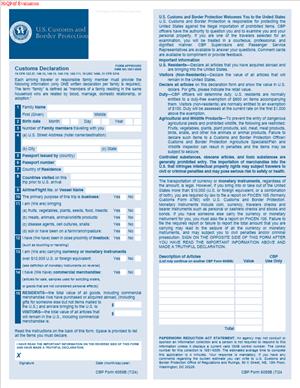
CBP Form 6059B – Customs Declaration
Fill out nowJurisdiction: Country: United States | Province or State: Federal
If you are entering the United States from another country, you will likely encounter CBP Form 6059B – Customs Declaration. This form is part of the entry process at airports, land borders, and seaports. It helps federal authorities understand what you are bringing into the country.
CBP Form 6059B – Customs Declaration collects information about you, your trip, and the items in your possession. You complete it before or during inspection by a customs officer. The details you provide affect how your entry is processed.
This document applies to travelers, not businesses filing cargo paperwork. It is designed for individuals, families, and other people arriving in the United States. Even if you are a U.S. citizen, you may still need to complete it.
Filling it out correctly matters. Inaccurate or incomplete answers can delay your entry and may lead to further questions. Knowing what each section asks for makes the process smoother and more predictable.
What is CBP Form 6059B – Customs Declaration?
Clear definition
CBP Form 6059B – Customs Declaration is a federal entry document used by U.S. Customs and Border Protection. It is a written statement about who you are and what you are bringing into the United States.
The form asks for basic identification details, travel information, and declarations about certain goods. These goods may include food, currency, commercial merchandise, and items acquired abroad. Your answers help officials determine whether inspection, duties, or other steps are required.
It is not a visa application. It is not a passport form. It is a declaration made at the time of arrival.
Who typically uses this form?
Most international travelers use this form when entering the United States. This includes U.S. citizens, lawful permanent residents, and visitors from other countries.
In many cases, one form may cover members of the same household traveling together. A household generally means people who live at the same address and are related by family or marriage. If you are traveling with friends or colleagues who live at different addresses, each household may complete its own form.
Travelers arriving by airplane, cruise ship, or land vehicle may all encounter this document. The exact method of submission can vary. Sometimes it is completed on paper. In other cases, it may be completed electronically at a kiosk or through a digital system at the port of entry.
Why might you need this form?
You need this form to formally declare items you acquired abroad. This includes purchases, gifts, and certain goods you are bringing back into the country. The form allows federal authorities to assess whether duties apply or whether items require further inspection.
It also addresses health and safety concerns. Certain agricultural products, plants, meats, and animal products can pose risks. Declaring them allows officers to evaluate whether they can enter the country.
The form also includes questions about currency and monetary instruments. Large amounts of money must be reported. This reporting supports federal financial regulations.
In short, the form creates a record of what you are bringing into the United States and confirms that you have answered specific questions under penalty of law.
Typical real-life scenarios
- You return from a vacation overseas with clothing and electronics you purchased during the trip. At the airport, you are asked to complete the declaration before meeting a customs officer. You list the value of the items and answer questions about food and currency.
- You are a U.S. citizen visiting relatives abroad and returning with homemade food products. The form asks whether you are bringing fruits, vegetables, meats, or other agricultural goods. You indicate “yes,” which leads to additional inspection.
- You are an international student entering the United States for the first time. You carry personal belongings, gifts, and a modest amount of cash. You use the form to declare these items and confirm the total value.
- You travel frequently for business and bring back product samples. The form asks whether you are carrying commercial merchandise. Your answer determines whether further customs processing is needed.
When would you use CBP Form 6059B – Customs Declaration?
You use CBP Form 6059B – Customs Declaration when you are physically entering the United States from another country. The timing is tied to arrival. It is not filed weeks in advance like a visa application.
Air travelers often complete the form during the flight or at an electronic kiosk after landing. Land border travelers may complete it when arriving at a port of entry. Cruise passengers may complete it before disembarking.
The form is generally required when you have been outside the United States and are returning with items acquired abroad. Even if you believe you have nothing to declare, you may still need to answer the form’s questions.
Travelers entering for tourism, study, work, or returning home after a trip can all encounter this document. The role you hold, such as visitor or citizen, does not remove the need to declare applicable items.
Legal characteristics of CBP Form 6059B – Customs Declaration
CBP Form 6059B – Customs Declaration is a federal government document. Its effectiveness comes from being completed truthfully and signed or certified by the traveler. Your signature or electronic confirmation indicates that the information is accurate to the best of your knowledge.
The form becomes part of the official entry record. Customs officers rely on it when deciding whether to inspect your baggage, assess duties, or ask additional questions. Inaccurate answers can create delays or trigger enforcement actions.
Common problems include failing to list all purchased items, underreporting value, or overlooking food and agricultural products. Even small omissions can result in secondary inspection. Clear and complete answers reduce the risk of complications.
This document does not grant permission to enter the United States. Entry decisions are based on immigration status and inspection. The form does not replace a visa, passport, or other travel authorization.
Because this is a federal form, it applies uniformly across all states and territories. Procedures at different ports of entry may vary in format, especially with electronic systems, but the core questions remain consistent nationwide.
Is it legally binding?
Yes, this form carries legal significance. When you sign or electronically certify it, you are declaring that your answers are true and complete. This declaration is made under federal law.
Providing false information can lead to penalties. These may include fines, seizure of goods, or further legal consequences in serious cases. The binding nature of the document comes from the fact that you are making an official statement to a federal authority.
At the same time, the form itself is not a contract between you and the government. It does not create a negotiated agreement. It is a required declaration that supports the customs inspection process.
How to fill out CBP Form 6059B – Customs Declaration
Step 1 – Provide your personal information
Enter your full name as it appears on your passport or travel document. Include your date of birth and other identifying details requested. If you are completing one form for a household, ensure the primary traveler’s information is clearly stated.
Step 2 – Enter travel details
Provide the country or countries you visited before arriving in the United States. Include your flight number or vessel information if requested. This section helps officers understand your travel route and potential risk factors related to certain regions.
Step 3 – List your U.S. address
Write the address where you will stay in the United States. This may be your home address, a hotel, or a host’s residence. The information should be complete enough for identification, including city and state.
Step 4 – Declare the total value of goods
Add the value of all items you purchased or acquired abroad and are bringing with you. This includes gifts and items for others. Use the purchase price paid in foreign currency and convert it as required by the form’s instructions at the time of completion.
Step 5 – Answer agriculture and food questions
Read each question carefully. Indicate whether you are bringing fruits, vegetables, plants, meats, animal products, soil, or related items. If you are unsure whether an item qualifies, review the wording closely and answer based on the description provided.
Step 6 – Report currency and monetary instruments
State whether you are carrying currency or monetary instruments over the specified threshold amount. Include cash and certain financial instruments as defined in the form. If the amount exceeds the threshold, additional reporting may be required during inspection.
Step 7 – Indicate commercial merchandise
Confirm whether you are bringing items intended for sale or business use. Product samples, inventory, or goods for resale typically fall into this category. Accurate identification of commercial items affects how they are processed at entry.
Step 8 – Review all answers carefully
Before signing or submitting, read through each response. Ensure totals are accurate and no section is left incomplete. Check that names and numbers are clearly written if using a paper version.
Step 9 – Sign and date the form
Sign and date the declaration where indicated. If you are completing it electronically, follow the prompts to certify your answers. Your signature or certification confirms that the information provided is true and complete to the best of your knowledge.
Legal terms you might encounter in CBP Form 6059B – Customs Declaration
- Customs Declaration: This is your official statement to U.S. Customs and Border Protection about what you are bringing into the country. On this document, you confirm details about your trip, your identity, and the goods in your possession. It is completed under penalty of law, which means accuracy matters.
- Port of Entry: The port of entry is the airport, seaport, or land border crossing where you arrive in the United States. This location determines where your form is reviewed and where you may be inspected. It also affects which customs officers process your entry.
- Accompanied Goods: These are items traveling with you in your luggage or vehicle. You must include their total value when completing this document. Goods shipped separately are handled differently and may require additional paperwork.
- Monetary Instruments: This term includes cash, traveler’s checks, money orders, and certain negotiable instruments. If the total amount you carry exceeds the reporting threshold, you must declare it. Failing to report can lead to seizure and penalties.
- Commercial Merchandise: Items intended for resale, business use, or commercial distribution fall into this category. Even small quantities can qualify if your purpose is business-related. This affects duties, taxes, and inspection requirements.
- Agricultural Products: This includes fruits, vegetables, plants, seeds, meats, and animal products. You must answer specific questions about these items. Some may be restricted or require inspection to prevent the spread of pests and disease.
- Dutiable Items: These are goods that may be subject to customs duties or taxes. Whether something is dutiable depends on its type, value, and your eligibility for exemptions. You are responsible for declaring the total value accurately.
- Household Effects: Personal belongings used abroad and brought back for personal use can fall under this term. Some may qualify for duty-free treatment depending on circumstances. You still must declare them.
- False Statement: Providing incorrect information, whether intentional or not, can be treated as a false statement. This includes undervaluing goods or failing to disclose items. Consequences may include fines, delays, or further inspection.
- Signature Certification: When you sign the form, you certify that all information is true and complete. This signature gives the document legal weight. It confirms that you understand the declaration requirements.
FAQs
Do I still need to complete this form if I have nothing to declare?
Yes. You must still complete the declaration portion and confirm that you are not bringing in items that require reporting. Customs officers rely on your answers to determine whether you can proceed or need further inspection.
What value should I write for the goods I purchased abroad?
You should list the total fair retail value paid for the items in U.S. dollars. Use the actual purchase price, not what you think the item is worth now. If you bought items in a foreign currency, convert them using a reasonable exchange rate at the time of entry.
Do I include gifts and souvenirs in the total value?
Yes. Gifts and souvenirs count toward the total value of goods you are bringing in. Even if the items are inexpensive, you must include them in the amount you declare on this document.
What happens if I realize I made a mistake after I hand it to the officer?
Tell the officer immediately. Corrections can often be made on the spot before processing is complete. Waiting or staying silent may lead to delays or questions about your intent.
Do children need their own CBP Form 6059B – Customs Declaration?
In many cases, one responsible adult may complete a single declaration for immediate family members traveling together and living in the same household. You must include all goods carried by each family member in the total value. If you are unsure, confirm with the officer before submitting the form.
What if I am carrying more than the currency reporting threshold?
You must answer the currency question truthfully and be prepared to provide additional details if asked. Reporting does not automatically mean the money will be taken. It simply ensures compliance with federal reporting requirements under CBP Form 6059B – Customs Declaration.
Does signing this document create a public record?
This form is part of your entry record with federal authorities. It is used for border processing and enforcement purposes. It is not typically published in a public database, but it may be retained in government records.
Can I complete CBP Form 6059B – Customs Declaration electronically?
At many ports of entry, you may provide the same information through an electronic kiosk or mobile system instead of a paper version. The questions and legal effect are the same. You must still review your answers carefully before final submission.
Checklist: Before, During, and After CBP Form 6059B – Customs Declaration
Before
- Gather receipts for items purchased abroad.
- Count all cash and monetary instruments you are carrying.
- List all items in your luggage, including gifts.
- Confirm your U.S. address where you will stay.
- Review whether any items are for business or resale.
- Check for agricultural items such as food or plants.
- Convert foreign currency purchase amounts into U.S. dollars.
During
- Print your full legal name exactly as it appears on your passport.
- Enter accurate flight, vessel, or vehicle information.
- Write clearly and legibly if completing a paper form.
- Add up the total value of all goods carefully.
- Answer every yes/no question without leaving blanks.
- Review your responses before signing.
- Ask an officer if you do not understand a question.
After
- Keep your receipts accessible in case of inspection.
- Be prepared to explain the nature of high-value items.
- Follow directions for secondary inspection if selected.
- Pay any assessed duties promptly.
- Retain any payment confirmation provided.
- Store travel documents together for your records.
Common mistakes to avoid with CBP Form 6059B – Customs Declaration
- Mistake: Underreporting the value of goods because you think small amounts do not matter, which happens when travelers guess instead of checking receipts, leading to penalties or extra inspection; do not forget to total every purchase accurately.
- Mistake: Forgetting to include gifts or items purchased for someone else, which occurs when you assume gifts are exempt, resulting in incorrect declarations; do not forget that all items count toward your total.
- Mistake: Answering “no” to agriculture questions without checking your bags, which happens when food items are packed by others, causing delays or confiscation; do not forget to inspect your luggage carefully.
- Mistake: Failing to report cash over the threshold because you fear seizure, which often comes from misunderstanding reporting rules, leading to serious legal consequences; do not forget that reporting is required even if the money is lawful.
- Mistake: Leaving blanks on the form due to rushing, which happens in busy arrival areas, creating processing delays; do not forget to complete every field or mark not applicable where appropriate.
- Mistake: Signing without reviewing your answers, which occurs when travelers feel pressured to move quickly, increasing the risk of false statements; do not forget that your signature certifies everything is accurate.
- Mistake: Misstating your U.S. address because you are unsure where you will stay, which can cause record inconsistencies, leading to follow-up questions; do not forget to confirm your destination address before arrival.
- Mistake: Treating business samples as personal items, which happens when you assume small quantities are not commercial, potentially triggering penalties; do not forget to disclose items related to business use.
What to do after filling out CBP Form 6059B – Customs Declaration
Once you complete the form, your next focus is inspection and clearance. Stay organized and responsive. Border processing moves quickly, and clear answers help avoid delays.
- Step 1: Present the completed form or electronic confirmation to the customs officer when requested.
- Step 2: Provide your passport and any supporting travel documents at the same time.
- Step 3: Answer follow-up questions clearly and directly without adding unrelated details.
- Step 4: Provide receipts if the officer asks to verify the declared value of goods.
- Step 5: Follow instructions if you are directed to secondary inspection.
- Step 6: Pay any duties or taxes assessed and obtain proof of payment.
- Step 7: Confirm that your documents are returned to you before leaving the inspection area.
- Step 8: Keep any payment receipt or clearance slip with your travel records.
- Step 9: Review your luggage before exiting to ensure nothing was left behind during inspection.
- Step 10: Store your declaration details with your travel documents in case questions arise later.
If duties were assessed, keep proof of payment for your personal financial records. This can help if you later need to show that taxes were properly paid on imported goods.
If any items were detained or seized, ask for written documentation explaining the reason and the next steps. Follow the instructions provided to respond within any stated deadlines.
Finally, use what you learned for future travel. Keep purchase receipts organized during trips. Track high-value items separately. Planning ahead makes your next entry process smoother and faster.
Disclaimer: This guide is provided for informational purposes only and is not intended as legal advice. You should consult a legal professional.