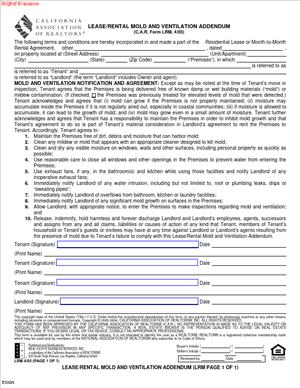
Lease or Rental Mold and Ventilation Addendum
Fill out nowJurisdiction: Country: United States | Province or State: California
What is a Lease or Rental Mold and Ventilation Addendum?
A mold and ventilation addendum is a written agreement attached to a residential lease. It addresses indoor mold, moisture, and ventilation. It tells you what is known about mold at the property. It sets clear duties for you and the landlord. It explains ventilation practices and reporting steps. It also authorizes entry for inspection and repairs when moisture or mold is suspected.
You use this addendum with the main lease or rental agreement. It becomes part of your contract. Landlords and property managers use it to meet disclosure duties. They also use it to guide tenants on daily ventilation and cleaning practices. Tenants use it to understand what to do if they see moisture, musty odors, or mold. It reduces confusion. It documents who does what and when.
You need this form if you rent or manage a home in California. Mold can grow when moisture is present. That can happen after leaks, condensation, or poor ventilation. California requires landlords to disclose known mold and maintain a habitable home. The addendum helps show those steps were taken. It also tells you how to prevent mold growth. It can reduce health risks and property damage.
Typical usage scenarios include a new lease, a renewal, or a re-lease after repairs. You may add the form after a significant leak or water event. Old buildings and coastal or inland humid areas benefit from clear guidance. Homes with bathrooms without windows, older kitchens, or large households need extra ventilation steps. The addendum sets those steps in writing. If you manage multiple units, you can use the same form across your portfolio. You then tailor the “known conditions” to each unit.
When Would You Use a Lease or Rental Mold and Ventilation Addendum?
You use this addendum at lease signing for a house, condo, ADU, or apartment. It is most helpful where humidity is moderate to high. That includes coastal communities and valley areas during certain seasons. If the property had a past roof leak, slab leak, or flood, include it. If you replaced a shower, repaired drywall, or installed new ventilation fans, include it. The addendum documents conditions and instructions at that point in time.
If you manage a multi-unit building, use it at move-in and renewal. Tenants change. Conditions change. Each tenant should receive current information and duties. If you take over management from another company, add the form at the first chance. Use it with any change in terms notice when you adjust month-to-month tenancies.
When a tenant reports a musty smell or staining, pull out the addendum. It provides the reporting process and access language. You can enter with proper notice to inspect. You can act fast to stop damage and reduce risk. If you need to set up containment or run dehumidifiers, the addendum anticipates that. It asks for tenant cooperation.
If you are the tenant and you are sensitive to mold, ask for this addendum. It should disclose any known issues or past remediation. It should also explain ventilation steps in bathrooms and kitchens. You will know how to make timely reports. You will know what equipment you should use, such as fans or dehumidifiers, if provided.
Use this addendum after a long vacancy, too. Empty homes can develop stagnant air and moisture pockets. The start of tenancy is the time to set expectations. This is also useful in student housing and roommate rentals. More people in a space means more moisture from cooking and showers. Clear rules help everyone.
If a homeowners’ association manages the building’s exterior, the addendum still helps. It explains what the landlord maintains and what the tenant maintains. It also describes how exterior leak reports get routed through the association. This avoids delays and finger-pointing later.
Legal Characteristics of the Lease or Rental Mold and Ventilation Addendum
This addendum is legally binding when signed by all parties and attached to the lease. It becomes part of the rental contract. The law in California requires landlords to provide a habitable home. That includes fixing leaks and controlling moisture. Landlords must not rent a property with visible mold that poses a health risk, except for minor mildew. There are also duties to disclose known mold conditions. This addendum helps fulfill those duties in writing.
Enforceability comes from a few core elements. The addendum is in writing. It states clear obligations. Both sides sign it. It is supported by the main lease. It does not try to waive habitability or legal rights. It sets reasonable care duties and notice requirements. Courts uphold agreements that clarify maintenance and reporting. They do not enforce clauses that excuse a landlord from basic safety. The addendum should not limit emergency repairs. It should not shift landlord duties for building systems to the tenant.
A well-drafted addendum uses plain language. It explains how to ventilate and clean. It explains what is “urgent” and how to report it. It authorizes entry with proper notice. In emergencies, entry can occur without standard notice. The addendum can note that. The law allows entry to protect the property and persons in emergencies.
The addendum should not be used to deny repairs. It should not threaten retaliation. It should not impose costs for normal wear. It can be stated that a tenant pays for damage caused by the tenant’s misuse or neglect. It should also state that the landlord handles structural repairs and building system issues. That includes roofs, plumbing, and ventilation systems.
The addendum can address insurance. Tenants often insure their personal property. Most policies exclude mold unless caused by a covered water event. The addendum should advise you to review your policy. It should explain that the landlord does not insure your personal items. This prompts tenants to plan for contingencies.
Keep records to strengthen enforceability. Provide the addendum with the lease. Have tenants initial key sections. Keep copies of all disclosures and attachments. When you remediate, keep receipts and the scope of work. If you claim no known mold, keep any inspection records that support that. If a dispute arises, this paper trail matters.
How to Fill Out a Lease or Rental Mold and Ventilation Addendum
1) Gather background information.
Pull any prior inspection reports, work orders, and receipts. Gather leak history, photos, and remediation records. Confirm HVAC filter sizes and replacement schedules. Confirm the presence and condition of exhaust fans. Know who to call for emergency plumbing and drying.
2) Identify the property.
Write the full street address, unit number, and city. Include any building name if used for deliveries. Add the county. Accuracy matters. You want no confusion about the premises.
3) Identify all parties.
Name the landlord or owner. If a property manager signs, list the manager’s name and company. List all tenants who will sign the lease. Use full legal names. Make sure names match the lease. If a guarantor will sign the lease, they do not need to sign this addendum unless required by your lease.
4) Tie the addendum to the lease.
Insert the lease date and type. State whether it is a fixed-term lease or month-to-month. Write the start date of the tenancy. This ensures the addendum applies to the correct agreement. If used at renewal, state the renewal date.
5) Disclose known mold conditions.
Check the box that best fits the current knowledge if you have no actual knowledge of mold, state that. If you know of present or past mold, disclose the details. List the location. For example: “Primary bathroom, north wall under sink.” Include dates discovered and dates repaired. Describe what was done. For example: “Drywall removed and replaced. Plumbing P-trap replaced. Drying performed.” If you have lab results or consultant reports, attach them. Label them as exhibits. Do not overstate or understate. Keep to the facts.
6) Note any areas prone to moisture.
Identify rooms with limited ventilation. For example: “Interior bathroom has no window; exhaust fan provided.” Mention any slab areas or below-grade rooms that need extra care. If the property has a crawl space or attic that had past moisture, note that. A brief sentence is enough.
7) Describe the landlord’s duties.
State that you will maintain roofs, windows, and plumbing. State that you will repair leaks and water intrusion. State that you will maintain and repair exhaust fans. Confirm you will provide and replace HVAC filters or supply them to the tenant at set intervals. Set a response standard for urgent leaks. For example: “Emergency response within 24 hours for active leaks.”
8) Describe the tenant’s duties.
State that the tenant must use exhaust fans during and for 30 minutes after showers. State that the tenant should run kitchen fans while cooking. State that the tenant should not block vents. Ask the tenant to keep furniture a few inches from exterior walls. Ask the tenant to hang towels to dry. Ask the tenant to wipe condensation on windows and sills. Ask the tenant to promptly report leaks, overflows, or musty odors.
9) Set the reporting process.
Provide one phone number and one email for maintenance. Add an after-hours number for emergencies. Define “emergency” as active leaks or flooding. State that the tenant should report moisture issues within 24 hours of discovery. Ask the tenant to include photos if possible. Fast reporting reduces damage.
10) Address access and entry.
State that the landlord may enter with proper notice to inspect and repair moisture issues. The law allows entry with advance notice in non-emergencies. State your standard notice time. For example: “At least 24 hours’ written notice.” In emergencies, entry may occur without that notice to protect persons and property. State that you will post a notice after emergency entry.
11) Authorize remediation steps.
Explain that remediation may include opening walls, removing materials, and running equipment. Explain that fans and dehumidifiers may operate for several days. Explain that doors may be sealed for containment. Ask the tenant to cooperate and not turn off equipment. If storage or temporary relocation may be needed, state how you will handle it. If any rent adjustment will apply, state it or note that rent rights follow the law. Do not promise more than you will deliver.
12) Clarify cleaning and household practices.
Provide simple instructions. For example: “Keep bathrooms clean and dry. Use a squeegee on shower walls. Clean any minor mildew on grout with household cleaners. Do not let spills sit. Dry them within 24–48 hours.” Small actions prevent growth before it spreads.
13) Address HVAC filters and equipment.
If the tenant is to change filters, state the size and cadence. For example: “20x20x1, every 90 days.” If the landlord will provide filters, state how and when. If a dehumidifier is provided, state that the tenant should run it and empty the tank. If there is a condensate drain line for HVAC, state that the landlord maintains it.
14) List prohibited conduct that increases moisture.
State that the tenant must not use unvented gas or kerosene heaters. State that the tenant must not disable or remove exhaust fans. State that the tenant must not store wet items indoors. State that the tenant should not place aquariums or houseplants in a way that causes standing water. Keep this list reasonable and related to moisture control.
15) Explain personal property risk and insurance.
State that the landlord does not insure the tenant’s belongings. Suggest that the tenant get renters’ insurance. Suggest the tenant confirm whether water and mold-related losses are covered. Explain that the tenant should move items away from leaks to prevent further damage.
16) Include a move-in condition acknowledgment.
Ask the tenant to confirm they inspected the unit. Ask them to confirm they saw no visible mold, except as disclosed. Attach a move-in checklist and photos if available. Have the tenant initial this section. It reduces disputes later.
17) Attach related documents.
If you have a mold information sheet, attach it. If you have a ventilation instruction sheet, attach it. If you have a remediation notice or clearance letter, attach it. Label each attachment clearly. Reference each attachment in the addendum body.
18) Address remedies and cost allocation.
State that the tenant may be responsible for costs if their failure to report or improper use causes damage. Give examples, such as failure to report an overflow or disabling a fan. Clarify that normal wear or system failures are the landlord’s responsibility. Clarify that nothing in the addendum limits legal rights or required repairs.
19) Final review for clarity and consistency.
Ensure that dates, names, and the property address match the lease. Confirm that checkboxes and blanks are filled. Remove any internal notes. Make sure the language is plain and consistent with the rest of the lease.
20) Signatures and initials.
Have the landlord or manager sign and date. Have each tenant sign and date. Ask all parties to initial each page. This prevents page swaps. Provide a fully signed copy to each tenant. Keep a signed copy with the lease file. If you e-sign, ensure all signature blocks are complete and audit logs are retained.
21) Deliver and store.
Deliver the addendum at the same time as the lease, or when added later. If added mid-tenancy, use the proper form to change terms for a month-to-month tenancy and provide the required notice. Store all documents together for easy access. You may need them during repairs or claims.
Real-world example: You receive a text that the bathroom ceiling has a water stain. The tenant smells a musty odor. The addendum tells the tenant to report with photos. It allows you to enter with notice or immediately if water is active. You send a plumber and a remediation contractor. Drying equipment runs for three days. The tenant keeps it on. You replace part of the ceiling. You document the work. You attach the invoice and a brief summary to your file. The addendum shows both sides did what they agreed to do.
Another example: A tenant never uses the bath fan and keeps a window sealed. Mold grows on the shower caulk. The addendum requires using the fan and cleaning minor mildew. You instruct the tenant to clean it. You show them how to run the fan 30 minutes after showering. You also confirm the fan works. If the fan is broken, you repair it. If the tenant still refuses to use it and damage continues, you use the addendum to support cost recovery for tenant-caused damage.
A final note on tone and use. Keep the addendum practical. Avoid dense legal language. Focus on actions and timelines. Use it to prevent problems, not just to assign blame. If you need to enforce, you will be glad the duties were clear. If you need to remediate, you will be glad entry and cooperation were in writing.
Legal Terms You Might Encounter
- Addendum means an extra agreement attached to your lease. This form changes or adds duties regarding mold and ventilation. It becomes part of your lease once signed.
- Premises means the rental space you occupy. It includes rooms, closets, bathrooms, and attached areas. The form may also cover common areas, like hallways or laundry rooms.
- Habitability refers to the basic standard that a home is fit to live in. Mold and poor ventilation can threaten that standard. This form sets duties to help maintain safe conditions.
- Material fact means information that could affect your decision to rent. Known water leaks or visible mold are material facts. The form documents whether such facts are known.
- Notice means how you tell the owner or manager about a problem. The form often requires prompt, written notice. It tells you where and how to report issues.
- Cure period is the time allowed to fix a problem after notice. The form may outline response timing for repairs. You still should report issues as soon as you see them.
- Right of entry allows the owner or manager to enter for repairs. This is usually with notice and at reasonable times. The form explains the entry for inspections or remediation.
- Remediation means steps taken to fix water damage or mold. It can include cleaning, removal, and drying. The form explains when and how remediation may occur.
- Ventilation means moving indoor air to the outside. It includes exhaust fans, windows, and vents. The form sets your duty to use fans and keep vents clear.
- Moisture intrusion means water entering where it should not. Examples include leaks, seepage, or condensation. The form asks you to report moisture intrusion right away.
- Filters are replaceable parts in HVAC or air systems. Dirty filters can trap moisture and reduce airflow. The form may assign you tasks to check or replace them.
- Personal property means your belongings inside the unit. This includes furniture, clothing, and electronics. The form may address what happens if mold damages property.
- Waiver means giving up a right, usually in writing. Some clauses try to limit liability for certain issues. Read these parts closely and ask questions before agreeing.
FAQs
Do you have to sign this form if you don’t see mold?
Yes. Most leases include this addendum even when you see no mold. It sets clear duties for prevention and reporting. It also documents the current condition as known.
Do you need a professional mold inspection before signing?
The form does not require one. You can request an inspection if you have concerns. You can also note any visible issues on your move‑in checklist. Document what you see with time‑stamped photos.
Do you have to run exhaust fans after showering or cooking?
Yes, if the unit has them. The addendum expects you to use fans to control moisture. Open windows when possible. Wipe condensation on windows and walls. These steps reduce mold risk.
Do you need to alert the owner about a small leak or damp spot?
Yes. Report any leak, dampness, or musty smell right away. Send notice in writing. Include photos and the location. Quick reporting protects you and speeds up repairs.
Can you withhold rent if mold appears?
Follow your lease and the law. Withholding rent can have serious consequences. Report the issue in writing and allow access for repairs. Keep records of all communications. If you need legal advice, speak with a professional.
Who pays for mold remediation?
It depends on the cause and the lease. Owners often handle building leaks or system failures. You may be responsible if your actions caused the issue. The addendum explains duties and cost responsibility.
Does renters’ insurance cover mold damage?
Policies vary. Many exclude mold unless caused by a covered event, like a sudden pipe burst. Check your policy and endorsements. Ask your provider about coverage options.
What if a household member has mold sensitivities?
Tell the manager about ventilation needs. Use fans and dehumidification as allowed. Keep humidity low through daily habits. If you need accommodations, follow the lease process. Seek medical advice as needed.
Do you have to allow entry for inspections or repairs?
Yes, with proper notice under your lease. The addendum explains the entry for inspections, drying, or repairs. Be flexible to help resolve the issue quickly. Document entry dates and work done.
Can you install your own air purifier or dehumidifier?
Often, yes, if it is safe and does not damage the unit. Check the lease for restrictions. Do not alter building systems without written approval. Keep receipts and maintenance logs for your devices.
Checklist: Before, During, and After the Addendum
Before signing:
- Gather unit details. Note locations of fans, vents, and windows.
- Ask for the property’s leak and water damage history if available.
- Confirm how to submit maintenance requests. Get an email and phone number.
- Review responsibilities for filter replacement and fan use.
- Inspect bathrooms, kitchens, windows, and closets for dampness.
- Take dated photos of ceilings, walls, baseboards, and under sinks.
- Ask how repairs and remediation are handled and timed.
- Review your renters’ insurance. Check mold exclusions and options.
- Clarify who pays for new filters and how often to change them.
- Request any prior mold or moisture communications kept on file.
During signing:
- Verify the property address and unit number.
- Confirm the start date and how long the addendum applies.
- Read disclosures on known leaks, past remediation, or stains.
- Check the box selections for owner and resident duties.
- Confirm your duty to report moisture, leaks, or musty odors.
- Review any timeframes for notice and repair response.
- Confirm right of entry for inspections and remediation.
- Note who replaces filters and the required schedule.
- Read any clauses on personal property and liability limits.
- Make sure all residents who must sign are listed.
- Initial each page where required. Use full legal names.
- Date the form. Keep your copy immediately after signing.
After signing:
- Save a digital copy in a secure folder.
- Share the addendum with all adult occupants.
- Post maintenance contact info on the fridge or entry.
- Create calendar reminders for filter changes and fan checks.
- Keep a simple log for leaks, smells, or condensation events.
- Report issues in writing with photos every time.
- Allow repair access as scheduled. Note who enters and when.
- Store receipts for filters, dehumidifiers, and related supplies.
- Review your insurance annually for any mold endorsements.
- Bring the addendum to move out to compare conditions.
Common Mistakes to Avoid
- Don’t ignore small moisture signs. A small stain can hide a larger problem. Delay can increase damage and repair time.
- Don’t disable or block ventilation. Turning off fans or covering vents traps humidity. That can lead to mold and odors.
- Don’t skip filter changes. Dirty filters restrict airflow and cause condensation. That can damage walls and windows.
- Don’t report by phone only. Without written notice, tracking is hard. You risk delays or disputes later.
- Don’t clean visible mold with harsh chemicals without guidance. You could spread spores or damage surfaces. Report first and follow instructions.
- Don’t forget to document move‑in conditions. Without photos, you may face blame for prior damage. Time‑stamped images protect you.
What to Do After Filling Out the Form
- Send the signed addendum to the property manager or owner. Use the method your lease requires. Keep proof of delivery.
- Save a digital and paper copy. Name the file with the property address and date. Store it with your lease documents.
- Brief everyone in the household. Explain fan use, window habits, and reporting steps. Post a simple checklist near the bathroom and kitchen.
- Set up your maintenance routine. Replace filters on schedule. Test exhaust fans monthly. Open windows when humidity allows.
- Create a reporting template. Draft a short email format you can reuse. Include date, location, issue, and photos. This speeds up notice.
- Track conditions in a simple log. Note any leaks, odors, or condensation. Include the date and action taken. Share the log when you report.
- Coordinate access for repairs. Confirm dates and windows of time in writing. Secure pets and valuables. Ask for a work summary after the service.
- Review insurance coverage. Ask your insurer about mold exclusions and endorsements. Keep policy documents with your lease file.
- Update the addendum if facts change. If new ventilation equipment gets installed, request a written update. If responsibilities change, document that change.
- Prepare for move‑out. Use the addendum as a checklist. Ventilate during the final weeks. Repair minor damage as allowed. Document the unit’s condition on the last day.
- If you need an amendment, request it in writing. State the change clearly. Ask all parties to sign and date the amendment. Keep copies of your lease.
- If issues persist, escalate thoughtfully. Follow the lease’s dispute or escalation section. Keep all communications professional and documented.
Disclaimer: This guide is provided for informational purposes only and is not intended as legal advice. You should consult a legal professional.