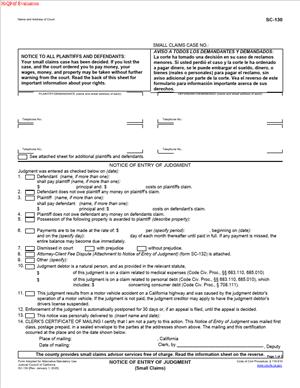
SC-130 – Notice of Entry of Judgment
Fill out nowJurisdiction: Country: United States | Province or State: California
SC-130 – Notice of Entry of Judgment is a court form used in California small claims cases. It records that the court has entered a judgment and notifies the parties that the decision is now official. If you are about to fill it out, this form helps you understand what the court decided and when that decision took effect.
This document matters because it connects the judge’s decision to the next phase of the case. Once judgment is entered, certain timelines often begin to run. Those timelines can affect payment, appeals, or enforcement actions.
People often encounter this form at the end of a small claims case. You may receive it in the mail, or you may be responsible for preparing it after a hearing. Either way, it is a key record of what happened in court.
The form is practical and procedural. It does not explain the judge’s reasoning in detail. Instead, it confirms the result and provides formal notice to everyone involved.
Understanding this document before you fill it out can help you avoid confusion. It also helps you recognize what information the court expects and why accuracy matters.
What is SC-130 – Notice of Entry of Judgment?
Clear definition
SC-130 – Notice of Entry of Judgment is a written notice that a judgment has been entered in a California small claims case. A judgment is the court’s final decision about who wins and what, if anything, is awarded.
This form communicates that the clerk has officially recorded the judgment in the court’s records. Entry of judgment is a specific step that makes the decision effective in the court system.
The document includes basic case information, the names of the parties, and the outcome. It may also reflect whether money was awarded and in what amount.
This form is not the judgment itself. It is the notice that the judgment exists and has been entered.
Who typically uses this form/document?
This form is typically used by the court clerk after a small claims hearing. In some situations, a party to the case may prepare it for the clerk’s review.
Plaintiffs and defendants both receive or review this document. It applies regardless of which side won the case.
Self-represented individuals commonly interact with this form because small claims cases do not involve attorneys in the courtroom. The form is designed to be understandable without legal training.
Court staff also rely on this document to ensure the record shows when notice was given.
Why you might need this form/document
You might need this form to confirm the result of your small claims case. It provides a clear, official statement of the outcome.
This notice often marks the start of important time periods. For example, deadlines related to payment or review of the judgment are commonly tied to the date of entry.
If you plan to take any next steps after the case, this document gives you a reference point. It shows when the judgment became part of the court record.
The form can also be used as proof that a judgment was entered, which may matter in later interactions related to the case.
Typical real-life scenarios
You attend a small claims hearing, and the judge announces a decision at the end. A few days later, you receive SC-130 – Notice of Entry of Judgment in the mail confirming what the judge decided.
You are the plaintiff, and the court rules in your favor. The notice shows the amount awarded and the date the judgment was entered, helping you understand when the case officially concluded.
You are the defendant and did not attend the hearing. The notice arrives and alerts you that a judgment was entered without your presence, including the outcome.
You are involved in a case where both sides appeared, but the judge took the matter under submission. The notice later confirms the decision once it is entered.
When would you use SC-130 – Notice of Entry of Judgment?
- This form is used after the court has made a decision in a small claims case. It comes into play once the hearing is over and the judge has ruled.
- You may encounter it whether the decision was announced in court or delivered later in writing. In both situations, the form documents the official entry of judgment.
- The form is relevant to both sides of the case. Plaintiffs use it to understand the result of their claim. Defendants use it to see whether any obligations were imposed.
- In practice, the timing of this form matters. It is often connected to procedural deadlines that begin after judgment is entered, not when the hearing occurred.
Legal characteristics of SC-130 – Notice of Entry of Judgment
SC-130 – Notice of Entry of Judgment has legal significance because it reflects an official court action. It shows that the judgment is no longer just an oral ruling but a recorded decision.
For the form to be effective, the information must match the court’s records. Names, case numbers, and judgment details need to align with what the judge ordered.
Common problems arise when the form contains incorrect party names, wrong amounts, or missing dates. These errors can cause confusion about the status of the case.
Practices can vary slightly by court location. While the form is standardized across California, local procedures about who prepares it or how it is delivered may differ.
This document does not explain how to enforce a judgment. It also does not collect money or resolve disputes about compliance. Its role is limited to notice and recordkeeping.
Is it legally binding?
The notice itself is not a contract or agreement between the parties. It does not create new obligations on its own.
Its legal effect comes from the judgment it references. The binding decision is the judgment entered by the court, not the notice form.
Once the judgment is entered, it carries legal weight according to court rules. The notice simply communicates that status to the parties.
How to fill out SC-130 – Notice of Entry of Judgment
Step 1 – Case caption information
At the top of the form, you will see spaces for the court name, address, and case number. This information identifies which court handled the small claims case. It needs to match the case exactly as filed.
The party names should appear as they did on the original claim. Consistency here helps ensure the notice is correctly linked to the court record.
Step 2 – Identifying the parties
The form includes sections listing the plaintiff and the defendant. Review these carefully to confirm spelling and order.
If there were multiple plaintiffs or defendants, each name is typically included. This reflects who is covered by the judgment.
Step 3 – Judgment details
This section summarizes the court’s decision. It may state who won the case and whether money was awarded.
If a dollar amount is listed, it should reflect the judge’s ruling. This part does not explain how the amount was calculated.
Step 4 – Date of entry of judgment
The form includes a date showing when the judgment was entered into the court record. This is a key procedural date.
This date may be different from the hearing date. It reflects when the clerk recorded the judgment, not when the judge spoke.
Step 5 – Clerk’s information and signature
The notice is issued by the court clerk. The clerk’s name or signature area confirms that the judgment has been officially entered.
This section indicates that the form is an official court document, not a personal statement by either party.
Step 6 – Distribution or mailing information
The form may show how notice was provided to the parties. This often involves mailing copies to the addresses on file.
This information documents that the parties were notified of the entry of judgment.
Step 7 – Reviewing the completed form
Before finalizing the form, the completed entries are typically reviewed for accuracy. Errors can affect how the judgment is understood.
The goal of this review is to ensure the notice accurately reflects the court’s decision and the case record.
Step 8 – Finalizing the notice
Once completed and reviewed, the notice is finalized as part of the case file. It then serves as the formal record that judgment was entered.
At this point, the form fulfills its purpose of notifying the parties and marking the conclusion of the court’s decision-making process.
Legal terms you might encounter in SC-130 – Notice of Entry of Judgment
- Judgment: This is the court’s final decision in the case. In this document, the judgment is summarized so everyone knows who won, who lost, and what was ordered. It can include money awarded, dismissal, or other outcomes.
- Entry of Judgment: This means the date the court officially recorded the judgment in its records. The entry date matters because it often starts timelines for payment, appeals, or other next steps. The form exists to formally notify parties of that entry.
- Prevailing Party: This is the person or entity the court ruled in favor of. The form identifies the prevailing party so there is no confusion about who is entitled to collect or enforce the judgment.
- Judgment Debtor: This is the person or entity ordered to pay or comply with the judgment. Their name must match the case record exactly because this notice becomes part of the official file.
- Judgment Creditor: This is the person or entity entitled to receive payment or benefit from the judgment. The form lists this party to clarify who has enforcement rights.
- Clerk of the Court: This is the court official who processes filings and enters judgments into the court system. The clerk’s role on this form is to confirm that the judgment was entered and that notice is being given.
- Mailing Address: This is the address used to send the notice to the parties. On this document, correct mailing information is essential because it proves that notice was provided.
- Proof of Service: This refers to the record showing that the notice was sent or delivered to the parties. While this form may include mailing details, it works together with service rules to show proper notice.
- Appeal Period: This is the limited time window to challenge the judgment. The entry date shown on the form is often used to calculate when that period begins.
FAQs
What exactly does this document notify people about?
This document tells the parties that the court has officially entered the judgment into the case record. It does not decide the case again. It simply records the fact and date of entry so everyone has the same starting point for deadlines and next steps.
Who completes and sends this form?
In many cases, the clerk completes and sends it after the judgment is entered. In some situations, a party may prepare it for the clerk’s signature. You should check who is listed as the sender and confirm the clerk’s name and signature area are properly completed.
How do I know the judgment details listed are correct?
You compare the judgment information on this document to the court’s decision or minute order. Names, amounts, and outcomes should match exactly. If something looks different, you flag it right away before relying on the notice.
Why is the entry date so important?
The entry date is often used to calculate deadlines. This includes time to appeal, time to request payment, or time to start enforcement. You should write this date down and keep it with your case records.
Does this document change the judgment in any way?
No. This document does not add to or modify the judgment. It only reports that the judgment has been entered and provides notice to the parties.
What if my name or address is wrong on the notice?
Errors in names or addresses can cause confusion or missed deadlines. You should compare the information to the case caption and party information. If something is wrong, you take steps to correct the court record rather than ignoring the mistake.
Is this the same as receiving payment or enforcing the judgment?
No. This document does not collect money or force compliance. It is a notice. Any payment, enforcement, or follow-up action happens separately after the judgment is entered and noticed.
How many times will I receive this notice?
Typically, you receive it once for each judgment entry. If there is an amended or corrected judgment, a new notice may be issued. For example, SC-130 – Notice of Entry of Judgment may be sent again if the court enters a revised judgment.
Checklist: Before, During, and After SC-130 – Notice of Entry of Judgment
Before
- Confirm the judgment has actually been entered in the court record.
- Review the case caption for the correct court name, case number, and location.
- Verify the exact spelling of all party names.
- Gather the judgment details, including amounts and outcomes.
- Check mailing addresses for each party.
- Note any deadlines tied to the entry date.
- Make sure you understand who will sign or issue the notice.
During
- Enter the case information exactly as it appears on the court record.
- Fill in judgment details without summarizing or changing language.
- Double-check the date of entry of judgment.
- Ensure the clerk’s information section is complete.
- Confirm all required parties are listed for notice.
- Review mailing or distribution information for accuracy.
- Read the completed form from top to bottom before finalizing.
After
- Make copies for your personal records.
- Confirm the notice was mailed or distributed as indicated.
- Write down the entry date in your case calendar.
- Monitor deadlines that run from the entry date.
- File or store the document with your other court papers.
- Check the court record later to ensure the notice appears in the docket.
- Update any internal notes or tracking sheets you keep for the case.
Common mistakes to avoid with SC-130 – Notice of Entry of Judgment
- Mistake: Using a judgment date instead of the entry date, which happens when people confuse the court’s decision date with the recording date, leading to missed deadlines, and forgetting to confirm the official entry.
- Mistake: Misspelling a party’s name, often due to copying from memory, which can cause enforcement problems later, and forgetting to match the case caption exactly.
- Mistake: Listing the wrong mailing address, usually from outdated contact information, which can result in improper notice, and forgetting to verify current addresses.
- Mistake: Assuming the clerk will fix errors automatically, which happens when people do not review the form, leading to incorrect records, and forgetting to proofread before submission.
- Mistake: Treating the notice as the judgment itself, which occurs from misunderstanding its role, causing confusion about enforcement, and forgetting it is only a notification.
- Mistake: Failing to keep a copy, often due to rushing after filing, which leaves no proof later, and forgetting to store it with case documents.
- Mistake: Ignoring the form after receipt, which happens when people think no action is required, leading to missed timelines, and forgetting to calendar deadlines.
- Mistake: Overlooking distribution details, which occurs when focus stays on judgment amounts, causing disputes about notice, and forgetting to confirm who received it.
What to do after filling out SC-130 – Notice of Entry of Judgment
Once the form is complete, your focus shifts from preparation to follow-through. This document becomes part of the official case record, so what you do next affects how clearly the judgment is documented and relied upon later.
You start by organizing your paperwork. Keep the completed notice with the judgment and any related court orders. Having everything together saves time if questions come up months later.
- Step 1: Make at least two copies of the completed notice for your records.
- Step 2: Confirm how the notice will be submitted or issued, whether by the clerk or through filing.
- Step 3: Check that the court has accepted the document and recorded it properly.
- Step 4: Verify that mailing or distribution actually occurred as listed on the form.
- Step 5: Record the entry date in your calendar or case tracker.
- Step 6: Review any deadlines that run from the entry date and note them clearly.
- Step 7: Update your internal notes to reflect that notice of entry has been given.
- Step 8: Monitor the case file later to ensure there are no corrections or amendments.
- Step 9: Keep the document accessible in case you need to show proof of notice.
- Step 10: Use the information on the notice to guide any next procedural steps.
Staying organized after completing this form helps you avoid confusion and missed timelines. The notice itself is simple, but the actions that follow are what keep your case on track.
Disclaimer: This guide is provided for informational purposes only and is not intended as legal advice. You should consult a legal professional.