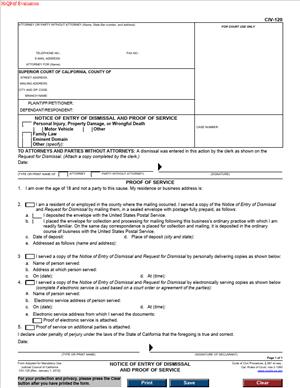
CIV-120 – Notice of Entry of Dismissal and Proof of Service
Fill out nowJurisdiction: Country: United States | Province or State: California
The CIV-120 – Notice of Entry of Dismissal and Proof of Service is a court form used in California civil cases. It confirms that a case has been dismissed and that notice of that dismissal has been properly delivered to the other parties. If you are representing yourself, this document helps close the loop after a dismissal.
When a case ends through dismissal, the court record reflects that outcome. But the other side must also be formally notified. This form connects those two steps. It shows the dismissal and proves that notice was served.
You might encounter this form after filing a request for dismissal or after the court dismisses the case. It is commonly used in civil lawsuits, including contract disputes, personal injury cases, and other general civil matters. It may also appear in limited or unlimited jurisdiction cases.
Understanding this document helps you avoid delays or confusion. If notice is not properly served, the court file may remain incomplete. That can create problems later if questions arise about whether the case was truly closed.
What is CIV-120 – Notice of Entry of Dismissal and Proof of Service?
Clear definition
The CIV-120 – Notice of Entry of Dismissal and Proof of Service is a California court form that serves two main purposes. First, it notifies the other parties that a dismissal has been entered in the case. Second, it provides proof that this notice was served in a legally acceptable way.
In simple terms, it is a written confirmation that the case has been dismissed and that everyone involved has been informed. The document becomes part of the official court file.
It does not dismiss the case by itself. The dismissal occurs through a separate filing or court action. This form documents that the dismissal happened and that notice of that event was delivered.
Who typically uses this form?
This form is often used by plaintiffs who request a dismissal of their own case. It may also be used by defendants or cross-complainants if they dismissed their own claims.
Self-represented litigants frequently use this form in California civil court. Attorneys also use it as part of routine case closure procedures. In many situations, the party that benefits from the dismissal or who initiated it handles the notice and proof of service.
A court clerk may prepare part of the dismissal process, but service of notice is generally handled by one of the parties. The person completing the proof of service cannot be the same person who is a party to the case.
Why might you need this form?
You may need this form after filing a Request for Dismissal and receiving confirmation that the dismissal was entered. Once the court processes the dismissal, the other parties must be notified.
Without proof of service, there may be no clear record that the other side was told about the dismissal. That can create uncertainty about deadlines, future filings, or enforcement issues.
This form also helps prevent misunderstandings. For example, if the other party believes the case is still active, they might continue filing motions or preparing for hearings. A properly served notice reduces that risk.
In some situations, a settlement leads to dismissal. Even then, formal notice through this document confirms that the court record reflects the agreed outcome.
Typical real-life scenarios
- You filed a civil lawsuit but later decided not to pursue it. After submitting a request for dismissal and receiving confirmation from the court, you use this form to notify the defendant that the case is officially dismissed.
- You reached a settlement agreement before trial. As part of the settlement terms, one party agreed to dismiss the case. After the dismissal is entered, this form is used to provide formal notice to all parties.
- The court dismissed the case due to procedural issues, such as failure to serve the complaint within the required time limits. Once the dismissal appears in the court file, notice may be served using this document.
- A cross-complaint was filed in a larger case, but the cross-complainant later withdrew it. The dismissal of the cross-complaint is entered, and notice is provided through this form to ensure all parties are aware of the change in claims.
When would you use CIV-120 – Notice of Entry of Dismissal and Proof of Service?
You would use this form after a dismissal has been officially entered in your case. The key point is timing. The dismissal must already be part of the court record before you complete and serve this notice.
It is commonly used at the end of a case when one or more claims are voluntarily dismissed. This may happen early in the case or after significant litigation activity. The form can apply to full dismissals or partial dismissals, depending on what the court entered.
Plaintiffs often use it after dismissing the entire complaint. Defendants may use it if they dismiss a cross-complaint. In multi-party cases, one party may use it to notify others that a specific claim or party has been dismissed.
You may also encounter this form after a court-ordered dismissal. In that situation, the dismissal is not voluntary, but notice still needs to be documented. The form provides a structured way to show that the service was completed.
If you are closing out your case and want a clear paper trail, this form becomes part of that record. It helps demonstrate that all procedural steps related to dismissal were completed.
Legal characteristics of CIV-120 – Notice of Entry of Dismissal and Proof of Service
For this form to be effective, it must accurately reflect a dismissal that has already been entered by the court. The case number, party names, and court information must match the official court file.
The proof of service portion must be completed by someone who is not a party to the case. That person must be at least 18 years old and must describe how and when the notice was served. Inaccurate or incomplete service information can cause problems.
Common issues include incorrect case numbers, missing signatures, or listing the wrong method of service. Another frequent mistake is having a party to the case sign the proof of service. That can lead to rejection or questions about validity.
This document does not reopen a case, change a judgment, or create new rights. It does not serve as a settlement agreement. It simply records notice and proof that the service occurred.
Court procedures may vary slightly depending on the type of civil case or the county. However, the core purpose of this form remains the same across California civil courts: to document entry of dismissal and service of notice.
Is it legally binding?
The form itself does not create legal obligations in the same way a contract does. Its legal effect comes from documenting two important events: the entry of dismissal and proper service of notice.
Once filed and served, it becomes part of the official court record. That record can be used to show that the case was dismissed and that notice was given. In that sense, it carries legal weight as evidence of procedural compliance.
If the proof of service is properly completed and signed, it is generally accepted as evidence that service occurred as described. However, it does not prevent a party from challenging service if there is a valid reason to do so.
The binding effect comes primarily from the dismissal itself, not from this notice. This form supports and confirms that outcome within the court file.
How to fill out CIV-120 – Notice of Entry of Dismissal and Proof of Service
Step 1 – Enter your attorney or self-represented information
At the top of the form, provide your name, address, telephone number, and, if applicable, email address. If you are representing yourself, you will indicate that you are self-represented. This section identifies who is submitting the notice.
Step 2 – Fill in the court information
Enter the name and address of the court where the case was filed. Use the exact court name and branch location shown on prior filings. Accuracy here ensures the document is matched to the correct court file.
Step 3 – Identify the case
Write the full case title, including the names of the plaintiff and defendant, exactly as they appear in earlier documents. Then enter the case number. Double-check this number against the court’s records to avoid processing issues.
Step 4 – Confirm entry of dismissal
In the section that refers to the dismissal, indicate that a dismissal was entered and specify the date it was entered. This date must match the court’s record. The form may include space to attach a copy of the dismissal if required in your situation.
Step 5 – Complete the notice portion
The notice section states that the dismissal has been entered in the action. Review the wording carefully to ensure it reflects what occurred, whether it was a full dismissal or dismissal of specific claims or parties.
Step 6 – Arrange for service by a non-party
Choose someone who is at least 18 years old and not a party to the case to serve the notice. This person will deliver the document according to an accepted method of service, such as mail or personal delivery, depending on what is permitted in your case.
Step 7 – Fill out the proof of service
The person who serves the notice must complete the proof of service section. They will provide their name, address, and details about how the document was served. This includes the date of service, the method used, and the names and addresses of the people served.
Step 8 – Sign and date the proof of service
The server signs and dates the proof of service under penalty of perjury. This confirms that the information provided is true and correct. The signature must be original if you are filing a paper version, unless the court allows electronic signatures.
Step 9 – File the completed form with the court
After service is completed and the proof of service is signed, file the form with the court clerk. Once filed, it becomes part of the official case record, documenting that notice of entry of dismissal was properly served.
Legal terms you might encounter in CIV-120 – Notice of Entry of Dismissal and Proof of Service
- Entry of Dismissal: This is the court’s official record that the case, or part of it, has been dismissed. It is not just a request. It confirms that the clerk has entered the dismissal into the court system. On this form, you are notifying others that this entry has already happened.
- Clerk of the Court: The clerk is the court official who processes filings and updates the case record. The clerk enters the dismissal into the docket. Your form reflects the clerk’s action, not a new request for dismissal.
- Proof of Service: This section confirms that you delivered a copy of the notice to the other parties. The court needs written confirmation that everyone was properly informed. Without proof of service, the notice may not be recognized as properly given.
- Service by Mail: This is a common way to deliver the notice. A person over 18 who is not a party to the case places the document in the mail and completes the proof of service. The mailing details must be accurate and complete.
- Party: A party is anyone directly involved in the case, such as a plaintiff or defendant. Every party that has appeared in the case must receive a copy of the notice. You must list them correctly as they appear in court records.
- Attorney of Record: This is the lawyer officially listed in the court file for a party. If a party has an attorney, you serve the attorney instead of the party directly. The name and address must match what is on file.
- Case Number: This unique number identifies your case in the court system. It appears at the top of the form. If the case number is wrong, the notice may not be connected to the correct file.
- Caption: The caption is the heading section that lists the court name, parties, and case number. It must match the caption used in prior filings. Even small spelling differences can cause confusion in the record.
- Declaration: The proof of service is written as a declaration. The person signing it states under penalty that the information is true. This gives the document legal weight.
- Date of Entry: This is the date the clerk officially entered the dismissal. It is important because it may affect deadlines or the final status of the case. You must use the exact date shown in the court record.
FAQs
What date should I list as the date of entry?
Use the exact date the clerk entered the dismissal into the court record. You can find this on the filed dismissal document or the court’s case summary. Do not use the date you signed the dismissal or the date you mailed the notice. The date of entry is the clerk’s official entry date.
Do I need to file CIV-120 – Notice of Entry of Dismissal and Proof of Service if everyone already knows the case was dismissed?
Yes. This document creates a formal record that notice was given. Even if the parties discussed the dismissal, the court file must show that written notice was served. The form confirms who received notice and when.
Who is allowed to sign the proof of service section?
The person who mails or delivers the notice must sign the proof of service. This person must be at least 18 years old and not a party to the case. You cannot sign as the server if you are a party. The signature confirms that the service was completed as stated.
What if a party has an attorney—do I serve both?
No. If a party is represented, you serve the attorney of record. Check the latest court filings to confirm the attorney’s name and address. Serving the wrong person can delay recognition of proper notice.
What happens if I make a mistake in the case number or party names?
Errors in the caption can cause filing issues or confusion in the court record. If the case number does not match the court’s file, the notice may not be associated with your case. Review prior documents to copy the information exactly as shown.
Does this form change the dismissal or reopen the case?
No. This form does not request any new action from the court. It simply confirms that notice of the dismissal was given after the clerk entered it. The dismissal itself remains as previously entered.
How do I know if the court accepted and filed this document?
After submission, the court typically stamps or marks the document as filed. You should receive a filed copy or confirmation. Check the case summary to confirm that the notice appears in the docket.
What if I forgot to serve someone listed in the case?
You must complete service on any party who has appeared in the case. If someone was missed, arrange for service immediately and complete a new proof of service. The court record should clearly reflect that all required parties received notice.
Checklist: Before, During, and After CIV-120 – Notice of Entry of Dismissal and Proof of Service
Before
- Confirm that the dismissal has already been entered by the clerk.
- Obtain a copy of the filed dismissal showing the date of entry.
- Review the case caption from the most recent court document.
- Identify all parties who have appeared in the case.
- Confirm whether any parties are represented by attorneys.
- Verify current mailing addresses for all parties or attorneys.
- Choose a qualified person to serve the notice.
- Prepare enough copies for service and your records.
During
- Enter your name and contact information exactly as shown in prior filings.
- Fill in the court name and branch location accurately.
- Copy the case number carefully from the court record.
- List party names exactly as they appear in the caption.
- Insert the correct date of entry of dismissal.
- Ensure the server completes the mailing details fully.
- Double-check that each recipient is listed correctly.
- Have the server sign and date the proof of service.
After
- Make copies of the fully completed and signed form.
- File the original with the court using the accepted filing method.
- Confirm that the court marked the document as filed.
- Keep a filed copy in your case file.
- Note the filing date in your personal records.
- Monitor the case docket for updates.
- Provide copies to your records management system if applicable.
- Store proof of mailing details with the case documents.
Common mistakes to avoid with CIV-120 – Notice of Entry of Dismissal and Proof of Service
- Mistake: Using the wrong date of entry because you rely on memory instead of the clerk’s record, which can create confusion about timing and deadlines; do not forget to verify the exact date in the court file.
- Mistake: Serving the wrong person because you overlook that a party has an attorney, which may result in ineffective service; do not forget to check the most recent filing for attorney information.
- Mistake: Listing an incorrect case number due to copying from an old document, which can cause misfiling in the court system; do not forget to match the number exactly to the current case summary.
- Mistake: Signing the proof of service yourself when you are a party, which invalidates the service; do not forget that the server must be a non-party adult.
- Mistake: Leaving out a party who has appeared in the case because you assume they are no longer involved, which can delay closure; do not forget to review the full party list before serving.
- Mistake: Failing to keep a filed copy for your records because you assume the court will maintain everything, which can make future verification difficult; do not forget to store a stamped copy safely.
- Mistake: Incomplete mailing information in the proof of service due to rushing, which can raise questions about proper service; do not forget to include full names, addresses, and the mailing date.
- Mistake: Submitting the form without reviewing for spelling errors in party names, which may create inconsistencies in the public record; do not forget to compare the caption with prior filings line by line.
What to do after filling out CIV-120 – Notice of Entry of Dismissal and Proof of Service
Once the form is fully completed and signed, your job is not quite finished. You need to make sure it is properly filed, recorded, and stored. This protects you if questions come up later.
- Step 1: Review the entire document one more time for accuracy, including names, addresses, case number, and the date of entry.
- Step 2: Make at least two copies of the signed form—one for your records and one for service if not already copied.
- Step 3: Have the designated server mail the copies to each required party or attorney.
- Step 4: Confirm that the server has signed and dated the proof of service section after mailing.
- Step 5: Submit the original signed form to the court using the filing method accepted for your case.
- Step 6: Wait for confirmation that the court has filed the document, such as a stamped copy or electronic notice.
- Step 7: Check the court’s case summary to confirm that the notice appears in the docket.
- Step 8: Store your filed copy in a secure folder with the dismissal and other final case documents.
- Step 9: Update any personal or business records to reflect that the case has been dismissed and notice has been served.
- Step 10: Keep all related documents together in case you need proof of dismissal in the future.
Taking these steps ensures your records are complete. It also helps prevent future disputes about whether proper notice was given. Careful follow-through now can save you time and stress later.
Disclaimer: This guide is provided for informational purposes only and is not intended as legal advice. You should consult a legal professional.