Bill of Sale
Fill out nowJurisdiction: Country: Canada | Province or State: Alberta
A Bill of Sale is a written record of a transaction. It confirms that ownership of property has moved from one person to another. In Alberta, it is commonly used when selling or buying a vehicle.
If you are about to complete a Bill of Sale, you likely want clarity. You want to know what details matter, what information must match, and how this document fits into the bigger process. This guide walks you through that in plain language.
In Alberta, a Bill of Sale plays an important role in vehicle registration. It helps prove that a transfer of ownership took place. It may also be used for other types of property, but vehicle sales are the most common situation.
This document protects both the seller and the buyer. It creates a written record of the deal, including the price and the date. If questions come up later, the completed form shows what was agreed at the time of sale.
What is a Bill of Sale?
Clear definition
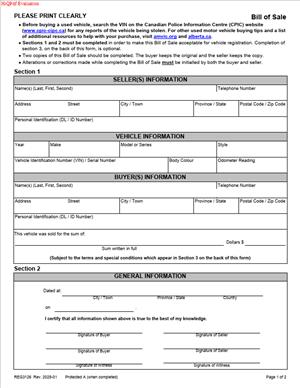
A Bill of Sale is a written agreement that confirms the sale of property from one party to another. It identifies the seller, the buyer, the item being sold, and the purchase price. It usually includes the date of the transaction and the signatures of the parties.
In Alberta, this form is often associated with private vehicle sales. When you buy or sell a used vehicle, the Bill of Sale documents the transfer. It supports the vehicle registration process by showing that ownership changed hands.
The document does not need to be long to be effective. What matters is that it clearly describes the property and the parties involved. Clear information reduces confusion later.
Who typically uses this form?
Private sellers commonly use this form when selling a used vehicle. For example, someone selling their car directly to another individual would complete it as part of the transaction.
Buyers also rely on the document. When registering a vehicle in Alberta, the buyer may need to present the Bill of Sale to show proof of purchase and the agreed price.
Businesses may also use a similar document when selling equipment or other goods. However, in Alberta, the most frequent use relates to motor vehicles under the vehicle registration system.
Anyone transferring ownership of valuable personal property may use this form to create a written record of the agreement.
Why might you need this form?
You may need this form to prove ownership. If you are the buyer, it helps show that the property is now yours. If you are the seller, it shows that you transferred ownership on a specific date.
For vehicles in Alberta, the document supports registration. The information in the form is used to process the change of ownership. Without accurate details, registration may be delayed.
The form also records the sale price. This can matter for tax purposes or future disputes. A clear written price reduces arguments about what was agreed.
It also sets out the basic terms of the sale. For example, it may state that the vehicle is sold “as is,” meaning in its current condition. This helps define expectations between the parties.
Typical real-life scenarios
- You are selling your used car to a neighbour. You agree on a price and a pickup date. Before handing over the keys, you both complete and sign the Bill of Sale to record the transaction.
- You are buying a motorcycle from a private seller you found online. The seller provides a completed document with their name, your name, the vehicle identification number, and the price. You use this when registering the motorcycle.
- You are selling a trailer that you no longer use. The buyer wants written proof of purchase. You prepare the form, list the trailer’s details, and both of you sign it on the day of payment.
- You are transferring a vehicle to a family member for an agreed amount. Even if you know each other well, you complete the document to create a formal record of the transfer and its terms.
When would you use a Bill of Sale?
You would use a Bill of Sale when ownership of personal property is changing from one person or business to another. In Alberta, this most often happens during private vehicle sales.
If you are the seller, you prepare the document at the time of sale. It is typically completed on or before the day payment is made, and the property is delivered. The timing matters because the date written on the form reflects when ownership changed.
If you are the buyer of a used vehicle, you use the completed document as part of the registration process. The information on the form is reviewed when updating vehicle records.
The form is also used when selling other types of personal property, such as equipment or recreational vehicles. In each case, it serves as written proof of the transaction.
If there is a dispute about the sale later, the document can show what was agreed. It may clarify the price, the condition of the property, and the identities of the parties involved.
Legal characteristics of the Bill of Sale
A Bill of Sale is generally effective when it clearly identifies the parties, describes the property, states the purchase price, and is signed by the seller. Some versions also include the buyer’s signature.
Clear and accurate information is essential. Errors in names, vehicle identification numbers, or dates can create problems. For vehicle registration in Alberta, mismatched details may delay processing.
The document reflects a transfer of ownership, but it does not automatically guarantee that the seller had legal authority to sell. It records the agreement between the parties. If the property was subject to a lien or other claim, that issue exists separately from the form itself.
High-level differences may exist depending on the type of property involved. For vehicles, identification details such as make, model, year, and vehicle identification number are commonly required. For other property, a clear description is usually enough.
The document does not replace other required paperwork. In the case of vehicles, additional registration or insurance steps may be required. The Bill of Sale forms part of the overall process but does not complete it on its own.
Common problems include incomplete information, missing signatures, unclear property descriptions, and altered prices. Any inconsistency between the form and other records can raise questions.
Is it legally binding?
A Bill of Sale is generally considered legally binding when it reflects a valid agreement between the parties. This usually means there was an offer, acceptance, and payment or other value exchanged.
When both parties sign the document and the essential terms are clear, it serves as written evidence of the agreement. The signatures show that the seller and buyer intended to complete the transaction.
If key information is missing or if one party did not understand the agreement, the document may be challenged. For example, unclear terms about the condition of the property can lead to disputes.
The binding nature of the form depends on the overall circumstances of the sale. The document itself records the agreement, but its enforceability may depend on factors such as accuracy, honesty of the parties, and compliance with related requirements.
How to fill out a Bill of Sale
Step 1 – Title
At the top of the document, write a clear title such as “Bill of Sale.” This identifies the form and makes its purpose obvious. If you are using a standard Alberta vehicle form, the title will already appear.
Step 2 – Date of Sale
Enter the full date when the transaction takes place. Use a clear format that includes the day, month, and year. This date reflects when ownership transfers from the seller to the buyer.
Step 3 – Seller Information
Write the seller’s full legal name as it appears on official identification. Include the seller’s current address. Make sure the spelling matches other records, especially for vehicle registration.
Step 4 – Buyer Information
Enter the buyer’s full legal name and current address. Check that the details are complete and readable. Accurate information helps avoid issues during registration or future contact.
Step 5 – Description of the Property
Provide a detailed description of the item being sold. For a vehicle in Alberta, include the make, model, year, colour, and vehicle identification number. Ensure the identification number matches the vehicle exactly.
Step 6 – Purchase Price
State the agreed purchase price in Canadian dollars. Write the amount clearly and avoid corrections or cross-outs. The price listed should reflect the actual amount agreed between the parties.
Step 7 – Terms or Conditions
If the sale includes specific terms, record them clearly. For example, note if the vehicle is sold in its current condition. Keep the wording simple and direct so both parties understand what is included.
Step 8 – Signatures
Have the seller sign and date the document. In many cases, the buyer also signs. Signatures confirm that both parties agree to the information written in the form.
Step 9 – Copies for Each Party
After signing, make sure both the buyer and the seller have a copy of the completed document. Each party keeps its copy as a record of the transaction.
Legal terms you might encounter in a Bill of Sale
- Consideration: This is the value exchanged for the property. In most cases, it is the purchase price you write in the document. Even if the item is a gift, you still need to state what was exchanged, such as “$1.00 and other valuable consideration,” or clearly note that it is a gift. This term confirms that something of value supports the agreement.
- As Is: This phrase means the buyer accepts the property in its current condition. When you include “as is,” the seller is not promising that the item works perfectly or is free of defects. This document limits future disputes about conditions unless you specifically list warranties.
- Warranty: A warranty is a promise about the condition, ownership, or quality of the property. If you include a warranty clause, you are stating that certain facts are true, such as that the vehicle is free from liens. If no warranties are given, that should be clearly stated.
- Lien: A lien is a legal claim against the property for an unpaid debt. For example, if a vehicle was financed and the loan is not fully paid, the lender may have a lien. This document often includes a statement confirming whether the property is free of liens.
- Encumbrance: An encumbrance is any legal restriction or claim on the property. It includes liens but can also include other rights held by third parties. You may see wording that the seller transfers the property “free and clear of all encumbrances.”
- Transfer of Ownership: This refers to the legal change from the seller to the buyer. The form records the date and details of that transfer. It is important because ownership affects liability, insurance, and registration.
- Identification Number: For vehicles, this is usually the Vehicle Identification Number (VIN). This number uniquely identifies the property. You must copy it exactly as shown on the vehicle and registration documents to avoid rejection or confusion.
- Odometer Reading: In vehicle sales, the odometer reading states the distance the vehicle has travelled. You must record the number accurately at the time of sale. Incorrect entries can cause legal issues and registration problems.
- Effective Date: This is the date when the sale legally takes effect. It is usually the same as the date of signing. This date determines when responsibility shifts from seller to buyer.
- Signatory: The signatory is the person who signs the document. If someone signs on behalf of another person or a business, they must have proper authority. The form may require printed names along with signatures to confirm identity.
FAQs
What date should I put as the sale date?
You should enter the actual date when ownership changes hands. This is usually the day you sign and exchange payment and keys. Make sure the date matches any related documents, such as the vehicle registration and insurance paperwork, because this date determines when responsibility transfers.
Do both the buyer and seller have to sign this document?
Yes. Both parties should sign to confirm that the details are correct and agreed upon. If someone is signing on behalf of a company or another person, ensure their authority is clear and that their name is printed beside the signature so it can be verified.
What details about the vehicle must be included?
You need to include the year, make, model, body type, colour, and the full Vehicle Identification Number. Double-check the VIN directly from the vehicle and registration certificate. Even a single incorrect character can delay registration or cause the form to be rejected.
Do I need to list the purchase price even if it is a gift?
Yes. If no money is exchanged, clearly state that the transfer is a gift. Avoid leaving the price section blank. The Bill of Sale must show what consideration was given, even if it is nominal or described as a gift.
What if there is still money owed on the vehicle?
You should not state that the vehicle is free of liens unless that is true. Confirm whether any financing remains. If a lien exists, resolve it before completing the transfer or clearly disclose it so the buyer understands the situation before signing this form.
Can I handwrite the form?
Yes, as long as it is legible. Print clearly in dark ink. Make sure all required sections are completed and easy to read. If registry staff cannot read the details, they may refuse to accept it for registration purposes.
What happens if I make a mistake while filling it out?
Avoid crossing out or using correction fluid if possible. If you make a significant error, it is usually better to complete a new copy. Inaccurate or messy entries can create doubt about authenticity and may delay acceptance by registry authorities.
Do I need witnesses or notarization?
In most routine vehicle sales, witnesses or notarization are not required. However, both parties should keep signed copies. If either party wants additional protection, they can choose to have signatures witnessed, but this document is typically valid with the buyer and seller’s signatures alone.
Checklist: Before, During, and After Bill of Sale
Before
- Confirm the full legal names of both buyer and seller as shown on government identification.
- Verify the vehicle’s year, make, model, colour, and VIN directly from the vehicle.
- Check whether there is any outstanding lien or financing on the vehicle.
- Agree on the exact purchase price or confirm that the transfer is a gift.
- Review the current odometer reading and ensure it works properly.
- Gather supporting documents, such as the current registration certificate.
- Decide whether the sale will be “as is” or include any warranties.
- Prepare two identical copies so each party can keep one.
During
- Enter the full date of sale clearly and accurately.
- Write the purchase price in numbers and words if space allows.
- Record the odometer reading exactly as shown at the time of transfer.
- Carefully copy the VIN without skipping or changing characters.
- Include any additional terms or conditions in clear language.
- Review every section before signing to confirm that nothing is blank.
- Have both parties sign and print their names.
- Exchange payment and keys at the same time the document is signed.
After
- Provide one signed copy to the buyer and keep one for the seller.
- The buyer should arrange insurance before driving the vehicle.
- Submit the required documents to a registry agent to complete registration.
- Remove or transfer licence plates according to applicable rules.
- Cancel or update the seller’s insurance policy.
- Keep your copy in a safe place for tax and record purposes.
- Confirm that the registration has been successfully updated.
- Update personal records to reflect the change of ownership.
Common mistakes to avoid with the Bill of Sale
- Mistake: Leaving sections blank because you think they are optional, which often happens when you rush, but blank fields can cause rejection or disputes, so do not forget to complete every required line.
- Mistake: Writing the wrong VIN due to copying it from memory instead of the vehicle, which can invalidate registration and create ownership confusion, so do not forget to verify each character directly.
- Mistake: Stating the vehicle is free of liens without confirming financing status, which can expose you to legal claims later, so do not forget to check loan records before signing.
- Mistake: Using nicknames instead of full legal names because it feels informal, which may prevent proper registration, so do not forget to match names exactly to the government ID.
- Mistake: Failing to record the accurate odometer reading due to oversight, which can raise fraud concerns, so do not forget to check the dashboard at the time of sale.
- Mistake: Not keeping a copy for yourself because you trust the other party, which leaves you without proof of transfer, so do not forget to store a signed copy securely.
- Mistake: Altering the document after signatures are added, which can invalidate it and create suspicion, so do not forget to prepare a fresh copy if changes are needed.
- Mistake: Delaying registration after signing, which can result in fines or liability issues, so do not forget to complete the registration process promptly.
What to do after filling out the Bill of Sale
Once the document is fully completed and signed, your focus shifts to protecting yourself and finalizing the transfer. The paperwork alone does not complete registration. You must follow through with the proper administrative steps.
- Step 1: Make at least two signed copies immediately after signing. Each party should leave with a complete copy.
- Step 2: Review your copy for clarity. Ensure the VIN, date, purchase price, and signatures are clearly visible.
- Step 3: The buyer should obtain valid insurance coverage before operating the vehicle.
- Step 4: Gather all required supporting documents, including the current registration certificate and identification.
- Step 5: Visit an authorized registry agent to apply for registration in the buyer’s name.
- Step 6: Pay any required fees and taxes at the time of registration.
- Step 7: Confirm that the registry has accepted the documents and that ownership records have been updated.
- Step 8: The seller should remove their licence plate if required and confirm that their name is no longer associated with the vehicle record.
- Step 9: Contact your insurance provider to cancel or adjust coverage if you are the seller.
- Step 10: Store your copy of the document in a secure place, along with proof of payment and any related correspondence.
You should also monitor your records over the next few weeks. If you are the seller, check that you no longer receive notices, fines, or toll charges connected to the vehicle. If you are the buyer, confirm that your registration and licence plate documents accurately reflect your name and vehicle details.
Keeping organized records protects you if questions arise later about the transfer date, payment, or condition of the vehicle. A properly completed and followed-through transaction gives both parties clarity and peace of mind.
Disclaimer: This guide is provided for informational purposes only and is not intended as legal advice. You should consult a legal professional.