Landlord’s Notice to a New Tenant About an Order Prohibiting a Rent Increase
Fill out nowJurisdiction: Country: Canada | Province or State: Ontario
What is a Landlord’s Notice to a New Tenant about an Order Prohibiting a Rent Increase?
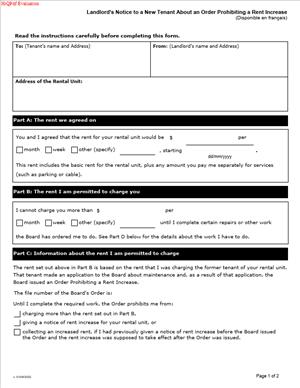
A Landlord’s Notice to a New Tenant about an Order Prohibiting a Rent Increase is a formal document used in Ontario, Canada. This notice informs a new tenant that a specific order prohibits any increase in their rent. As a landlord, you might need to issue this notice if there is a legal restriction preventing rent hikes on a property you are leasing. Typically, this restriction comes from an order issued by a rental authority or tribunal that has determined that the rent cannot be increased for a certain period or under specific conditions.
Who Typically Uses This Form?
This form is primarily used by landlords and property management companies. It serves as a communication tool to inform new tenants about existing restrictions on rent increases. Occasionally, legal advisors or real estate professionals might assist landlords in preparing this notice to ensure compliance with local rental laws.
Why Would You Need This Form?
As a landlord, you need this form to comply with a legal order that restricts you from increasing rent. It ensures transparency with your tenants about their financial obligations and protects you legally by demonstrating that you have informed them of the rent conditions. For tenants, receiving this form provides clarity and reassurance about their rental expenditures, helping them plan their budget without unexpected changes in rent.
Typical Usage Scenarios
Consider a scenario where a rental tribunal has issued an order due to complaints or issues about the property’s condition, restricting rent increases until improvements are made. As a landlord, you would use this notice to inform new tenants of this restriction. Another scenario could involve government-imposed rent control measures where landlords are required to notify tenants of such controls to ensure compliance with provincial housing laws. In both cases, the form serves as a critical communication tool to align both parties on the rent terms from the outset.
When Would You Use a Landlord’s Notice to a New Tenant about an Order Prohibiting a Rent Increase?
Use this notice when legislation, a regulation, a housing-program requirement, or an order prevents or restricts rent increases for a rental unit. The restriction may arise under rent-control rules, a subsidized or affordable housing program, or a decision made by a court, tribunal, or other authorized body.
A landlord or housing provider may need to give the notice when entering into a tenancy agreement for a unit subject to special rent restrictions. It informs the tenant that the rent cannot be increased through the usual process while the restriction remains in effect. The notice does not create the restriction; it documents and explains an existing legal or regulatory limitation.
For example, the notice may apply to a unit operated through a social housing, affordable housing, rent-geared-to-income, or another regulated housing program. These programs may establish specific rules governing rent calculations, tenant eligibility, permitted adjustments, and the timing of future increases. Some restrictions may apply to the entire property, while others may affect only a particular unit or tenancy.
The notice may also be required when an authority has ordered that rent increases be suspended, postponed, reduced, or otherwise limited. Such an order may arise from unresolved repair or maintenance obligations, housing-standard violations, loss of an essential service, or another dispute concerning the condition or operation of the property. For example, if a housing authority determines that serious repairs remain outstanding, it may prohibit the landlord from increasing the rent until the required work is completed and the restriction is formally removed.
A landlord should review the governing legislation, program rules, or order before completing the notice. The document should accurately identify the rental unit, landlord, tenant, current rent, and legal basis for the restriction. If the restriction began on a particular date or is expected to continue until a stated condition is satisfied, include that information where the form requires it. Do not suggest that the restriction has ended unless the appropriate authority has confirmed that it is no longer in force.
Providing the notice promotes transparency at the beginning of the tenancy. It helps the tenant understand why ordinary rent-increase procedures may not apply and reduces the risk of later confusion about the lawful rent. It also creates a written record that the applicable restriction was disclosed.
The notice does not authorize the landlord to collect additional rent, change another term of the tenancy, or avoid obligations relating to repairs, maintenance, services, or habitability. It should also not be used to replace a rent-increase notice when an increase is legally permitted. Each document serves a different purpose and must be delivered according to the applicable procedural requirements.
Typical users include landlords, property managers, social and affordable housing providers, nonprofit housing organizations, and other professionals responsible for leasing regulated units. The tenant receives the notice and should retain it with the tenancy agreement, rent receipts, program documents, and other rental records.
Use this notice only when a valid restriction applies to the particular unit or tenancy. Keep a copy and record when and how it was delivered. If the restriction later expires, changes, or is removed, any future rent increase must still comply with all applicable notice periods, timing rules, amount limits, service requirements, and program conditions.
Legal Characteristics of the Landlord’s Notice to a New Tenant about an Order Prohibiting a Rent Increase
This notice is legally binding because it is mandated by local rental laws and tribunal orders. The enforceability of this form comes from its basis in legal orders issued by housing authorities or tribunals. When a landlord issues this notice, they are adhering to a legal obligation that ensures transparency and compliance with housing regulations.
For the notice to be enforceable, it must be accurate and complete, reflecting the specific terms of the order that prohibits the rent increase. This ensures that both the landlord and tenant have a clear understanding of the rental conditions, preventing future disputes. Legally, this document serves as evidence that the landlord has fulfilled their duty to inform the tenant, which can be crucial in tribunal hearings or legal disputes.
General legal considerations include ensuring that the notice is delivered in a timely manner, ideally before the lease agreement is signed. Additionally, the notice should be written in clear, plain language to avoid misunderstandings. It’s also important to retain a copy of the notice as part of the rental agreement documentation, providing a record that can be referenced if needed.
How to Fill Out a Landlord’s Notice to a New Tenant about an Order Prohibiting a Rent Increase
Filling out this form involves several straightforward steps. Here’s a detailed guide to ensure you complete it accurately:
Step 1: Identify the Parties
Begin by clearly stating the names and contact information of both parties involved. This includes the landlord’s full name, the tenant’s full name, and their respective addresses. This information sets the foundation for clear communication and legal identification.
Step 2: Describe the Property
Include a detailed description of the rental property. This should comprise the full address, unit number (if applicable), and any other identifiers that distinguish the property. This ensures clarity about which property the notice pertains to.
Step 3: State the Order Details
Clearly outline the specifics of the order prohibiting the rent increase. This includes the issuing authority (e.g., rental tribunal or government agency), the date the order was issued, and the exact terms of the restriction. It’s crucial to convey the effective period of the order and any conditions that must be met before the restriction is lifted.
Step 4: Clarify Rent Terms
Explain the current rent amount and affirm that this amount will remain unchanged for the duration specified by the order. This section should also mention any conditions under which the rent amount might be reconsidered, such as the expiration of the order or completion of required property improvements.
Step 5: Include Additional Clauses
You may need to add specific clauses that relate to the order, such as the tenant’s right to contest or inquire about the order, or any obligations the tenant has under this notice. This section helps to cover additional legal bases and ensures both parties understand their rights and responsibilities.
Step 6: Signatures
Both parties should sign and date the notice. The landlord’s signature confirms the issuance of the notice, while the tenant’s signature acknowledges receipt and understanding of the terms. This step is critical as it validates the notice and completes the legal process.
Step 7: Attach Relevant Schedules
If there are additional documents or schedules related to the order, such as a copy of the tribunal’s decision or government communication, attach these to the notice. These attachments provide supporting evidence and context for the restrictions outlined in the notice.
By following these steps, you ensure that the Landlord’s Notice to a New Tenant about an Order Prohibiting a Rent Increase is complete, legally compliant, and clear to all parties involved. This careful preparation not only facilitates a transparent landlord-tenant relationship but also minimizes potential legal disputes by setting clear expectations from the beginning.
Legal Terms You Might Encounter
When dealing with the Landlord’s Notice to a New Tenant about an Order Prohibiting a Rent Increase in Ontario, you may come across several legal terms. Understanding these will help ensure you fill out the form correctly and comply with local regulations.
- Order Prohibiting a Rent Increase: This is a directive issued by an authority, typically the Landlord and Tenant Board, that prevents a landlord from raising the rent for a specific period. It’s essential to know this term as it directly affects the information you need to convey to your tenant.
- Landlord and Tenant Board (LTB): This body resolves disputes between landlords and tenants in Ontario. The LTB issues orders like those prohibiting rent increases, which you must communicate to your tenant with this form.
- Tenancy Agreement: A contract between you and your tenant that outlines the terms of the rental arrangement. This form serves as a supplement to your tenancy agreement, detailing specific restrictions on rent increases.
- New Tenant: A person who has recently started renting a property from you. The form must be given to any new tenant affected by a rent increase prohibition order.
- Rent: The regular payment your tenant makes to you for using the residential property. This form specifies that you cannot increase this payment during the prohibition period.
- Notice: A formal communication is required by law to inform your tenant about the rent increase prohibition. This form serves as that notice.
- Lease Term: The duration for which the tenancy agreement is effective. The rent increase prohibition typically applies to a specific lease term.
- Compliance: The act of conforming to the rules or standards set out by the Landlord and Tenant Board. Filling out and providing this form is part of complying with such orders.
- Effective Date: The date when the order prohibiting the rent increase comes into force. This date should be clearly stated on the form to inform the tenant when the prohibition begins.
- Jurisdiction: The legal authority under which the Landlord and Tenant Board operates, in this case, Ontario. Understanding that these rules apply specifically to Ontario helps ensure appropriate application of the form.
FAQs
Do you need to provide this form to every new tenant?
Yes, if there is an active order prohibiting a rent increase, you must inform every new tenant moving into a unit affected by this order. This is a legal requirement to ensure tenants are aware of their rights regarding rent.
What information must be included on the form?
The form should include the details of the rent increase prohibition order, such as the effective date and the properties it covers. You should also include your contact information and any relevant details about the tenancy.
How soon should you give this notice to a new tenant?
You should provide this notice at or before the time the new tenant signs the tenancy agreement. This ensures they are fully informed about the rent conditions from the outset.
What happens if you don’t provide this notice?
Failing to provide this notice can lead to disputes and possible penalties from the Landlord and Tenant Board. It may also damage your relationship with your tenant if they feel uninformed about their rights.
Can the tenant dispute the notice?
While the notice itself is a factual statement of an existing order, tenants can contact the Landlord and Tenant Board if they believe the order has been incorrectly applied or if they have other disputes.
Is there a specific format required for this notice?
While there might not be a prescribed format, the notice should be clear, concise, and include all necessary details about the rent increase prohibition. Using a consistent format helps maintain clarity and compliance.
Can you increase rent once the prohibition order ends?
Yes, once the prohibition period ends, you can proceed with a rent increase, provided you follow the standard notice requirements for rent increases in Ontario.
Checklist: Before, During, and After
Before Signing:
Gather all relevant documents, including the order from the Landlord and Tenant Board.
Verify tenant details, such as full name and contact information.
Ensure you have the correct details of the property and tenancy agreement.
During Signing:
Confirm the form accurately reflects the rent increase prohibition order.
Check that all necessary fields are filled out completely and correctly.
Ensure the tenant receives a copy of the notice along with their records.
After Signing:
File a copy of the notice with your tenancy records.
Notify the Landlord and Tenant Board if required by any specific conditions.
Store the document securely, accessible for future reference or inspections.
Common Mistakes to Avoid
Don’t forget to verify tenant information.
Incorrect tenant information can lead to confusion and disputes. Double-check names and contact details before finalizing the form.
Avoid vague language.
Clarity is key. Make sure all terms and dates related to the rent increase prohibition are clearly stated. Vagueness might lead to misunderstandings and potential legal issues.
Don’t ignore filing requirements.
Failing to file the notice properly can result in non-compliance with legal obligations. Always keep a well-organized record of all notices issued.
Steer clear of incomplete forms.
An incomplete form can nullify the notice. Ensure every section is fully completed to avoid legal repercussions.
Don’t delay in delivering the notice.
Timeliness is crucial. Provide the notice to your tenant at or before the signing of the lease to avoid any claims of withholding information.
What to Do After Filling Out the Form
Once you have completed the Landlord’s Notice to a New Tenant about an Order Prohibiting a Rent Increase, the next steps are straightforward but important. Start by ensuring that a copy of the notice is provided to the tenant at the time of signing the lease. This keeps both parties informed and aligns with legal requirements.
Next, file a copy of the notice in your records. This is crucial for maintaining compliance and can serve as evidence that you have fulfilled your obligations should any disputes arise. It’s a good practice to also notify the Landlord and Tenant Board if the order requires such communication.
Finally, ensure the document is stored securely. While digital storage is often preferred for its ease of access and backup capabilities, ensure that electronic copies are kept in a secure, encrypted format. If you maintain physical records, store them in a safe, organized manner, easily accessible for inspections or legal needs.
Disclaimer: This guide is provided for informational purposes only and is not intended as legal advice. You should consult a legal professional.