

A certified criminal record check in Canada is a fingerprint-based verification of an individual’s criminal history processed through the Royal Canadian Mounted Police (RCMP) Canadian Criminal Real Time Identification Services (CCRTIS). Unlike name-based police record checks, this process compares an applicant’s fingerprints against the National Repository of Criminal Records and other RCMP identification systems. The resulting document is issued as a certified criminal record check, and the information disclosed is limited to what the applicant authorizes through a written consent form and what federal law permits to be released.
Although the RCMP manages the national fingerprint database, the rules governing criminal record checks vary across Canadian legal and administrative frameworks. Terminology, disclosure limits, routing procedures, and eligibility requirements can differ depending on the purpose of the check and the jurisdiction involved.
- Federal RCMP fingerprint checks require applicants to choose a specific consent form. Selecting the wrong form can affect what information may legally appear on the certified record check—such as immigration-related disclosures, outstanding charges, or certain non-conviction information.
- British Columbia often routes checks involving work with children or vulnerable adults through the Criminal Records Review Program (CRRP), which operates separately from the RCMP fingerprint system and may require fingerprints only after an initial review.
- Ontario regulates police record checks through the Police Record Checks Reform Act, which establishes defined categories of checks and procedural rights that differ from federal RCMP certified products.
- Canadian immigration processing through Immigration, Refugees and Citizenship Canada (IRCC) may require an RCMP fingerprint-based criminal record check, but applicants are typically instructed when and how to obtain it, and electronic submission to CCRTIS is required.
Because these pathways are not interchangeable, selecting the correct purpose, the correct agency, and the correct RCMP consent form is vital to the procedural process. The process determines how fingerprints are processed, what information may legally be disclosed, how long processing may take, and who is authorized to receive the final certified result.
The chosen form determines what information may legally be disclosed; selecting the incorrect form can delay processing and result in an unusable record check. Find the right law forms online with RunSensible Forms.
Legal Scope and Functions of RCMP Certified Criminal Record Checks
An RCMP record form is part of a purpose-restricted, consent-based fingerprint screening process administered through the Canadian Criminal Real Time Identification Services (CCRTIS). Each RCMP record form authorizes the submission of fingerprints and the search of the National Repository of Criminal Records, resulting in a certified criminal record product issued for a specific legal or administrative purpose.
These record forms are used to determine the scope of the search, the categories of information that may be disclosed, and how the certified result may be delivered. These parameters are governed by federal law, including the Criminal Records Act, RCMP dissemination policies, and administrative procedures controlling criminal record disclosure. Across all application types, the certified criminal record check process performs several core legal functions.
Verified identity confirmation
Fingerprint comparison provides the highest level of identity verification used in Canadian criminal record screening. This process resolves identity ambiguity that can occur in name-based checks and ensures the certified product corresponds to the correct individual.
Authorized national database searches
By executing the required consent form, the applicant authorizes CCRTIS to search the National Repository of Criminal Records and associated CPIC systems for records that may be lawfully disclosed for the selected purpose.
Purpose-based disclosure control
The application type determines what categories of information may be included in the certified product. Federal policy limits the release of certain information depending on whether the request relates to employment screening, immigration processing, or vulnerable sector verification.

Controlled issuance and delivery of results
Each fingerprint submission produces a single certified record product. Depending on the application pathway, results may be delivered directly to the applicant or routed to an authorized police agency or requesting organization.
Statutory safeguards for restricted records
Disclosure remains subject to federal statutory protections. For example, information related to record suspensions (pardons) may not be released without specific legal authorization under the Criminal Records Act.
Eligibility restrictions for vulnerable sector screening
Vulnerable sector verification is permitted only when the position involves authority or trust over children or vulnerable persons, and the request must originate from an organization responsible for their well-being. These statutory conditions prevent misuse of enhanced screening procedures.
RCMP Record Check Forms and Documents
In the RCMP fingerprint-based screening system, the governing documents are the RCMP record forms themselves. These forms are not administrative paperwork; they define the lawful purpose of the search, authorize the release of information, and determine how the certified result may be issued and delivered.
Each RCMP record form establishes the legal basis for disclosure under federal law, including the Criminal Records Act and RCMP dissemination policy. Selecting the correct form is therefore a procedural requirement that affects both the legality and processing pathway of the request.
Primary RCMP Record Forms Authorizing the Certified Check
In practice, the foundational filing is an application package submitted to CCRTIS through a police service or an RCMP-accredited fingerprinting agency. The package includes fingerprint capture, identity verification, and the appropriate RCMP record form authorizing the search and disclosure. The principal RCMP consent forms used in certified criminal record checks are:
Used when an individual requires a certified criminal record check for paid or unpaid employment that does not involve authority or trust over a vulnerable person. The form defines employment-related application types and the categories of information that may be disclosed to employers or requesting organizations.
Used for immigration, citizenship, visa, travel, or international work requirements. The form establishes the legal authorization for disclosure of criminal record information in immigration contexts and notes that processing timelines may vary depending on whether fingerprints produce a match requiring manual verification.
Used for certified vulnerable sector screening where fingerprints are required. This RCMP record form operates within the statutory framework of the Criminal Records Act and includes provisions addressing disclosure restrictions related to record suspensions and vulnerable sector verification procedures.
Used for specialized purposes such as adoption screening, legal name-change verification, personal certified checks, and applications supporting a record suspension. Certain application types under this form restrict third-party delivery and require that results be sent directly to the applicant.
Supporting Compliance and Verification Documents
While the RCMP record form is the central legal authorization, the certified check process often requires additional compliance documentation that verifies eligibility and identity before fingerprints are processed. Common supporting documents include:
Organizational request or instruction letters.
For vulnerable sector screening, police agencies frequently require a letter from the requesting organization confirming that the position involves authority or trust over children or vulnerable persons. This document establishes eligibility for the enhanced screening process.
Identity verification records.
Police services and accredited fingerprint agencies must confirm the applicant’s identity before submitting fingerprints to CCRTIS. Identity verification may involve government-issued identification checks, digital identity validation, or in-person confirmation procedures.
Privacy and information-handling documentation.
Personal information submitted through RCMP record forms is protected under the Privacy Act and stored within RCMP personal information banks. Applicants retain the right to request access or corrections through the RCMP Access to Information and Privacy (ATIP) process.
Submission, Delivery, and Procedural Confirmation
The RCMP certified criminal record check workflow also requires procedural confirmation of submission and delivery. These steps function as proof that the request was properly initiated, processed through CCRTIS, and delivered according to the authorized instructions in the RCMP record form.
- Submission confirmation
Applicants typically receive a receipt or confirmation from the police service or RCMP-accredited fingerprinting provider that submitted the fingerprints and the RCMP record form to CCRTIS. Because applications are processed in the order received, this confirmation serves as proof of filing if processing delays occur.
- Delivery authorization and recipient control
Each submission produces one certified record product and one authorized delivery method. Depending on the purpose indicated on the RCMP record form, the certified result may be sent directly to the applicant or delivered to a designated third party such as an employer, immigration authority, or requesting organization.
- Vulnerable sector routing requirements
In vulnerable sector screening workflows, the certified result may be returned to the police service conducting the vulnerable sector check rather than directly to the applicant. The police agency then issues the final record check outcome to the requesting organization in accordance with applicable screening procedures.
Access the latest RCMP Consent for Certified Criminal Record Check forms (Forms 6673e, 6674e, 6675e, and 6676e) through the RunSensible Forms library. RunSensible provides current, easy-to-complete templates organized by legal purpose. Find the right RCMP record form with RunSensible Forms.
Common Stages in the RCMP Record Form Process
When an organization requires a fingerprint-based RCMP-certified criminal record check, the process typically follows a defined procedural sequence. Each stage determines how the RCMP record form is selected, how fingerprints are submitted to CCRTIS, and how the final certified product is issued. Errors at any stage can result in delays, rejected submissions, or a record check that the requesting authority cannot accept.
Step 1: Confirm the Required Type of Record Check
The first step is determining whether the requesting authority requires a name-based police record check or an RCMP-certified fingerprint-based criminal record check. Many employers, licensing bodies, and immigration authorities require the fingerprint-based RCMP product specifically.
In several provinces, including Ontario, police services provide different types of record checks such as Criminal Record Checks (CRC), Criminal Record and Judicial Matters Checks (CRJMC), and Vulnerable Sector Checks (VSC). These local checks are distinct from RCMP-certified fingerprint products. Submitting the wrong type of record check can result in a document that the requesting authority will not accept, forcing the applicant to repeat the process.
Step 2: Determine Whether Vulnerable Sector Screening Applies
Before completing an RCMP record form, applicants must determine whether the request involves vulnerable sector screening. Under the Criminal Records Act, vulnerable sector verification is permitted only when a position involves authority or trust over children or vulnerable persons.
The request must normally originate from the organization responsible for the role, and police services must verify that the statutory criteria are met. If the vulnerable sector threshold is not satisfied, the request may be refused, and the applicant may need to restart the process under a different application category.
Step 3: Select the Correct RCMP Record Form
The next stage is selecting the appropriate RCMP record form, which legally defines the purpose of the request and the scope of information that may be disclosed.
The primary forms used in certified criminal record checks include:
- Form 6673e — Consent for Certified Criminal Record Checks (Employment Purposes)
- Form 6674e — Consent for Certified Criminal Record Checks (Immigration and Travel)
- Form 6675e — Consent for Certified Criminal Record Checks (Vulnerable Sector)
- Form 6676e — Consent for Certified Criminal Record Checks (Other Purposes)
Each form establishes the legal authorization for the search and determines what information may appear on the certified result. Selecting the incorrect RCMP record form can produce a certified product that does not meet the requesting authority’s requirements.
Step 4: Determine the Correct Application Channel
Applicants must also confirm where the request must be initiated. Some RCMP record form applications can be processed through RCMP-accredited fingerprinting agencies, while others must be conducted through a local police service.
For vulnerable sector screening in particular, applicants are typically required to apply through their local police service, and private fingerprinting providers may not process the vulnerable sector component of the request. Approaching the wrong provider can result in being redirected or refused service, delaying the application.
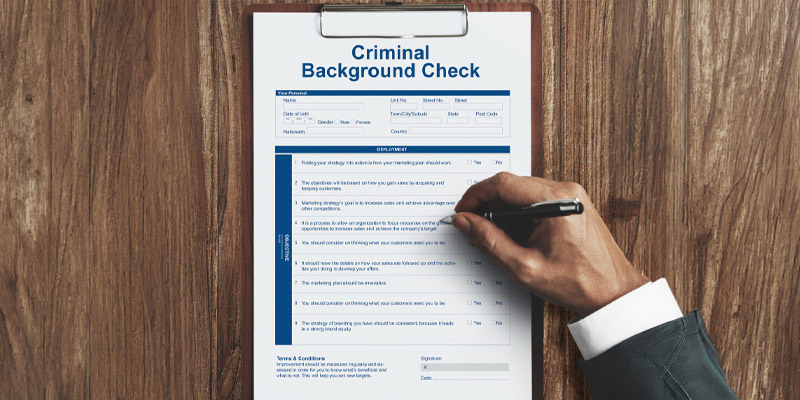
Step 5: Submit Fingerprints Through an Authorized Provider
Certified criminal record checks rely on fingerprint comparison, which must be captured and submitted by an authorized provider. Police services and RCMP-accredited fingerprinting companies submit the fingerprints electronically to the RCMP’s Canadian Criminal Real Time Identification Services (CCRTIS) system.
Applicants located outside Canada may first obtain fingerprint cards from a local authority abroad, which must then be transmitted through an accredited provider in Canada. Incorrect submission methods, such as mailing fingerprints directly to RCMP processing centres, may result in rejected applications.
Step 6: Pay Applicable Processing Fees
Certified criminal record checks may involve both federal and local processing fees. The RCMP federal processing fee is typically CAD $25 per check, although fee waivers may apply in certain immigration or citizenship contexts.
Local police services and fingerprint providers may charge additional fees for fingerprint capture or administrative processing. Many of these fees are non-refundable, and incomplete payment can prevent the application from being processed.
Step 7: Monitor Processing Timelines
Processing time depends largely on whether the fingerprint search produces a match in the National Repository of Criminal Records. Electronic submissions that produce no match are often processed quickly, while cases requiring manual verification or clarification may take significantly longer.
Applicants should also be aware that local programs, like provincial screening systems or vulnerable sector processes, may introduce additional timelines before the final result is issued.
Step 8: Confirm Delivery of the Certified Result
The final stage involves confirming how the certified criminal record product will be delivered. The RCMP issues one certified product per submission and allows only one delivery method.
Depending on the purpose indicated in the RCMP record form, results may be sent directly to the applicant, delivered to a requesting authority such as an employer or immigration body, or routed through a police service in vulnerable sector workflows. Incorrect delivery instructions can create privacy issues or prevent the requesting authority from receiving the required documentation.
How RCMP Record Forms Work in the Certified Check Process
The RCMP record form system is designed as a structured compliance process. Each document authorizes the search, confirms identity, and controls how the certified result may be issued and disclosed. The process begins with three required components submitted together:
- Fingerprints captured through an authorized provider
- Identity verification confirming the applicant’s details
- The correct RCMP record form
The consent forms used in certified checks are:
- Form 6673e for employment purposes
- Form 6674e for immigration and travel
- Form 6675e for vulnerable sector verification
- Form 6676e for other authorized purposes
Additional compliance documentation confirms that the request is valid and properly routed. This may include an organization request letter, vulnerable sector instruction letter, and identity verification records. These materials ensure the request meets statutory requirements and reaches the correct processing authority.
Delivery instructions are also controlled by the RCMP record form. The RCMP issues one certified product per submission with one delivery method. The authorized recipient depends on the application purpose. Incorrect routing may prevent the requesting authority from accepting the result.
From Submission to Certified Result
An RCMP-certified criminal record check follows a defined administrative process from fingerprint submission to issuance of the certified document. The process begins when fingerprints and the appropriate RCMP record form are submitted through an authorized police service or an RCMP-accredited fingerprint provider.
Who initiates the request depends on the purpose.
- Employment and personal use requests may be initiated by an applicant, employer, or licensing authority
- Immigration related checks are usually requested following instructions from Immigration, Refugees and Citizenship Canada
- Vulnerable sector checks must originate from the organization responsible for the position
Fingerprints are transmitted electronically to Canadian Criminal Real Time Identification Services (CCRTIS), where the RCMP conducts the search of the National Repository of Criminal Records.
Processing time depends on the fingerprint comparison result.
- No match may be processed within a few business days
- A possible match or manual verification may extend processing significantly
- Incomplete submissions may cause additional delay
During processing the submitting agency may request clarification or additional identity verification. In vulnerable sector workflows, a name-based review may occur first, and fingerprints may be required to confirm identity. The process ends when the certified criminal record check is issued to the authorized recipient indicated on the RCMP record form. In vulnerable sector cases, the certified result may first be sent to the police service conducting the screening before the final result is released to the requesting organization.
After Issuance Compliance and Ongoing Obligations
A certified criminal record check may create continuing responsibilities for both applicants and organizations. Because the check is based on fingerprint comparison, it is often treated as the most reliable confirmation of identity linked to criminal record information. Certified checks may be used to meet employment screening requirements, immigration processing requirements, licensing applications, and record suspension procedures.
Vulnerable sector information is subject to statutory limits. Under the Criminal Records Act, an organization receiving vulnerable sector information may use the information only to assess the applicant for the specific position and may not disclose it for unrelated purposes. Organizations may also require repeat screening. Vulnerable sector checks are position-specific, and employers or regulatory bodies may determine when new checks must be completed.
Applicants retain rights over their personal information. Individuals may request access or correction through the RCMP Access to Information and Privacy process and may file a complaint with the Office of the Privacy Commissioner of Canada if personal information is mishandled. Applicants should keep all submission documentation, including the request letter, completed RCMP record form, fingerprint receipt, delivery instructions, and any third-party consent. Incorrect routing or missing documentation often requires the application to be restarted.
Selecting the correct RCMP record form is key to a valid certified criminal record check. RunSensible Forms provides up-to-date, easy-to-complete versions of Forms 6673e, 6674e, 6675e, and 6676e, organized by legal purpose to help avoid filing errors and delays. Find the right RCMP record form with RunSensible Forms.
Final Thoughts
RCMP-certified criminal record checks operate under a distinct federal framework and are not interchangeable with local name-based police record checks. The certified process relies on fingerprint comparison, purpose-specific authorization, and controlled disclosure rules administered through the RCMP Canadian Criminal Real Time Identification Services.
Key principles that govern the process include:
- Correct the RCMP record form selection. Form 6673e applies to employment, Form 6674e to immigration and travel, Form 6675e to vulnerable sector verification, and Form 6676e to other authorized purposes, including adoption or legal name change.
- Three core documentation pillars. A properly completed RCMP record form establishes the legal purpose, fingerprint submission through an authorized police service or accredited provider ensures lawful processing, and correct delivery instructions determine who receives the certified result.
- Strict procedural compliance. Vulnerable sector eligibility rules, electronic submission requirements, and delivery routing must all be followed carefully to avoid rejected applications, processing delays, or privacy risks.
Understanding how the RCMP record form system operates guides applicants and organizations to complete certified criminal record checks efficiently and obtain results that meet the legal and administrative requirements of the requesting authority.

FAQs
What is the difference between a name-based criminal record check and an RCMP-certified criminal record check?
A name-based criminal record check searches police databases using personal identifiers such as name and date of birth. Because these identifiers can be shared by multiple individuals, the result may not conclusively confirm identity.
An RCMP certified criminal record check, by contrast, is based on fingerprint comparison processed through the RCMP’s Canadian Criminal Real Time Identification Services system. Fingerprints are matched against the National Repository of Criminal Records, which allows the RCMP to verify identity with a high level of accuracy and produce a certified record check linked to a specific individual.
Which RCMP record form should I use for a standard employment background check?
For most employment screening purposes, the appropriate document is the RCMP Consent for Certified Criminal Record Checks Form 6673e. This RCMP record form applies when a certified criminal record check is required for paid or unpaid employment that does not involve authority or trust over children or vulnerable persons.
Employers or licensing bodies may request this fingerprint-based check when a higher level of identity verification is required than a local name-based police record check.
Which RCMP record form applies to Canadian immigration, permanent residence, or citizenship applications?
For immigration and international travel purposes, the appropriate document is the RCMP Consent for Certified Criminal Record Checks Form 6674e. This RCMP record form authorizes the fingerprint-based search required when a certified criminal record check is requested in immigration or visa processing contexts.
Applicants should note that Immigration, Refugees and Citizenship Canada generally instructs applicants when a Canadian police certificate is required. In many cases, applicants are advised not to request an RCMP-certified criminal record check unless IRCC issues a formal request letter.
When is it lawful to request a vulnerable sector check, and who must initiate it?
A vulnerable sector check is governed by the Criminal Records Act and may be conducted only when specific statutory conditions are satisfied. The request must originate from an organization responsible for the position, the role must involve authority or trust over children or vulnerable persons, and the applicant must provide written consent using the appropriate RCMP record form.
Police services are required to verify that these conditions are met before processing the request. Conducting or requesting a vulnerable sector check outside this statutory framework is prohibited.
Can I obtain a vulnerable sector check directly from a private fingerprinting company?
In most cases, vulnerable sector checks must be initiated through a local police service rather than through a private fingerprint provider. Police services determine whether the statutory requirements of the Criminal Records Act are satisfied before the process begins.
In certain circumstances, the police service may instruct the applicant to complete fingerprint capture through an RCMP-accredited fingerprinting provider, but this typically occurs only after the police service has authorized the request.
How long does an RCMP-certified criminal record check take?
Processing time depends on the results of the fingerprint comparison. When fingerprints do not match any record in the National Repository of Criminal Records, the RCMP may process the request within a few business days.
Applications that produce a possible match or require manual review may take significantly longer. In some cases, processing can extend to several months while identity verification or record clarification is completed.
What does an RCMP-certified criminal record check cost, and when is the federal fee waived?
The RCMP federal processing fee for a certified criminal record check is typically 25 Canadian dollars per application. This fee is normally collected by the police service or accredited fingerprint provider submitting the fingerprints to CCRTIS.
The federal fee may be waived in certain situations, including applications related to Canadian citizenship, immigration processing, and specific volunteer positions. Local police services or fingerprint providers may charge additional administrative or fingerprinting fees.
If results are sent to a third party, will I still receive a copy?
Applicants may authorize the RCMP to deliver the certified criminal record check directly to a third party, such as an employer, lawyer, or government authority, by completing a third-party consent authorization.
When third-party delivery is selected, the RCMP generally issues only one certified product and sends it to the authorized recipient. In these cases, the applicant may not receive a separate copy from CCRTIS unless the requesting organization provides one.
Resources
- Types of Certified Criminal Record Checks – Royal Canadian Mounted Police
https://www.rcmp-grc.gc.ca/en/criminal-records/types-certified-criminal-record-checks - Criminal Records Act – Justice Laws Website (Government of Canada)
https://laws-lois.justice.gc.ca/eng/acts/C-47/ - Police Certificates for Immigration and Citizenship – Immigration, Refugees and Citizenship Canada
https://www.canada.ca/en/immigration-refugees-citizenship/services/application/medical-police/police-certificates/how/canada.html - Police Record Checks Reform Act, 2015 – Government of Ontario
https://www.ontario.ca/laws/statute/15p30 - Ministerial Directive Concerning the Release of Criminal Record Information by the RCMP – Public Safety Canada
https://www.publicsafety.gc.ca/cnt/trnsprnc/ns-trnsprnc/mnstrl-drctn-rcmp-rls-crmnl-rcrds-en.aspx - Privacy Act – Justice Laws Website (Government of Canada)
https://laws-lois.justice.gc.ca/eng/acts/P-21/ - Criminal Records Review Program – Government of British Columbia
https://www2.gov.bc.ca/gov/content/safety/crime-prevention/criminal-record-check - Office of the Privacy Commissioner of Canada – Official Website
https://www.priv.gc.ca/en/ - Record Suspension (Pardon) Applications – Parole Board of Canada
https://www.canada.ca/en/parole-board/services/record-suspensions.html - Police Record Checks – Ontario Provincial Police
https://www.opp.ca/index.php?id=147&lng=en
Disclaimer: The content provided on this blog is for informational purposes only and does not constitute legal, financial, or professional advice.
Contents