If you draft, sign, or manage contracts, you will eventually face this question: addendum vs amendment—which one should you use? People often use the words interchangeably, but contract disputes are rarely about vocabulary. They are about process and proof: Did the parties clearly agree to change terms? Did the new document become part of the contract? Did it override prior language, or merely add missing details?
At a high level, an addendum usually adds material to the deal without rewriting core language, while an amendment usually changes existing terms. Cornell’s Legal Information Institute (Wex) explains that an addendum supplements a document and should not be confused with an amendment, noting that civil-law usage can differ. In contrast, “modification” is the broader contract concept: changing an existing agreement, including by amending a term or altering performance.
This article shows how to choose the right tool, draft it correctly, and avoid the traps that cause “we signed it, but it didn’t stick.”
The baseline rule: contracts change only by agreement, not by labeling
Courts and counterparties care less about what you call the document and more about what it does and whether the parties assented. A one-page document titled “Addendum” can function as an amendment if it replaces a term in the original agreement. Likewise, a document titled “Amendment” can operate like an addendum if it merely appends a schedule.
Still, labels matter operationally. They shape how the document is stored, how it is referenced later, and whether teams treat it as supplemental versus replacing.
A practical definition set aligned with common U.S. usage is:
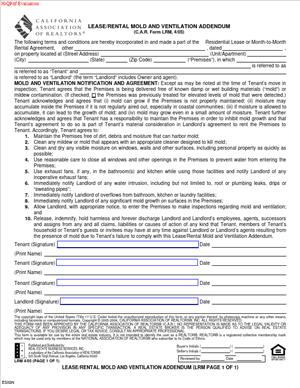
- Addendum: an attachment that supplements the contract with additional terms, exhibits, schedules, or clarifications, generally without rewriting core provisions.
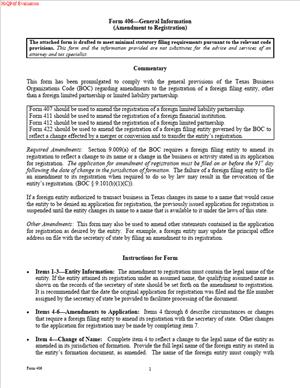
- Amendment: a written change that revises, replaces, or deletes existing contract language; in other words, a form of modification.
Because usage varies by industry and jurisdiction, your drafting should make the effect unmistakable: “This Addendum is incorporated into and forms part of the Agreement” or “This Amendment modifies Section 4.2 as follows.”
When an addendum is the better tool
Use an addendum when you want to add information or obligations that the original contract anticipated but did not fully specify.
Common addendum use cases include:
- Adding an exhibit (scope of work, pricing schedule, statement of work).
- Adding a checklist, inventory list, or deliverables description.
- Adding a compliance attachment (privacy addendum, security addendum, insurance requirement).
- Adding a real estate rider (HOA rules, lead-based paint disclosure, pet addendum).
- Adding clarifications that reduce ambiguity but do not rewrite the bargain.
The operational benefit is modularity. An addendum lets you expand the deal without reopening negotiated language. That can reduce transaction friction in consumer and small-business contracts.

The legal risk arises when the addendum conflicts with the main agreement. If the addendum adds a late-fee clause that contradicts a “no penalties” section, you have created a priority problem unless you include a control clause.
Addenda should include a conflict rule such as: “If there is a conflict between this Addendum and the Agreement, this Addendum controls with respect to the subject matter addressed.” Without that sentence, you risk interpretation disputes.
When an amendment is the better tool
Use an amendment when you need to change what is already written.
Common amendment scenarios include:
- Extending or shortening the contract term.
- Changing price, payment dates, or interest.
- Revising deliverables or service levels.
- Changing parties (assignment, name change, merger).
- Updating governing law, dispute resolution, or notice provisions.
- Editing definitions that affect multiple sections.
An amendment is the cleaner tool when you need precision. It allows you to say, “Section 3.1 is deleted and replaced with the following.” That level of clarity reduces later disputes.
In contract doctrine, this is a modification. The Legal Information Institute defines modification broadly as changing something already established, including contracts. Under UCC Article 2, modifications to contracts for the sale of goods may be binding without consideration, but written-modification clauses and statute-of-frauds requirements can still apply. The practical lesson is consistent: follow the contract’s change-control rules.
Signing and enforceability mechanics
Whether you use an addendum or an amendment, you need authority, assent, and compliance with form requirements.
Authority
The signers must have authority to bind the party. In companies that may require corporate authorization, signing authority policies, or delegated powers.
Assent and incorporation
Your document should identify the original contract precisely—parties, date, and title—and clearly state that it is incorporated into the agreement. Amendments should identify the exact section being changed.
Writing requirements
If the original contract requires changes to be in writing and signed, comply strictly. UCC 2-209 recognizes clauses requiring signed written modifications and addresses waiver issues when parties attempt informal changes. Relying on email threads where a written amendment is required is risky.
Integration and parol evidence
Many contracts include an integration (entire agreement) clause stating that the written contract is the complete agreement. Courts rely on such clauses to limit outside evidence. The parol evidence rule further restricts reliance on prior or contemporaneous external agreements, subject to exceptions like fraud or mistake.
For that reason, addenda and amendments must clearly become part of the written contract. Otherwise, parties may argue that the change was merely a side understanding.

How to Write an Affidavit: Affidavit Examples and Best Practices
Conflict and hierarchy: which document controls?
Most addendum-versus-amendment disputes are actually hierarchy disputes.
If a contract includes:
- The main agreement
- One or more addenda
- Exhibits
- Statements of work
- Later amendments
You need an order-of-precedence clause.
A clean structure looks like this:
- “This Amendment controls over the Agreement for the sections amended.”
- “This Addendum controls over the Agreement for its subject matter.”
- “Order of precedence: Amendments, then Addenda, then Exhibits, then the Agreement.”
Without hierarchy language, courts default to interpretation doctrines. That increases uncertainty and litigation risk.
Decision guide: addendum vs amendment
Alt text: addendum vs amendment decision table summarizing when to use each, risks, and required drafting elements.
| Issue | Use an Addendum when… | Use an Amendment when… | Drafting must-haves |
| Purpose | You are adding new material | You are changing the existing language | Identify the base contract; the incorporation clause |
| Risk | Inconsistency with the base agreement | Ambiguity about replaced terms | Conflict rule; order of precedence |
| Precision | Supplemental detail | Exact revision or deletion | “Section X is replaced” language |
| Evidence | You want attachment integration | You want a definitive change record | Version date, effective date, signatures |
How online legal form systems should handle addendum vs amendment
Online legal platforms can reduce disputes by structuring choices correctly.
For consumers:
- Provide a selector: “Add new terms” or “Change existing terms.”
- Require the original contract’s identifying information.
- Generate conflict and incorporation clauses automatically.
- Include a signing checklist that warns users about written-modification requirements.
For law firms:
- Use standardized language blocks.
- Require section-specific amendment input.
- Preserve document history and timestamps.
- Include optional attorney review for high-risk contracts.
The goal is not just document generation. It is error prevention.
Common mistakes that cause disputes
Several patterns repeat:
- Failing to identify the base contract precisely.
- Creating an addendum that contradicts the contract without a priority clause.
- Using an informal email to change material terms where the contract requires signed writing.
- Forgetting that integration and parol evidence principles limit reliance on side conversations.
In government contracting, regulations explicitly distinguish unilateral and bilateral modifications. That distinction illustrates a broader point: contract changes have formal categories, and clarity matters.
Frequently Asked Questions
Is an addendum legally binding?
Yes, if properly incorporated into the contract and executed according to the agreement’s requirements.
Does an addendum override the original contract?
Only if it says so or if an order-of-precedence clause establishes that result.
What is the difference between addendum vs amendment?
In common U.S. usage, an addendum adds supplemental material; an amendment changes existing language.
Do both parties need to sign an amendment?
Usually, yes, because contract changes require mutual assent unless the original contract permits unilateral modification.
Can you modify a contract without consideration?
Under UCC Article 2 for goods contracts, modifications can be binding without consideration, subject to writing and good-faith requirements.
Should price changes use an addendum or an amendment?
An amendment is generally cleaner because it directly replaces the pricing section.
Resources:
- (n.d.). Contract amendment vs. addendum.
https://www.upcounsel.com/contract-amendment-vs-addendum - (n.d.). What is the difference between an amendment and an addendum?
https://legalclarity.org/what-is-the-difference-between-an-amendment-and-an-addendum/ - (n.d.). Addendum vs amendment: Key differences explained.
https://www.hyperstart.com/blog/addendum-vs-amendment/ - (n.d.). Addendum vs amendment: What’s the difference?
https://www.signtime.com/en/blog/addendum-vs-amendment/ - (n.d.). Addendum vs amendment: What’s the difference in contracts?
https://www.adobe.com/acrobat/business/resources/addendum-vs-amendment.html - (n.d.). Addendum vs amendment: Key differences in contracts.
https://www.dottedsign.com/blog/product/addendum-vs-amendment - (n.d.). Understanding the difference between addendum and amendment.
https://www.tcwglobal.com/blog/understanding-the-difference-between-addendum-and-amendment - (n.d.). Addendum vs amendment in contract management.
https://www.sirion.ai/library/contract-management/addendum-vs-amendment/ - (n.d.). Addendum vs amendment: What’s the difference?
https://www.spotdraft.com/blog/addendum-vs-amendment - Wikipedia contributors. (n.d.).
https://en.wikipedia.org/wiki/Addendum - Wikipedia contributors. (n.d.).
https://en.wikipedia.org/wiki/Amendment
Disclaimer: The content provided on this blog is for informational purposes only and does not constitute legal, financial, or professional advice.
Contents