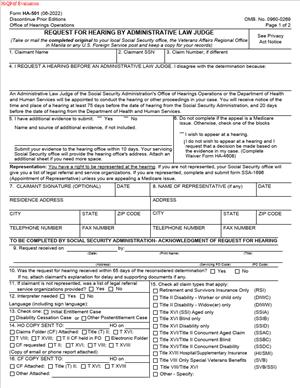
Form HA-501 – Request for Hearing by Administrative Law Judge
Fill out nowJurisdiction: Country: United States | Province or State: Federal
What is a Form HA-501 – Request for Hearing by Administrative Law Judge?
Form HA-501 is a Social Security Administration appeal form. You use it to ask for a hearing with an Administrative Law Judge. This is the next step after you receive an unfavorable reconsideration decision. The hearing is a fresh look at your case by a judge who was not part of earlier decisions.
You file this form when you believe SSA’s decision is wrong. You may challenge a denial of benefits, a termination of benefits, or an overpayment finding. You can also appeal decisions about work credits, earnings records, or other non-medical issues. If SSA made a reconsideration decision that hurts you, this form is how you ask for a hearing.
Typical users include Social Security Disability Insurance claimants. Supplemental Security Income claimants use it as well. So do people contesting medical cessations after a continuing disability review. You can also use it for retirement or survivor’s claims that were denied on technical grounds. Overpayment cases also go to a judge after reconsideration.
You complete the form to start the hearing process. The judge will review your entire claim file and any new evidence. You will have a chance to testify and present witnesses. You can bring a representative, such as an attorney or advocate. The hearing is recorded, and the judge issues a written decision.
You may request different hearing formats. In most cases, you can appear in person or by video. Telephone appearances are also used in some cases. You can request an interpreter or reasonable accommodations. You can ask that documents be read or explained to you if needed.
Common scenarios include a denied SSDI claim even after reconsideration. Another frequent case is an SSI claimant who lost benefits after a CDR. Many people use this form to fight an overpayment that they do not owe. Parents or guardians use it for minors who were denied benefits. Appointed representatives file it for their clients as well.
In short, this form is your formal request for a judge to hear your appeal. It preserves your rights and keeps your case moving. Once filed, SSA must schedule a hearing and send you a notice.
When Would You Use a Form HA-501 – Request for Hearing by Administrative Law Judge?
You use this form after you get a reconsideration decision you disagree with. The reconsideration decision is the second step in the SSA process. If that decision is unfavorable, you can request a hearing. You must do so within the appeal deadline.
Here are common situations. Your SSDI application was denied at the initial and reconsideration levels. You believe the evidence supports disability. You want a judge to hear your testimony and weigh your doctors’ opinions. Or, your SSI benefits were stopped after a medical review. You dispute the finding that you are no longer disabled. You need to keep your appeal rights and seek to restore benefits.
You also use this form for non-medical issues. For example, SSA says you do not have enough work credits. Or, SSA counted income or resources that you disagree with. You can ask a judge to review those findings. If you received an overpayment notice and lost the reconsideration, you can request a hearing. You can present evidence on why you do not owe the money. Or, you can show that recovery would be against equity and good conscience in a waiver case.
Parents and guardians use this form to appeal denials for a child’s SSI claim. Survivors can appeal decisions on benefits due after a worker’s death. Retirees may contest an adverse decision about entitlement or payment amount. Some Medicare entitlement or premium issues tied to Social Security records may also reach a hearing.
You may also need this form when SSA ended your disability benefits after a CDR. If you appeal quickly, you may elect to continue benefits. The deadlines for that are short. The form helps you document your request and protect your rights.
Representatives often file this form on behalf of clients. If you appointed someone to represent you, they can sign and submit it. They will manage deadlines, evidence, and hearing requests. If you do not have a representative, you can still file the form yourself.
Use the form as soon as you receive an unfavorable reconsideration notice. Waiting risks a late appeal and loss of rights. The hearing level is where many claimants prevail. You give a live account of your limitations. You can explain gaps in the record and submit new medical evidence.
In sum, you use Form HA-501 when you seek a de novo hearing. That means a new review by a judge. It is the formal gateway to that process.
Legal Characteristics of the Form HA-501 – Request for Hearing by Administrative Law Judge
Form HA-501 is not a contract. It is a formal administrative filing. By signing and submitting it, you invoke your right to a hearing. This right comes from federal law and administrative rules. The form creates duties for SSA. SSA must acknowledge your request and schedule a hearing.
The form must be timely. You usually have 60 days to file from the date you receive the reconsideration notice. SSA presumes you receive the notice five days after the date on it. If you miss the deadline, you may still file. You must show good cause for late filing. You explain the reason and attach proof if possible. Good cause can include illness, hospitalization, language barriers, or misdirected mail.
Your signature is important. It verifies that you are the claimant or authorized representative. Without a proper signature, SSA may not accept the request. If a representative signs, they must be properly appointed. The appointment of a representative is handled on a separate form. If someone signs for you due to incapacity, SSA may ask for proof of authority.
Once filed, the request triggers due process protections. You gain the right to review your file. You can submit evidence and arguments. You can appear and testify at the hearing. You can question witnesses and respond to evidence. You may request an interpreter or accommodations. You may also withdraw your request, but that has consequences. If you withdraw, you may lose appeal rights for that claim.
The judge is independent of the prior decision-makers. The hearing is de novo. The judge is not bound by earlier findings. The judge considers all evidence, including new submissions. The judge may call medical or vocational experts. The judge will issue a written decision with findings of fact. If you lose, you can appeal further to the Appeals Council.
Enforceability comes from proper filing and compliance with deadlines. Include complete identifying information. State why you disagree with the decision. Indicate your hearing request clearly. Sign and date the form. If the request is incomplete, SSA may delay scheduling. If it is late without good cause, SSA may dismiss the request.
You also have obligations. You must keep your contact information current. You must attend the scheduled hearing or show good cause if you cannot. You should submit evidence on time. There are rules about submitting evidence before the hearing. If you miss those, you must show good cause to add late evidence.
Finally, know the risk of not appealing. If you do not request a hearing on time, the decision becomes final. You can file a new application, but you may lose past benefits. In rare cases, a case can be reopened, but that is limited. Filing the HA-501 preserves your appeal and potential back pay.
How to Fill Out a Form HA-501 – Request for Hearing by Administrative Law Judge
Follow these steps to complete the form accurately. Keep your sentences clear and your entries legible. Use black ink if you fill it in by hand.
1) Gather key documents.
- Find the reconsideration notice you received.
- Note the date on the notice and the claim number.
- Collect your Social Security number and contact details.
- Gather any new medical or other evidence you plan to submit.
- If you have a representative, have their contact information ready.
2) Identify the claim.
- Locate the field for the type of claim.
- Indicate whether it is SSDI, SSI, retirement, survivors, or another issue.
- If your case involves an overpayment, note that as well.
- If your case is a medical cessation after a CDR, state that clearly.
3) Provide claimant information.
- Enter your full legal name as it appears on SSA records.
- Provide your Social Security number with no errors.
- Add your date of birth to help SSA match your file.
- If the wage earner is someone else, list their name and SSN.
- Include your mailing address, phone number, and email if available.
4) Enter the decision you are appealing.
- Write the date of the reconsideration decision.
- Use the date shown on the notice itself.
- If you are unsure, attach a copy of the notice.
- Identify the office or unit that issued the decision if asked.
5) Explain why you disagree.
- Use the space provided to state your reasons.
- Be specific and factual, not emotional.
- Point to missing or misunderstood evidence.
- Note any medical records that were not considered.
- Explain how the decision misstates your functional limits.
- If non-medical, explain the error in earnings, income, or resources.
- If overpayment, explain why the amount is wrong or that it is not your fault.
- If space is short, write “See attached” and include a signed page.
6) State your hearing preferences.
- Indicate that you want to appear at a hearing.
- Choose your preference for in-person, video, or telephone if offered.
- If you cannot travel, state why and request a remote appearance.
- Provide any scheduling limits, such as medical treatments or work.
- If you prefer to waive appearing, understand the risks before you do.
7) Request an interpreter or accommodations.
- If you need an interpreter, state your language or dialect.
- If you need sign language, specify the type.
- If you need large print, extra time, or other aids, describe them.
- If you need a wheelchair-accessible site, state that clearly.
8) Identify your representative.
- If you have a representative, list their name and contact information.
- Check the box indicating you have one.
- Ensure your appointment of a representative is properly filed.
- If you do not have one, you can still file now and appoint later.
- Keep SSA updated if your representation changes.
9) Address deadlines and timeliness.
- Confirm that you are filing within the appeal period.
- If late, explain good cause in the space provided or on an attachment.
- Provide proof, such as hospital records or returned mail.
- Be honest and detailed. Vague reasons are often denied.
10) Evidence planning and attachments.
- You can submit new evidence with the form.
- Or, state that you will submit evidence as soon as possible.
- List providers you will request records from.
- Include treatment dates and locations if known.
- You will need to submit evidence before the hearing.
- Aim to submit at least several days before the hearing.
- If the evidence is late, be ready to explain why.
11) Special notes for CDR cessations.
- If your benefits were stopped after a CDR, note the date.
- If you want benefits to continue, act fast.
- Make your request for continuation within the short deadline on the notice.
- Tell SSA that you elect to continue benefits during the appeal.
- Understand that you may have to repay if you lose.
12) Review for accuracy.
- Check all names, numbers, and dates.
- Make sure your reason for disagreement is clear.
- Confirm your contact information is current.
- Verify interpreter and accommodation requests.
13) Sign and date the form.
- Sign using your usual signature.
- Print your name below the signature line if asked.
- Date the form. Do not leave the date blank.
- If someone signs on your behalf, they must note their relationship and authority.
- A representative can sign if properly appointed.
14) Keep copies.
- Make a copy of the completed form for your records.
- Keep a copy of any attachments you submit.
- Keep the mailing receipt or delivery confirmation.
15) Submit the form.
- Deliver or mail it to your local Social Security office.
- You can also request help by phone from SSA if needed.
- Representatives may submit electronically through their available channels.
- Do not wait until the last day if you can avoid it.
16) After submission.
- Watch for an acknowledgment from SSA.
- SSA will assign the case to a hearing office.
- You will receive a hearing notice later with the date and time.
- Update SSA right away if your address or phone number changes.
- Keep collecting and submitting new medical evidence.
- Consider writing a short prehearing statement summarizing your case.
17) Common pitfalls to avoid.
- Missing the deadline. Count time from the date on the notice.
- Leaving the reason for disagreement blank or vague.
- Failing to sign and date the form.
- Entering the wrong claim number or SSN.
- Not requesting an interpreter when needed.
- Not updating contact information and missing the hearing notice.
18) Helpful additions.
- Include a simple timeline of your medical treatment.
- List medications and side effects if relevant.
- Provide statements from employers or caregivers when helpful.
- Ask your treating providers for opinion letters that address function.
- If overpayment is the issue, include payment records and bank statements.
19) If you need to change your request later.
- You can change hearing format preferences by notifying the hearing office.
- You can add or change representation at any time.
- If you cannot attend the scheduled hearing, request a new date promptly.
- Provide a good cause, reason, and any proof that supports it.
20) Stay organized.
- Create a folder for your case documents.
- Track your providers and record requests.
- Note all dates of contact with SSA and the hearing office.
- Bring your records and a photo ID to the hearing.
By following these steps, you will complete the HA-501 accurately and on time. You show SSA and the judge exactly what you are appealing and why. You set your case up for a fair hearing and a clear record.
Legal Terms You Might Encounter
- Administrative Law Judge (ALJ) means the neutral judge who will decide your appeal. You use this form to ask for that hearing. The ALJ reviews the whole record, not just your form.
- Claimant means you, the person appealing the decision. Your information and signature on the form make it an official request.
- Reconsideration is the step before a hearing. You file this form only after you receive a reconsideration denial. That denial notice starts your appeal clock.
- Notice of Hearing is the letter you get with the time and place of your hearing. The details in your form, like address and phone, must be accurate to get this notice.
- Good Cause is a valid reason for missing a deadline or hearing. If you file late, explain good cause in your form or a cover note.
- Date of Receipt is when the law assumes you got a notice. It is usually five days after the date on the notice. Your 60-day appeal period starts then.
- On-the-Record Decision is a decision the judge can make without a hearing. You can ask for this in your form, but it is not guaranteed.
- Evidence is the medical and non-medical proof in your file. You can file the form first and send evidence later. You must submit new evidence at least five business days before the hearing.
- Representative is someone you appoint to help, like an attorney or advocate. You can list your representative on the form. Your representative can also sign the request.
- Interpreter is someone who helps if you do not speak English well. Use the form to request an interpreter. List your language to avoid delays or rescheduling.
FAQs
Do you have to use Form HA-501 to request a hearing?
You do not have to use the pre-printed form, but it helps. Your request must be in writing, signed, and say you want a hearing. The form captures all the needed details in one place. Using it reduces processing errors and delays.
Do you have a deadline to file the hearing request?
Yes. You have 60 days from the date you receive your reconsideration denial. The law assumes you received it five days after the date on the notice. If you file late, include a written good cause reason. Submit as soon as possible if you are close to the deadline.
Do you need a representative to file the form?
No. You can file on your own. A representative can help with strategy, evidence, and deadlines. If you already have one, list them on the form. If you hire one later, notify the agency right away.
Do you need to explain every reason you disagree on the form?
Keep it short and clear. A sentence or two is fine. You can say you disagree because the decision is wrong about your medical limits or work ability. You will have a chance to provide full details and evidence later.
Do you need to include medical evidence with the form?
No. File the request first to meet your deadline. You can submit medical records later. Aim to send new evidence at least five business days before the hearing. Send updates if you start a new treatment or change doctors.
Do you get to choose an in-person, phone, or online video hearing?
You can state your preference in your request or when asked. The agency will consider your preference and your needs. If you object to a format, say so early and explain why. You will receive a notice confirming the hearing type.
Do you have to attend the hearing?
You should plan to attend. The judge often needs your testimony. You can ask for a decision on the record, but the judge may still require a hearing. If you cannot attend on the scheduled day, ask to reschedule and explain good cause.
Do you have to pay a fee to file the form?
No. There is no filing fee for the hearing request. If you hire a representative, fees are handled under separate rules. Those fees usually need approval before payment.
What if you moved after filing the form?
Update your address and phone right away. If you miss a hearing notice because of an old address, your case can be dismissed. Confirm the change was received. Keep proof of your update.
What if you already missed the 60-day deadline?
File the request now and attach a good cause statement. Explain why you missed the deadline and include supporting facts. The agency will decide whether to accept a late filing.
Checklist: Before, During, and After the Form HA-501 – Request for Hearing by Administrative Law Judge
Before signing: gather information and documents
- Your full name, date of birth, and Social Security number.
- The reconsideration denial notice with its date and claim number.
- The type of claim you are appealing, like disability or SSI.
- A short reason you disagree with the decision.
- Your current address, phone, and email, if you use one.
- Any dates you are not available for a hearing
- Your preferred hearing type, if you have one.
- You need an interpreter and the language.
- Any needed accommodations, like sight or hearing assistance.
- Your representative’s contact details, if you have one.
- A list of new medical providers and treatments since the last decision.
- A calendar showing deadlines, including the 60-day limit.
During signing: sections to verify
- Your name and Social Security number match your records.
- Your contact information is current and readable.
- The claim type you checked is correct.
- Your reason for disagreeing is clear and concise.
- Your hearing preference is marked, or you left it blank on purpose.
- Your interpreter and accommodation requests are listed.
- Your representative’s details are complete, if you have one.
- The date on your signature is within the appeal window.
- Your signature is present. If a representative signs, they are authorized.
- You kept copies of everything you filled out today.
After signing: filing, notifying, storing
- File the form using the address or instructions on your denial notice.
- If you mail it, use a trackable method and keep the receipt.
- If you deliver it in person, ask for a stamped copy as proof.
- If you fax it, keep the confirmation sheet.
- Notify your representative and give them a copy.
- Set a reminder to follow up if you do not get a receipt or letter.
- Update your address and phone if they change at any point.
- Start collecting new medical records and a treatment timeline.
- Store the form, denial notice, and mailing proof in one folder.
- Track the evidence deadline: five business days before the hearing.
- Watch for requests to complete additional forms and questionnaires.
Common Mistakes to Avoid
- Missing the 60-day filing deadline. Your request can be dismissed as being late. Don’t forget to file now and attach a good cause reason if you are past the window.
- Leaving the reason for disagreement blank. The form allows brief reasons. Don’t forget a sentence that points to why the decision is wrong, like your medical limits or work capacity.
- Using an old mailing address or phone number. You can miss your hearing notice. Don’t forget to update contact details right away and confirm it was received.
- Skipping the interpreter or accommodation request. You risk delays or a rescheduled hearing. Don’t forget to request your language or accommodation on the form.
- Forgetting to sign and date. An unsigned form stalls your appeal. Don’t forget a clear signature and a legible date on the form.
- Sending the form to the wrong office or address. Your request may be delayed and could miss the deadline. Don’t forget to use the address on your denial notice and keep mailing proof.
What to Do After Filling Out the Form HA-501 – Request for Hearing by Administrative Law Judge
- File the request promptly. Use the address or instructions on your reconsideration notice. Keep proof of filing, such as a receipt, fax confirmation, or tracking record. If you submit close to the deadline, do not wait for evidence. File the form first. You can send evidence later.
- Expect follow-up forms. You may receive additional forms that update your medical and work history. Complete them quickly. These updates help the judge understand what changed since the last decision. Include new providers, new diagnoses, and any worsening symptoms.
- Submit evidence on time. Gather records from all providers since your last decision. Include test results, imaging, treatment notes, and therapy records. Send them at least five business days before your hearing. If a provider needs more time, tell the hearing office as soon as you know.
- Track your hearing notice. Watch for the Notice of Hearing. It lists the date, time, location, and type of hearing. If you cannot attend, ask to reschedule and explain your reason. Confirm the new date in writing.
- Prepare for your testimony. Write a short daily activities summary. Note how your symptoms limit you. List your medications, side effects, and any assistive devices. Bring notes to the hearing. Practice clear, short answers.
- Coordinate with your representative. Share copies of the form, the denial notice, and all evidence. Discuss your hearing strategy and the questions you may face. Confirm who will submit evidence and when. Set calendar alerts for every deadline.
- Updates change fast. Tell the hearing office about new treatment, hospital stays, or work attempts. Report address or phone changes right away. Confirm your updates in writing and keep a copy.
- Consider an on-the-record request. If your records are strong, your representative may ask for a decision without a hearing. The judge decides whether to grant it. Continue preparing for a hearing unless you receive a written decision.
- Amend if needed. If you need to change your alleged onset date or clarify issues, tell the hearing office. You can submit a short written statement. Keep a copy in your file.
- Avoid new gaps in treatment. Keep appointments if you can. If you cannot attend, reschedule right away. Explain any gaps briefly in your hearing prep notes.
- Confirm evidence arrived. Call or write to confirm key records are in the file. Keep a list of what you sent and when. Bring that list to the hearing.
- Plan logistics for the hearing day. Confirm transportation and time off. Test your device and internet if your hearing is by phone or video. Charge your phone and have a quiet place ready.
- Request the hearing recording if needed. Hearings are recorded. If you plan to review the record later, ask how to request a copy. Note any deadlines or steps you must follow.
- Watch for the judge’s decision. You will receive a written decision by mail. Review it carefully. If you disagree, you can ask for further review. Note the deadline in your calendar and act quickly.
- Store your file securely. Keep the HA-501, denial notices, hearing notice, mailing proof, and all evidence in one place. Label documents by date. Bring your file to the hearing and any future appointments.
Disclaimer: This guide is provided for informational purposes only and is not intended as legal advice. You should consult a legal professional.